
How to Spot Greenwashing & Shop Consciously: The Ultimate Consumer’s Guide
Want to hear something crazy? 53% of green claims made online are exaggerated, misleading, or outright false!
That number comes from the European Commission, which reviewed hundreds of websites in 2021 and found almost half of them couldn’t back up their sustainability claims with any real evidence. Not all of them, almost half though… which is insane. Companies are throwing these claims around willy nilly, just to trick you into buying their product because you think you’re buying something good for your health and the environment.
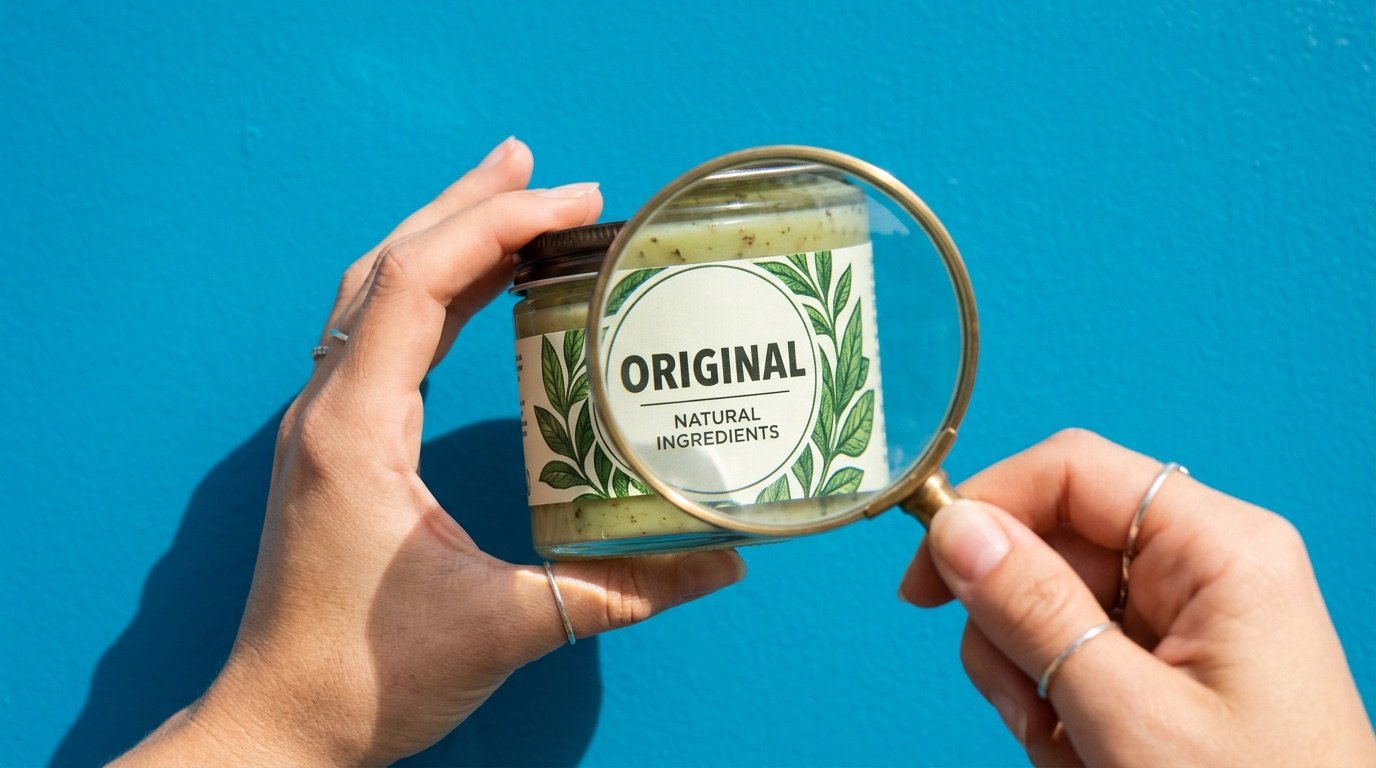
You might see “natural” on the packaging and assume you’re safe. Wrong. The reality of walking down a modern shopping aisle is far more complicated. Brands know you want to buy better products. They also know it costs real money to actually make better products. So they take a shortcut. They paint the box green. They slap a leaf logo on the front. They call it a day.
The core problem
So what does that actually mean for your daily shopping? It means you’re actively being lied to. Greenwashing happens when a company spends more time and money marketing themselves as environmentally friendly than actually minimizing their environmental impact. Greenwashing is what happens when a company makes itself look more environmentally responsible than it actually is. It can be subtle, it can be bold, and it’s everywhere. Here’s what to look for.
It’s a marketing spin. A distraction. A way to make you feel good about spending $25 on a shampoo bottle that’s just as bad for the planet as the $4 one. We see corporate greenwashing everywhere from fast fashion hauls to heavy industry. They want the halo effect of sustainability without doing the heavy lifting.
Where the term actually came from
Once upon a time in 1986, a man named Jay Westerveld was staying at a hotel in Samoa when he noticed a card asking guests to reuse their towels to “help the environment.” He also noticed that the same hotel was aggressively expanding onto the beach. AKA, Saving laundry costs while pretending to save the reef. He wrote an essay about it, coined the term “greenwashing,” and the idea stuck.
For the next few decades, the practice grew faster than the rules around it. The US Federal Trade Commission published its first Green Guides in 1992, trying to define what claims like “recyclable” and “degradable” actually had to mean. These were updated recently in 2012, and those guides are currently under review again because the gap has grown between what they cover and what brands are now claiming.
In Europe, regulators moved faster. The European Commission’s proposed Green Claims Directive, introduced in 2023, would require companies to substantiate any environmental claim with independent verification before putting it on packaging. The US isn’t there yet. Which matters, because a lot of the products on American shelves carry claims that wouldn’t have the legs to stand on European regulations.
The most common greenwashing tactics
Vague language designed to feel meaningful
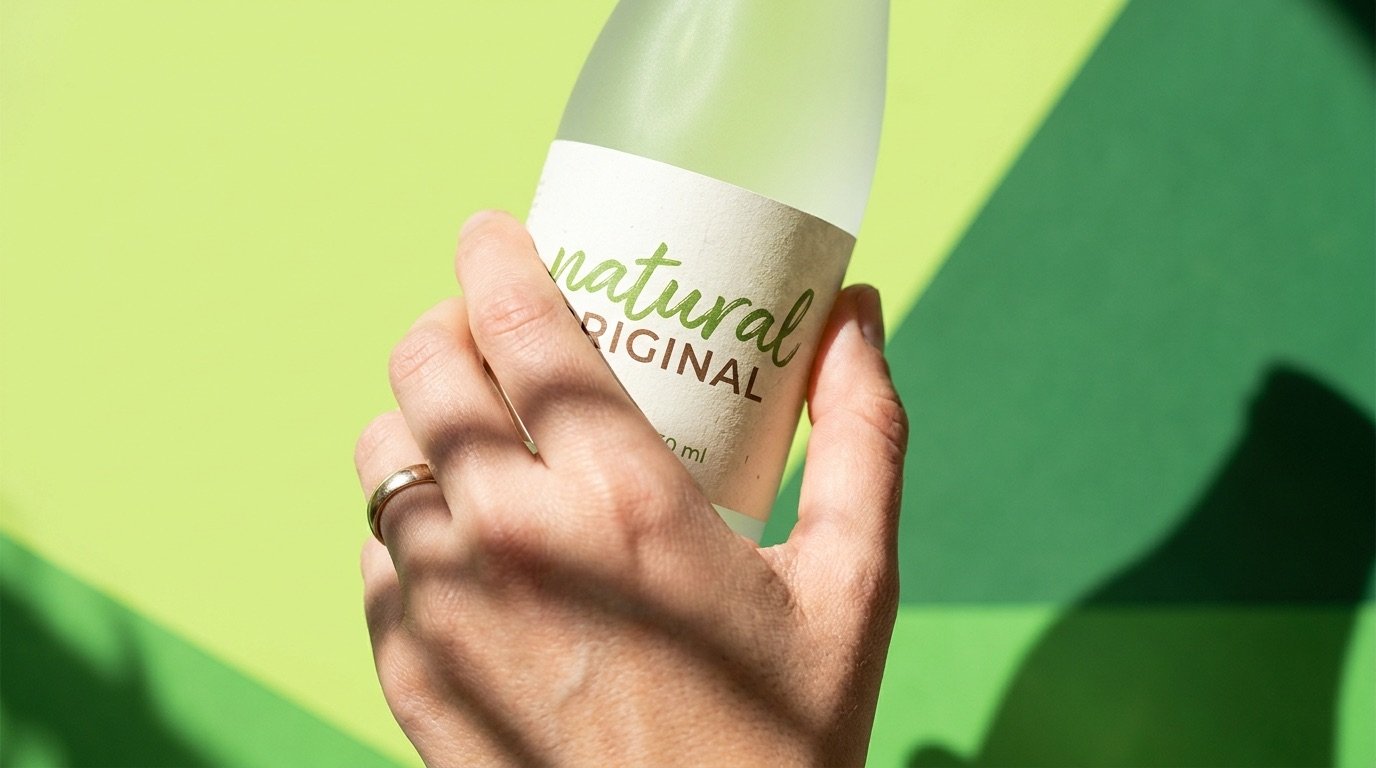
You’ve seen it before.. Words like “natural,” “eco-friendly,” “green,” “clean,” and “sustainable”. These actually have no regulated definition in US consumer goods marketing. A brand can put them on anything and uninformed customers are still falling for it.
The sunscreen with synthetic chemical filters calling itself “reef-safe.” The shampoo with a leaf logo and petroleum-derived preservatives calling itself “natural.” The fast-fashion line with one recycled thread in the stitching calling itself “conscious.” None of that is technically illegal. Which is exactly the problem.
The hidden trade-off
This one catches people. A product can score well on one environmental metric while being poor on others, and the marketing only mentions the first part.
Organic cotton is a real example. Cotton certified USDA Organic means no synthetic pesticides on that crop. Worth something. But if that shirt was made in a factory with no worker protections, shipped halfway around the world in unregulated freight, and falls apart after 15 washes because the fabric quality is poor, the “organic” label is doing a lot of lifting for a product that isn’t all that good for the planet overall. The claim isn’t false. It just isn’t telling you anything close to the full story.
Certifications you’ve never heard of
Some companies have started creating their own certification badges. A brand might display a green leaf logo with text like “EcoVerified” or “Certified Green,” designed to look like third-party verification while actually being self-issued. No independent auditing. No standards to meet. Just a logo they made. Now that’s just shady!
What you should look for
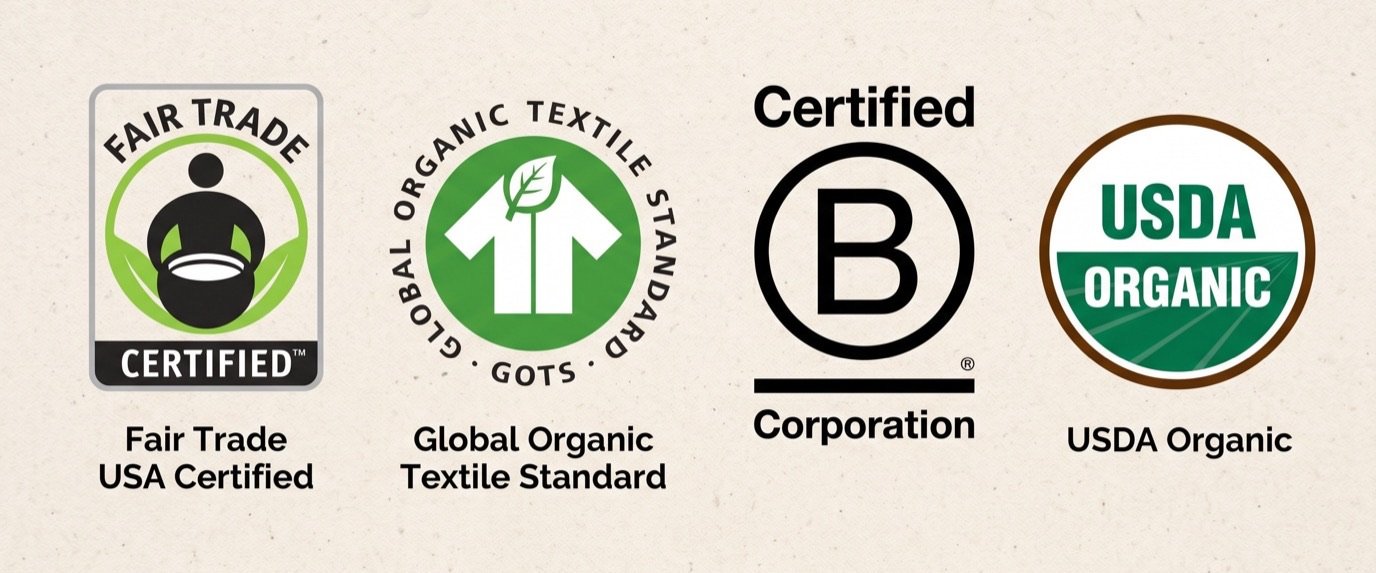
The certifications that actually mean something are independently administered and require regular auditing: Fair Trade USA, GOTS (Global Organic Textile Standard), B Corp, and USDA Organic. For carbon offsetting, Gold Standard and VCS are the names to know. If you haven’t heard of the certification a brand is citing, look it up before trusting it.
What the brand is choosing not to say
Selective disclosure is quieter than a fake claim, but it works the same way. A company highlights one initiative that really is good, and the framing implies that’s representative of how the whole business operates.
BP popularized the concept of a “carbon footprint” through a 2004 advertising campaign, shifting responsibility for climate emissions onto individuals. The company was, at the time, one of the largest fossil fuel producers in the world. They weren’t wrong that individual choices matter. They were just very carefully not talking about themselves.
The numbers, because they’re bad
A few years of EU regulatory research produced some figures that are hard to ignore.
53% of sustainability claims made by companies operating in the EU were found to be vague, misleading, or unsubstantiated, according to the European Commission’s 2021 screening of 344 websites. And 40% of those claims had no supporting evidence at all.
That same EC sweep found that 42% of green claims couldn’t be independently verified. That’s the number that keeps showing up because it’s the most direct measure of the gap between what’s claimed and what’s provable.
Carbon offsetting deserves its own conversation. The UN High Level Expert Group on Net Zero Commitments, in a 2022 report, described widespread “incomplete, misleading, or inaccurate” net zero pledges from companies using offset schemes that hadn’t been independently verified. Buying a carbon-neutral flight because an airline planted some trees doesn’t mean what it sounds like.
Why does this matter? Because knowing what is greenwashing isn’t just beneficial for yourself, unfortunately, it steals market share away from the brands actually doing things right. It funnels your money to companies actively harming the planet while pretending to save it.
How to spot greenwashing before you buy
Look for specifics, not adjectives. A brand with a real sustainability story will tell you exactly what that story is. Which factory. Which certification. Which percentage of recycled content. Vague language is a red flag. “We care about the planet” means nothing. “93% of our packaging is recycled and our Tier 1 supplier factories are Fair Trade certified” means something.
Check the certification before you trust it. If a brand mentions Fair Trade, GOTS, or USDA Organic, those are independently administered and searchable. If the brand has its own proprietary badge, treat that as no certification at all.
Read the ingredient list, not the front of the pack. This is extremely important! For beauty and personal care products especially, the front-of-pack claims are marketing. The back of the pack is the data. A quick EWG Skin Deep or Think Dirty search can tell you in seconds whether the “clean” label is backed up by what’s actually in the formula.
Ask what they’re not saying. Which part of the supply chain isn’t mentioned? A brand that talks about its sustainable packaging but not its manufacturing conditions, or its organic ingredients but not its shipping practices, is probably making selective claims. Press on the gap.
A live example of all this sits in the supplement aisle. Nearly every collagen tub says grass-fed, and not one of the ones we checked carried an independent grass-fed certification.
Five things to do right now
- Search any certification you see on a brand’s packaging. If it’s independently administered, it’ll have a public database where you can verify the brand’s status.
- Download Think Dirty or use EWG’s Skin Deep database before buying a beauty or personal care product marketed as “clean” or “natural.”
- Read the FTC Green Guides. They’re not comprehensive, but they define what terms like “recyclable,” “compostable,” and “ozone-friendly” are supposed to mean in US advertising. Worth an hour of your time.
- When a brand makes a carbon neutral or net zero claim, look for what offset standard they’re using. Gold Standard and VCS are reputable. Unnamed or unverified offset schemes usually aren’t.
- Follow journalists covering environmental accountability. Groups like Client Earth, InfluenceMap, and the Corporate Europe Observatory track greenwashing cases as they develop, often before they make mainstream news.
What this means for how you shop
Honestly, no brand is perfect. And no consumer should feel like every purchase is a moral exam they might fail. The point of understanding greenwashing isn’t to paralyze your shopping. It’s to make the claims you see on packaging legible rather than just decorative.
Brands that are actually doing the work tend to show it in specific, verifiable ways. Brands that aren’t tend to be very good at the language of sustainability without the substance behind it. After a while, you start to hear the difference.
Shopping sustainably feels exhausting sometimes. We get it. We review these products all day and still get tricked occasionally.
In my opinion, walking away from a brand the second you catch them faking a green claim is the most powerful thing you can do. Given all the access to supply chain data we have today, I find it impossible to believe companies just “make a mistake” with misleading labels. I sure don’t want to give them my money.
Hold out for the brands doing the real work. The ones sharing their full supply chains. The ones paying fair wages. The ones making products that are actually good for the earth. They exist. You just have to look past the fake green leaves to find them.
Frequently asked questions
What’s the most common example of greenwashing?
The hidden trade-off, by a mile. A brand picks one narrow fact that happens to be true and lets you assume the rest of the operation matches. Recycled packaging wrapped around a product made in a factory running on coal. “Ocean plastic” in a garment that sheds microplastic every time you wash it.
The hotel towel card that started all of this is still on the nightstand, forty years later.
Is greenwashing illegal?
Sort of, which is the frustrating answer. In the US the FTC’s Green Guides say an environmental claim has to be truthful and backed by evidence, and the FTC can act when one isn’t. Enforcement is rare though, and the guides haven’t kept pace with what brands now put on a box.
Europe is moving quicker. The proposed Green Claims Directive would make a company verify a claim independently before it reaches packaging. Until something like that lands in the US, most greenwashing sits in the gap between technically actionable and actually actioned.
How do you tell greenwashing from a brand doing the work?
Specificity.
A real claim names a number, a year, a percentage, or a certifying body, and every one of those is something you can go and check. A greenwashed claim reaches for an adjective instead. “Made with 60% post-consumer recycled polyester, certified to the Global Recycled Standard” is a fact. “Eco-conscious materials” is a mood.
When a brand has actually done the work, telling you precisely what they did costs them nothing. They usually can’t help themselves.
Does a green logo on the packaging mean anything?
Often nothing at all. Anyone can print a leaf on a box. Anyone can invent a seal, give it a name with “eco” or “earth” in it, write their own standard, and then certify themselves against it.
What separates a real one is whether the body behind it is independent of the brand, publishes its criteria where you can read them, and audits against them. If you can’t work out who issued a seal inside about thirty seconds of searching, you’ve learned what you needed to know.
For a worked example of a reassuring label that certifies less than it sounds like, see what the NSF water filter certifications actually cover, where “NSF certified” and “tested to NSF standards” mean very different things.

2 Comments
Comments are closed.