
Girlfriend Collective
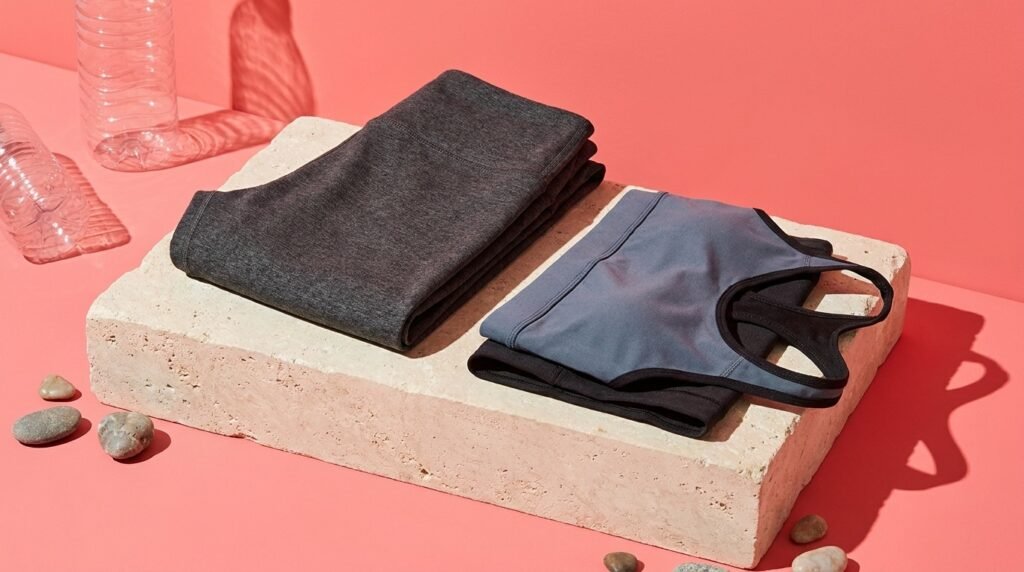
Quick verdict: Girlfriend Collective is the brand that proved recycled activewear didn’t have to feel like a compromise, and it’s still the one we’d point at first. Old bottles and fishing nets become very good leggings, the factory in Hanoi holds SA8000 certification for wages and conditions, and the size range runs XXS to 6XL rather than paying lip service to inclusivity. The compressive fabric divides people and it isn’t cheap. Our rating: 4.2 out of 5.
Who they are
Founded in Seattle in 2016, Girlfriend Collective arrived when “sustainable activewear” mostly meant a bamboo t-shirt, and built a business on turning post-consumer plastic into performance fabric instead. It’s privately held.
We’d rather be straight about a gap here: the company doesn’t publicly disclose its ownership structure. Everything points to an independent business and nothing suggests a parent company, but that’s inference, and this directory scores ownership too heavily to pretend inference is proof.
What they get right
The factory certification is the strongest part, and it’s the part most activewear brands skip entirely. Girlfriend Collective’s production sits in an SA8000 certified facility in Hanoi. SA8000 is a labor standard covering living wages, working hours, safe conditions, freedom of association, and no forced or child labor, audited by a third party. Plenty of brands certify their fabric. Very few will tell you anything about the people sewing it.
The fabric itself is OEKO-TEX Standard 100 certified, with bluesign approval on the water-repellent treatments.
The size range runs XXS to 6XL across the core line, not as a separate afterthought collection. And there’s a take-back program that recycles worn-out pieces rather than sending you to a landfill.
Where they fall short
No B Corp certification, despite it being widely repeated online that there is one. Their own materials don’t claim it, and we corrected our own article after checking. It doesn’t make the brand worse, but a directory built on verifying claims should be the last place a phantom certification gets repeated.
The fabric is highly compressive. Some people love that and some find it restrictive, and there isn’t a lighter-feel alternative within the range. Colors also drop in limited runs and sell out, so restocking an exact shade later is unreliable.
Recycled polyester still sheds microplastic in the wash. That’s true of every recycled synthetic and it’s the honest ceiling on this whole category, not a Girlfriend Collective failing. A filter bag helps.
What they sell and what it costs
Leggings, sports bras, tops, swim, and outerwear. Leggings typically run $68 to $88 and bras $38 to $58, which is below Lululemon and above Pact. Sales are infrequent.
Who it’s actually for
Anyone who wants recycled activewear that performs, and anyone who has been failed by size ranges that stop at XL. It’s the strongest pick here if factory labor conditions are what you care about most, because it’s the one brand naming a certified facility.
If you want a softer, less compressive feel, Boody is the rest-day answer. If price is the barrier, Pact.
Deals and discounts
No affiliate program live on our side, so nothing on this page earns us anything.
Related reading
- 7 Sustainable Activewear Brands That Perform
- Is Lululemon Actually Sustainable?
- What Is Sustainable Fashion?
Frequently asked questions
Is Girlfriend Collective a B Corp?
No, and this one is worth clearing up because the internet says otherwise constantly. The brand’s own materials list OEKO-TEX Standard 100 and bluesign, and its factory holds SA8000. None of those is B Corp certification, and we found no B Lab listing. The certifications it does hold are meaningful, which makes the phantom one unnecessary.
Where is Girlfriend Collective made?
In Hanoi, Vietnam, in a facility certified to SA8000. That standard covers wages, hours, safety, and freedom of association, and it’s independently audited. Naming the factory and its certification is more than most activewear brands will do.
Does Girlfriend Collective shed microplastics?
Yes, like every garment made from recycled synthetics. Recycling a bottle into fabric solves a waste problem, not a shedding problem. A washing filter bag catches a good share of it, and washing less often on cooler cycles helps too.
Is the sizing really inclusive?
Yes, and across the main range rather than in a separate line. Core styles run XXS to 6XL. That’s a meaningful gap from most of the category, where extended sizes tend to arrive late, in fewer colors, or not at all.