
PAKA
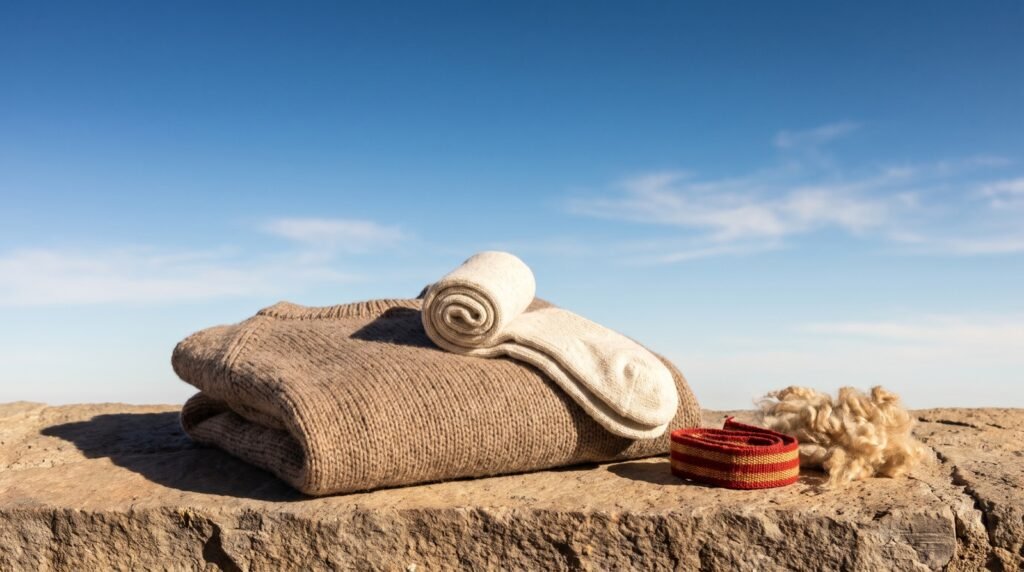
Quick verdict: Ever bought a “merino” base layer that pilled in a month and smelled by day two? PAKA is the alpaca alternative, and it’s a good one. The sweaters, base layers and socks are made with weavers and knitters in Peru, the company is a certified B Corp, and you can trace your garment’s fiber back to the region it came from. A sweater runs about $150, though, and the animal welfare story is the brand’s own word rather than an audited standard. Our rating: 3.9 out of 5.
Who they are
Kris Cody founded PAKA in 2016 and launched it with a Kickstarter that raised $347,378, way past its goal. It calls itself a Peru-founded brand, opened a flagship store in Cusco in 2024, and opened its first US headquarters in Boulder, Colorado this fall.
It’s still Cody’s company. Beyond the crowdfunding, it’s taken small startup-stage investment, and we couldn’t find a full list of who holds what. We found no acquisition and no parent company. Weaving is overseen by Nilda Callañaupa, who has directed Cusco’s Centro de Textiles Tradicionales since 1996, which tells you something about how seriously the craft side is taken.
What they get right
It’s a B Corp, checked at B Lab. B Lab lists PAKA as certified since November 2020. Its current score is 105.0, down from 124.8 on its first assessment. That drop is worth noticing, but 105 still sits comfortably above the 80-point pass mark.
You can actually trace the fiber. PAKA’s Traceable Alpaca program lets you follow a garment back to the coordinates where its fiber was sourced. The same page walks through every step: herds of 60 to 90 alpacas kept by single families, shearing once or twice a year, fiber hand-sorted by micron count, then dyed, spun and knit in Peru. That’s a lot more than most clothing brands tell you about where a sweater started.
Alpaca is pretty great at its job. It’s warm for its weight, and PAKA says it stays dry and resists odor in a way synthetics don’t. PAKA uses Royal Alpaca, the finest grade at 17 to 19 microns, for most of its garments, which is why the sweaters don’t itch the way a cheap wool one can. The Essentials underwear and tees blend alpaca with organic Pima cotton and TENCEL lyocell plus a little spandex.
Two percent goes back to Peru. One percent of sales supports alpaca farming families through the International Alpaca Association. Another 1% funds university scholarships for young Peruvian women through Peruvian Hearts.
Where they fall short
The animal welfare is self-reported. PAKA describes free-roaming herds and careful shearing, and we’ve no reason to doubt it. But there’s an independent standard for exactly this, Textile Exchange’s Responsible Alpaca Standard, and PAKA doesn’t claim it. The B Corp covers the company. It doesn’t audit how the animals are treated. “Traceable Alpaca” is PAKA’s own program, too, not a third-party certificate. If welfare is your main concern, that’s a real gap.
The dye claim stops short. The Origin page says the dyes are OEKO-TEX and GOTS certified. That’s a claim about the dyes, not the finished garments, and it names no certificate. We wouldn’t read it as GOTS or OEKO-TEX certified clothing.
It isn’t cheap. Alpaca costs more than merino, and the prices reflect it. You’re paying for the fiber and the handwork, not the logo, but it’s still a lot for a sweater.
What they sell and what it costs
About 95 core products across sweaters, outerwear, base layers, tees, underwear and socks. Some current prices:
- Trail Crew Socks: $25
- Men’s Essential Boxer Brief: $39
- Essential Tee: $41 to $59
- Thermal Crew base layer: $149
- Breathe Full Zip Hoodie: $159
- Mayu Ultralight Jacket: $269
- Apu Parka: $399
Call it $$$. Shipping is free over $150 and returns are free within 30 days in the US. Sweaters are best hand-washed cold and laid flat, per its care guide, while socks, tees and base layers go in the machine.
Who it’s actually for
PAKA is for the person who wants fewer, better layers and will wear them for years. It’s an easy call for hikers and travelers, since one alpaca layer replaces a lot of rewashing. And anyone who’s tired of synthetic fleece shedding microfibers in the wash will like it too.
Start with the socks. At $25 they’re the cheapest way to find out whether alpaca suits you, before you spend $150 on a sweater. If you’d rather buy secondhand, Patagonia resells used gear through Worn Wear, which brings the price of a warm layer down a lot.
Deals and discounts
No affiliate relationship on our side. Free shipping over $150, and PAKA runs an archive sale section on its site with older colorways marked down.
Related reading
- The Best Sustainable Activewear Brands That Actually Perform
- The Best Sustainable Underwear and Basics Brands Worth Buying
- Is Recycled Polyester Actually Better Than Virgin?
Frequently asked questions
Is PAKA a B Corp?
Yes. B Lab lists PAKA as a certified B Corporation since November 2020. Its current score is 105.0, down from 124.8 on its first assessment.
Who owns PAKA?
PAKA is independent and led by its founder, Kris Cody, who launched it in 2016 through Kickstarter. It has taken small outside investment, and we found no parent company or acquisition.
Where is PAKA clothing made?
In Peru. Alpaca fiber is sourced from family herds in the Andes, then sorted, dyed, spun and knit or woven in Peru. The company opened its first US headquarters in Boulder, Colorado, in 2026.
Is PAKA alpaca ethical?
PAKA describes small free-roaming family herds sheared once or twice a year, and its Traceable Alpaca program links each garment to where the fiber came from. That’s the brand’s own program, though. It doesn’t hold Textile Exchange’s Responsible Alpaca Standard, the independent animal welfare certification for alpaca.
Can you machine wash PAKA alpaca?
Socks, tees and base layers are machine washable. PAKA recommends hand washing sweaters cold, or a cold delicate cycle, and laying them flat to dry.