The Best Sustainable Underwear and Basics Brands Worth Buying
Underwear is the one thing you wear every single day, all day, pressed right against your skin. So it’s a little strange how little thought most of us give to what it’s made of. The answer, usually, is conventional cotton grown with a heavy load of pesticides, or synthetic blends that are essentially plastic against your body.
There’s a better version, and it doesn’t cost a fortune.
Sustainable underwear comes down to two things: what it’s made of, and who made it. The materials worth looking for are organic cotton, bamboo, hemp, and Tencel, natural fibers grown or processed with far less chemical load than conventional cotton or polyester. The labor part matters just as much, because “sustainable” means nothing if the people sewing it aren’t paid fairly. We covered the same logic for workout gear in our roundup of the best sustainable activewear brands; this is the everyday-basics version.
Here’s how we picked. Three things had to line up:
- Fibers: organic or naturally lower-impact, with certification to back it.
- Labor: fair standards you can verify.
- Ownership: named for every brand, parent company or not.
These made the cut.
Our picks at a glance
- Best overall: Pact
- Best take-back program: Subset
- Best for softness: Boody
- Best for odor resistance: WAMA
- Best minimalist basics: Organic Basics
- Best for inclusive nude shades: Proclaim
Pact: the affordable organic-cotton default
Best for: affordable organic-cotton basics for the whole drawer | Price: from $10 | Certifications: GOTS, Fair Trade Certified | Ownership: owned by Revelry Brands, a Boulder investment firm, since 2011
If you’re switching one thing, start with Pact. It works in GOTS-certified organic cotton sewn in Fair Trade Certified factories, and it prices those basics low enough that going organic doesn’t feel like a splurge. Underwear, tees, socks, loungewear, the whole everyday-basics category is covered, and the organic cotton skips the pesticide load of the conventional kind. Men get the same basics on the same terms.
The styles are simple rather than fashion-forward, which is exactly the point for basics. For fairly made organic cotton at prices that undercut nearly everyone, it’s the easy default.
One caveat we added after re-reviewing the brand in August 2026, and it’s the reason its rating came down from 4.2 to 3.5. Pact publishes no supplier list and no impact report, while claiming on every product page that its entire supply chain is third-party audited against GOTS. We could confirm that its mill is GOTS certified. We could not confirm anything about the rest of that claim. Buy it for the price and the certified cotton, not because the brand is unusually open. If you’re wondering why we push this hard on a GOTS claim, organic cotton labels have a fraud problem big enough to make the paperwork worth checking.
Subset: organic cotton with a take-back loop
Best for: organic cotton basics with a real recycling loop | Price: around $20 | Certifications: GOTS, OEKO-TEX Standard 100, Fair Trade Certified | Ownership: independent
Subset, the brand formerly known as Knickey, is organic cotton done thoughtfully end to end. The underwear is GOTS-certified organic cotton sewn in a Fairtrade-certified factory, and the brand runs a recycling program that takes back your worn-out pairs (any brand’s, actually) and turns them into new fibers instead of landfill.
The look is clean and minimal, and the fit runs true. No surprises. For organic cotton basics from a brand that thinks about where the product goes when you’re done with it, this is the standout.
Boody: bamboo softness that disappears
Best for: softness and seamless comfort under anything | Price: $17–$42 | Certifications: B Corp, OEKO-TEX Standard 100, 1% for the Planet | Ownership: Australian, privately held
If comfort is your priority, Boody is hard to beat. It works in organically grown bamboo viscose, which comes out remarkably soft, breathable, and temperature-regulating, and the seamless styles all but vanish under clothes. The brand gives back through 1% for the Planet.
Bamboo viscose is a processed fiber, so it’s a step removed from raw bamboo, but Boody’s is responsibly sourced and the comfort is the real draw. How far removed, and why the FTC keeps fining retailers over that one word on a label, is its own story. For soft, seamless, everyday-invisible underwear, it’s the pick.
WAMA: the hemp option nobody expects
Best for: breathable, odor-resistant hemp with inclusive sizing | Price: around $32 | Certifications: Green America Certified, PETA-Approved Vegan | Ownership: founder-owned since 2016
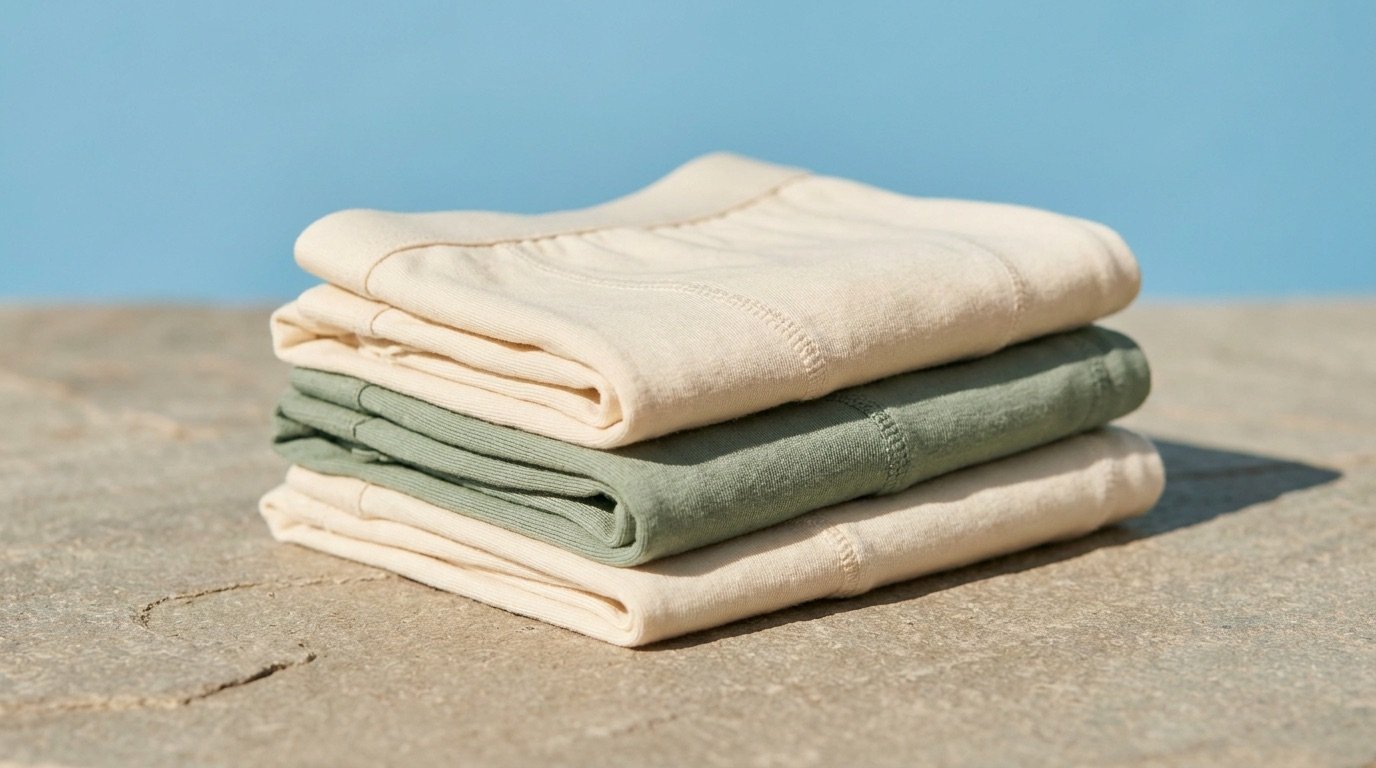
WAMA does something different: hemp-forward underwear. Hemp is naturally breathable and antimicrobial, which means less odor and a fabric that gets softer with every wash. And it grows with far less water and no pesticides. Underrated stuff, though the step that turns the plant into fabric complicates the clean story a little. The brand is PETA-Approved Vegan and Green America Certified, with sizing that runs inclusive up to 3XL. Worth knowing before you get attached: WAMA only makes men’s underwear. There’s no women’s range, so if that’s what you came for, Pact above is the one to look at.
Hemp has a slightly more substantial feel than cotton, which takes a wear or two to appreciate. For a natural, breathable fiber that most brands ignore entirely, WAMA owns the category.
Organic Basics: the minimalist essentials brand
Best for: plain, responsible essentials, if you’re comfortable with the ownership | Price: $14–$50 | Ownership: owned by Delta Galil (since 2022)
Some days you just want a plain, well-made basic with no logo and no fuss, made responsibly. Organic Basics is that brand. It runs on organic cotton and recycled materials, uses low-impact production and renewable energy in its supply chain, and holds its factories to fair, safe standards. The underwear, tees, and socks are quietly excellent.
It’s Scandinavian-minimal to a fault, so look elsewhere if you want color or personality. On the clothes alone, for responsible essentials that disappear into any wardrobe, it holds up.
One thing to weigh first, and it has nothing to do with the cotton. Delta Galil Industries acquired Organic Basics in 2022, and Delta Galil appears on the UN’s database of companies with business activities connected to Israeli settlements in the occupied Palestinian territory, listed since the database first appeared in 2020 and retained at the 2023 review. The certifier Eco-Stylist pulled its certification in 2025 for that reason alone, noting the brand’s own practices hadn’t changed.
That’s a values question rather than a product one, and it’s yours to answer. We just didn’t want you finding out afterward.
Proclaim: size-inclusive and thoughtfully made
Best for: inclusive sizing and nude shades that match real skin tones | Price: $17–$62 | Ownership: independent, woman-owned
Proclaim built its whole identity around inclusivity, in both sizing and skin-tone-matched nude shades that actually reflect a range of people. The pieces are made in Los Angeles from recycled and Tencel-based fabrics, and the brand is woman-owned and independent.
The range is more focused than a big basics brand’s, and it sits at a mid-tier price. But for size-inclusive, responsibly made underwear from a brand with a real point of view, it’s a standout worth knowing.
What we left off, and why
You won’t see the multipack underwear from fast-fashion giants here, and the reasons are the ones you’d expect: conventional cotton grown with heavy pesticide use, or cheap synthetic blends that are plastic against your skin, sewn in supply chains that stay deliberately vague about labor. Cheap underwear is cheap for reasons that get passed on to a farmer, a garment worker, or the planet. The brands above chose organic fibers and fair factories instead, and paid to prove it.
How to actually choose one
Don’t start with the brand. Start with the fiber and the fit.
If you want affordable organic cotton for the whole drawer, Pact is the default. If softness matters most, Boody’s bamboo is the one. Want a natural fiber that fights odor? WAMA’s hemp. And if size inclusivity is what’s been missing, Proclaim and WAMA both go further than most. For plain, responsible essentials with a recycling loop, Subset is the cleanest answer, with Organic Basics alongside it if the ownership question above doesn’t put you off.
If you’re really shopping for the loungewear and tee end of a basics drawer rather than underwear specifically, MATE the Label is worth a look alongside these. It’s founder-owned, a B Corp, and makes almost everything within about 17 miles of its own office in Los Angeles, which is an unusual thing to be able to say. It’s the most expensive option on this page and its organic claim rests on the fiber rather than a product-level certification, so it isn’t a straight swap for Pact.
One habit that beats any single purchase: buy fewer, better pairs and wear them longer. A drawer of eight organic-cotton pairs you actually like beats a fast-fashion 20-pack you’ll toss in a year.
Frequently asked questions
Why does the material in underwear matter?
Because it’s against the most sensitive skin on your body all day. Conventional cotton is one of the most pesticide-intensive crops in the world, and synthetic blends are essentially plastic that can trap heat and moisture. Organic cotton, bamboo, and hemp are grown or processed with far less chemical load, and natural fibers breathe better, which is healthier for skin.
What certifications should I look for in sustainable underwear?
GOTS (Global Organic Textile Standard) is the one to know for organic cotton, since it certifies both the material and the social and environmental conditions it was made under. OEKO-TEX Standard 100 confirms the fabric is free of harmful substances. For labor, look for Fair Trade Certified or Fairtrade International. A brand with none of these and a lot of “eco” language is worth a second look.
Is bamboo underwear actually sustainable?
Mostly, with a caveat. Bamboo grows fast with little water and no pesticides, which is the sustainable part. But turning it into soft viscose fabric is a chemical process, so the greenest bamboo brands use a closed-loop system that captures those chemicals. Boody sources responsibly, and the comfort and breathability are a real upgrade over synthetics.
Is sustainable underwear worth the higher price?
On cost-per-wear, usually yes. Organic-cotton and natural-fiber underwear tends to hold up better than cheap synthetic multipacks that pill and stretch out within a year, and brands like Pact keep the entry price close to conventional. Buying fewer, better pairs and keeping them longer ends up cheaper than repeatedly replacing fast-fashion ones.
Related reading
Building a more conscious wardrobe? Start with our guide to sustainable fashion, and see our picks for workout gear in the roundup of the best sustainable activewear brands. Most of the brands above also have a scored profile in our brand directory.