
WAMA
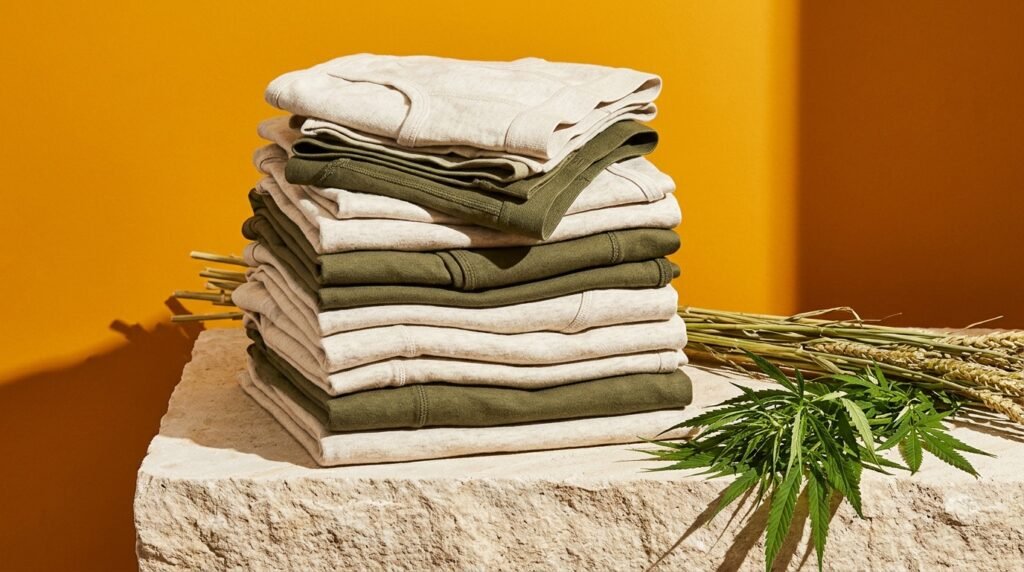
Quick verdict: Everyone in sustainable basics uses organic cotton or bamboo. WAMA went to hemp, and hemp turns out to deserve the attention: it’s breathable, naturally antibacterial so it resists odor, it needs a fraction of cotton’s water, and it softens rather than wearing out. The brand is independent, publishes its supply chain, and sizes to 3XL. The certifications are the softer ones. Our rating: 4.0 out of 5.
Who they are
Shakib Nassiri founded WAMA in Los Angeles in 2016 after working out that hemp’s properties, breathable and antibacterial, made underwear the obvious application rather than an unusual one. The brand is independent and founder-owned.
It publishes a supply chain page naming its manufacturing partner, which is more than most basics brands offer at any price.
What they get right
Hemp is a better fiber than cotton on almost every measure, and almost nobody uses it. It grows without pesticides, needs far less water than cotton, returns nutrients to soil, and produces more fiber per acre. The reason it’s rare is processing cost, not performance.
Naturally antibacterial, which is not a marketing claim but a property of the fiber. In practice it means less odor between washes, which matters most in exactly this garment.
It improves with age. Hemp starts substantial and softens with every wash rather than thinning out, so the useful life is longer than cotton’s.
Sizing runs to 3XL, further than most of the category.
Named supply chain, published rather than implied.
Where they fall short
The certifications are the soft ones. Green America Certified and PETA-Approved Vegan are real but neither is the fiber-and-factory audit that GOTS or Fair Trade provides. Subset holds all three of GOTS, OEKO-TEX and Fair Trade on comparable products, and that gap is the main reason WAMA sits at 4.0 rather than higher.
Hemp takes adjustment. It feels more substantial than cotton out of the packet and takes a few wears and washes to soften properly. Some people never warm to it.
The blend includes conventional elastane for stretch, which is a synthetic and isn’t biodegradable. Almost universal in underwear, worth stating anyway.
It’s also priced above Pact and Subset for what is, in certification terms, a lighter set of credentials.
What they sell and what it costs
Underwear, bras, undershirts and socks, in a small palette of natural tones. Underwear typically runs $20 to $28, with multipacks reducing the per-item cost.
Who it’s actually for
Anyone who runs hot, anyone bothered by odor between washes, and anyone curious whether hemp lives up to it. It’s also worth knowing about if organic cotton hasn’t held up for you.
If certification is what you weigh most, Subset. If softness is the priority, Boody.
Deals and discounts
No affiliate program on our side, so nothing here earns us anything.
Related reading
Frequently asked questions
Why hemp instead of organic cotton?
Hemp grows with little water and no pesticides, yields more fiber per acre, and is naturally antibacterial so it resists odor. It’s also more durable, softening with wear rather than thinning. The reason it isn’t everywhere is that processing hemp into soft fabric costs more than processing cotton, not that it performs worse.
Is hemp underwear scratchy?
It’s more substantial than cotton at first and it softens noticeably over the first several washes. If you’re expecting the immediate softness of bamboo you’ll be surprised on day one and probably converted by week three. If you want soft from the outset, Boody.
Is WAMA certified organic?
The hemp and cotton are described as organically grown, and the brand holds Green America Certification and PETA-Approved Vegan status. What it doesn’t hold is GOTS or Fair Trade certification, which are the audited fiber-and-factory standards. That’s the gap, and it’s why this scores below Subset.
Who owns WAMA?
Shakib Nassiri, who founded it in Los Angeles in 2016 and still runs it. No parent company and no acquisition.