
Made In
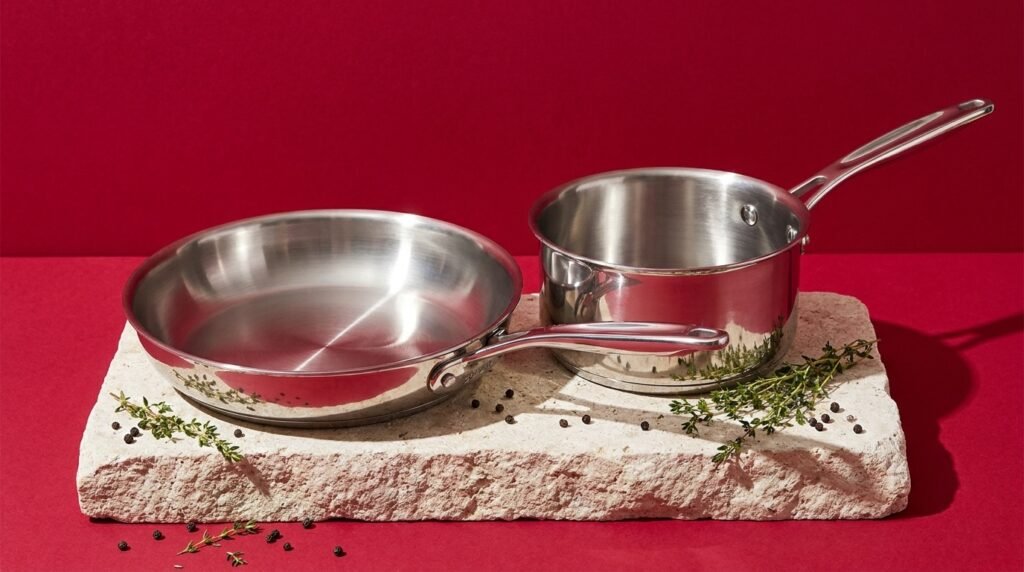
Quick verdict: The non-toxic cookware conversation is mostly about which coating is least bad. Made In’s answer, like Lodge’s, is to skip the coating entirely, but at the performance end: five-ply stainless and carbon steel of the kind restaurant kitchens run on. Nothing to scratch, nothing to off-gas, nothing to replace in three years. It’s expensive, it demands technique, and it holds no environmental certification whatsoever. Our rating: 3.7 out of 5.
Who they are
Jake Kalick and Chip Malt founded Made In in Austin in 2017, out of a family restaurant supply business that had been running for around a century. That lineage is the reason the brand behaves less like a startup and more like a supplier: it sells to professional kitchens as well as home cooks, and the products are specified accordingly.
It’s independent and privately held, though it has taken outside investment.
What they get right
No coating means no coating problem. Stainless steel and carbon steel are metal. There is nothing to degrade, nothing to release when overheated, and nothing to make the pan disposable. In a category where the premium option is a better non-stick that still wears out, this sidesteps the whole question.
It names its manufacturing partners, which is unusual: workshops in the United States, France and Italy, identified rather than implied. When our greenwashing guide tells readers to look for specifics, this is what that looks like in cookware.
It performs. Five-ply construction heats evenly and holds temperature, and the carbon steel takes a seasoning like cast iron at a fraction of the weight.
Buy-it-once durability. These pans outlast the buyer if treated reasonably, which is the only sustainability argument in cookware that really holds.
Where they fall short
There is no certification of any kind, and the rating reflects that honestly. No B Corp, no Climate Label, no published impact reporting. Steel production is energy-intensive, and Made In says very little about the footprint of its own supply chain. You’re buying durability and transparency about where, not evidence about impact.
It’s expensive. A single stainless pan costs multiples of a Lodge skillet, and a set runs into serious money.
Stainless steel is also not non-stick, and pretending otherwise is how people end up disappointed. Eggs need heat control and fat. There’s a learning curve, and the brand does sell a coated non-stick line if you want one, which reintroduces exactly the problem the rest of the range avoids.
What they sell and what it costs
Stainless steel and carbon steel pans, saucepans, stockpots, woks, knives and bakeware. Individual pans typically run $99 to $169, with sets considerably more.
Who it’s actually for
Someone who cooks a lot, wants professional performance, and would rather learn the technique than manage a coating’s lifespan. Also the right answer for anyone who found cast iron too heavy.
If you want the same no-coating logic for a tenth of the price, Lodge. If you want easy non-stick from day one, you’re back in the ceramic category and its tradeoffs.
Deals and discounts
No affiliate program on our side, so nothing here earns us anything.
Related reading
Frequently asked questions
Is stainless steel cookware non-toxic?
Yes, in the sense that matters here: there’s no synthetic coating to scratch off or break down at heat. Quality stainless can leach trace nickel and chromium, mostly with long acidic cooking, which is a consideration only if you have a diagnosed nickel sensitivity. For most people it’s the least complicated option available.
Why is Made In so much more expensive than Lodge?
Different material and different construction. Five-ply stainless is bonded layers of steel and aluminum, made in specialist workshops, and it heats far more evenly than cast iron. Whether that’s worth the difference depends on how much you cook. Both will outlive you.
Do I need to season carbon steel?
Yes, the same way as cast iron. It arrives bare or lightly seasoned and builds a non-stick surface through use with fat. The advantage over cast iron is weight and responsiveness; the cost is that it needs the same care and dislikes being left wet.
Does Made In have any sustainability certification?
No, and that’s the honest gap. There’s no B Corp, no Climate Label, no published impact data. What it does offer is named manufacturing partners and products durable enough that you stop buying replacements, which is a real argument but not a certified one.