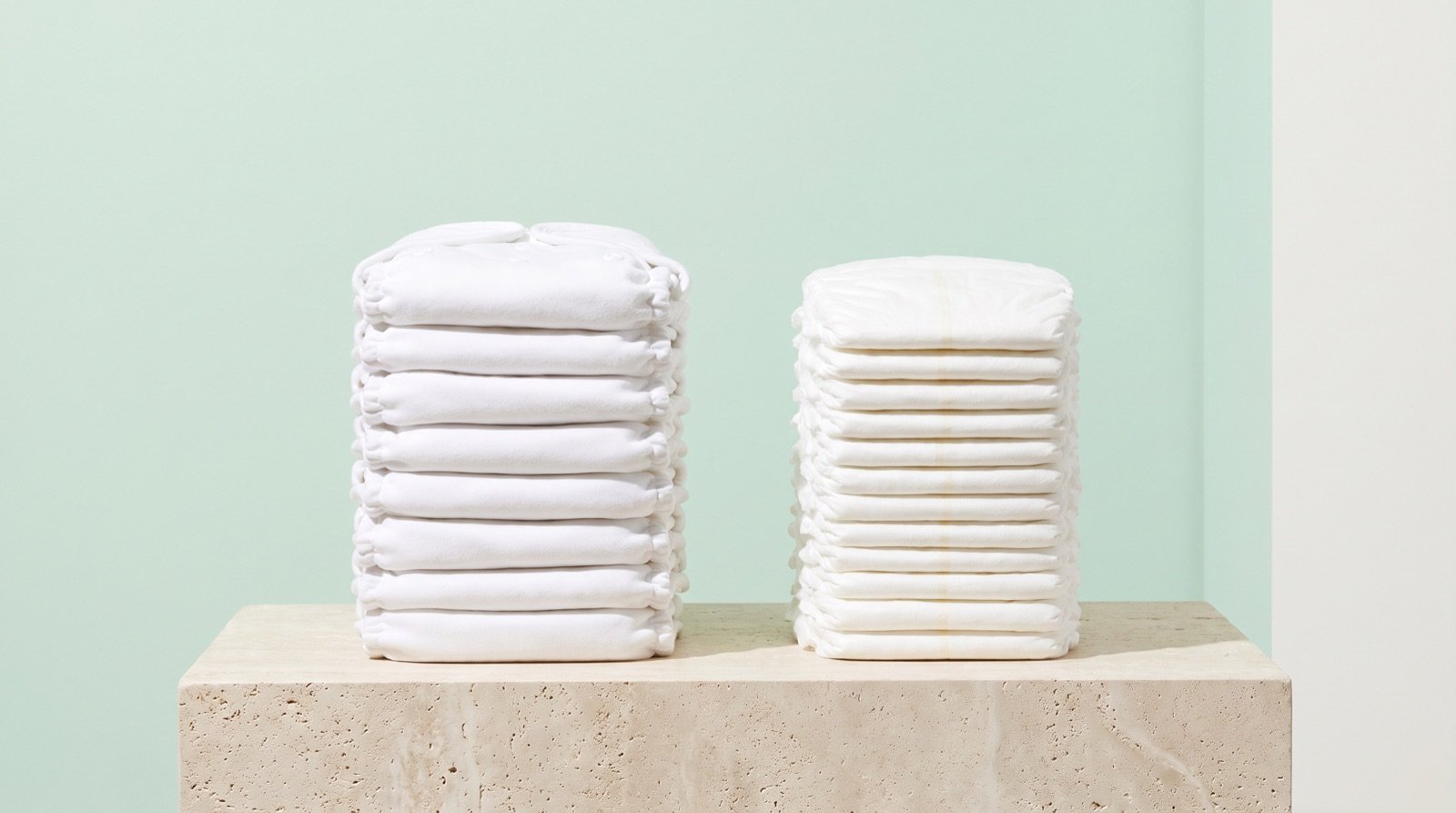
Cloth vs Disposable Diapers: The Honest Environmental Math
A baby goes through somewhere in the region of 5,000 to 6,000 diapers before potty training. Stacked up like that, the disposable pile looks indefensible and cloth looks like the obvious answer.
Then you run the numbers and it gets complicated fast.
Short answer: cloth clearly wins on solid waste, because disposables go to landfill and cloth doesn’t. Disposables generally win on water use, and often on energy, because washing has a footprint that lands entirely on you. Lifecycle assessments have repeatedly found the two much closer than intuition suggests, and that how you launder cloth swings the result more than the choice between cloth and disposable does. There’s no clean winner, which is an unsatisfying answer that happens to be the true one.
What cloth actually wins
Landfill volume, decisively. Disposable diapers are among the larger single contributors to household waste during the diapering years, they’re built around a polyethylene backsheet that doesn’t meaningfully degrade, and the volume is enormous.
Cost, usually, over a full diapering run and especially across more than one child. The upfront outlay is real and the ongoing cost is laundry rather than purchase.
And cloth has no undisclosed additives. No fragrance, no lotion, no wetness-indicator dye. If your reason for asking is a baby with reactive skin rather than the planet, that’s a straightforward advantage.
What disposables win, and why it surprises people
Water. Every wash cycle uses it, plus the water embedded in growing and processing cotton, which is a thirsty crop. A cloth system washed frequently at high temperature can consume a striking amount of water across two or three years.
Energy, often. Heating wash water and running a dryer is where cloth’s footprint concentrates, and the dryer is the single biggest lever in the whole comparison.
This is the part that trips people up. The environmental cost of a disposable is paid at the factory and the landfill, so it’s invisible to you. The cost of cloth is paid in your utility bill, so it’s invisible in a different way: you’re already paying it for other laundry and don’t attribute it to the diapers.
Why the studies keep landing on “it depends”
Lifecycle assessments comparing the two have generally found the results close enough that assumptions about laundry drive the conclusion. Wash temperature, load size, whether you tumble-dry, how many diapers you own, and whether they get used for a second child all move the answer more than the cloth-versus-disposable choice itself.
That’s not a dodge. It’s the actual finding: the variable with the most leverage is under your control, and it isn’t which product you buy.
It also means most confident claims in either direction are quietly smuggling in assumptions. A cloth advocate assuming cold washes and line drying and a disposable manufacturer assuming daily hot washes with a dryer can both produce honest-looking numbers pointing opposite ways.
The levers that actually decide it
If you use cloth, these are what move the needle:
Skip the dryer. Line drying removes the largest single energy cost. This one change does more than any other decision here.
Wash full loads, and not hotter than you need. Modern detergents work at lower temperatures, and most diaper laundry doesn’t require the hottest setting your machine offers.
Own enough diapers. More diapers means fewer, fuller loads, which is more efficient per diaper even though it’s more cotton up front.
Use them for a second child, or buy them used. Amortizing the manufacturing footprint across two children roughly halves it, and it’s the single biggest structural advantage cloth has.
The answer most families actually land on
Both. A hybrid setup, cloth at home where the washing machine is and disposables for daycare, travel, illness and the newborn weeks, is extremely common and is not a compromise anyone should feel bad about.
It also handles the thing lifecycle math ignores, which is that the best system is the one you’ll keep using. A cloth setup abandoned after six weeks because it was overwhelming has a worse footprint than disposables used thoughtfully for three years.
If you land mostly on disposables, the meaningful choices are within that category: fragrance-free, cleaner materials, and brands that disclose what’s in the product. That’s what our vetted diaper picks sort for, and what’s actually in a disposable diaper covers the construction. A few brands also run take-back composting programs, which chips away at the landfill problem that is cloth’s strongest argument.
Frequently asked questions
Are cloth diapers actually better for the environment?
On landfill waste, clearly yes. Overall, it’s close, because cloth shifts the footprint into water and energy used in your own home. Lifecycle studies have repeatedly found the two comparable, with laundry habits driving the result. Line drying, full loads, moderate wash temperatures and reusing the diapers for a second child are what make cloth come out meaningfully ahead.
Do cloth diapers save money?
Usually, over a full diapering run, and more so across multiple children. The upfront cost of building a stash is significant and the savings accrue gradually through the months you’d otherwise be buying packs. Factor in water, electricity and detergent, which are real if modest, and remember the resale value of used cloth diapers, which is better than most people expect.
Is the water use of cloth diapers a real problem?
It’s real but usually overstated in isolation. A cloth system adds meaningful laundry to a household, and cotton is water-intensive to grow. In a water-stressed region that’s a real consideration worth weighing. In most places the more decisive factor is energy, above all whether you tumble-dry, which is where cloth’s footprint concentrates.
Can you use cloth diapers part-time?
Yes, and most families who use cloth do exactly that. Cloth at home and disposables for daycare, travel and nights is a normal, sustainable pattern, and it captures much of the waste reduction without the parts people find hardest. Partial adoption you maintain for years beats full adoption you abandon in a month.
Related reading
The rest of this series: what’s actually in a disposable diaper, fragrance in diapers, and chlorine-free versus totally chlorine-free. For brands, see the best natural diapers, and for the laundry side, the best non-toxic laundry detergents.