The Best Non-Toxic Laundry Detergents That Actually Work
Do natural laundry detergents actually get anything clean, or do you end up with faintly damp-smelling towels and a guilty conscience? That fear is exactly why most people keep reaching for the blue stuff. And honestly, the early “eco” detergents earned it. They were weak, they were pricey, and they left your gym clothes smelling like a health-food store.
That was a decade ago. The category has moved on.
The reason this matters isn’t just clean clothes. Laundry detergent sits against your skin all day, on every shirt and every pillowcase, and a lot of conventional formulas hide behind the same “fragrance” catch-all we flagged in our piece on the hormone disruptors in cosmetics. One word on the label, dozens of undisclosed ingredients underneath it. Optical brighteners that stay on the fabric to trick your eye. Dyes that do nothing but tint the liquid. And 1,4-dioxane, a likely carcinogen that arrives as a factory leftover and never appears on a label at all.
So here’s how we picked. Four things had to line up:
- A real third-party certification: EPA Safer Choice, MADE SAFE, EWG Verified, or USDA Biobased.
- A short ingredient list: one you can actually read.
- No synthetic fragrance or optical brighteners.
- It had to clean: a real load of laundry, not just smell like it did.
That last one knocked out more brands than you’d think. If you want the reasoning behind that certification list, we’ve pulled apart what “non-toxic” is actually claiming and which marks survive scrutiny.
The short version, if you’d rather not read all eight: Dirty Labs is the one we’d hand someone who tried a natural detergent once and went back to Tide, because it actually cleans. If price is the thing stopping you, Meliora works out at about 16 cents a load, which undercuts most of the supermarket shelf.
These are the ones left standing.
Our picks at a glance
- Best certifications: Blueland
- Best cleaning power: Dirty Labs
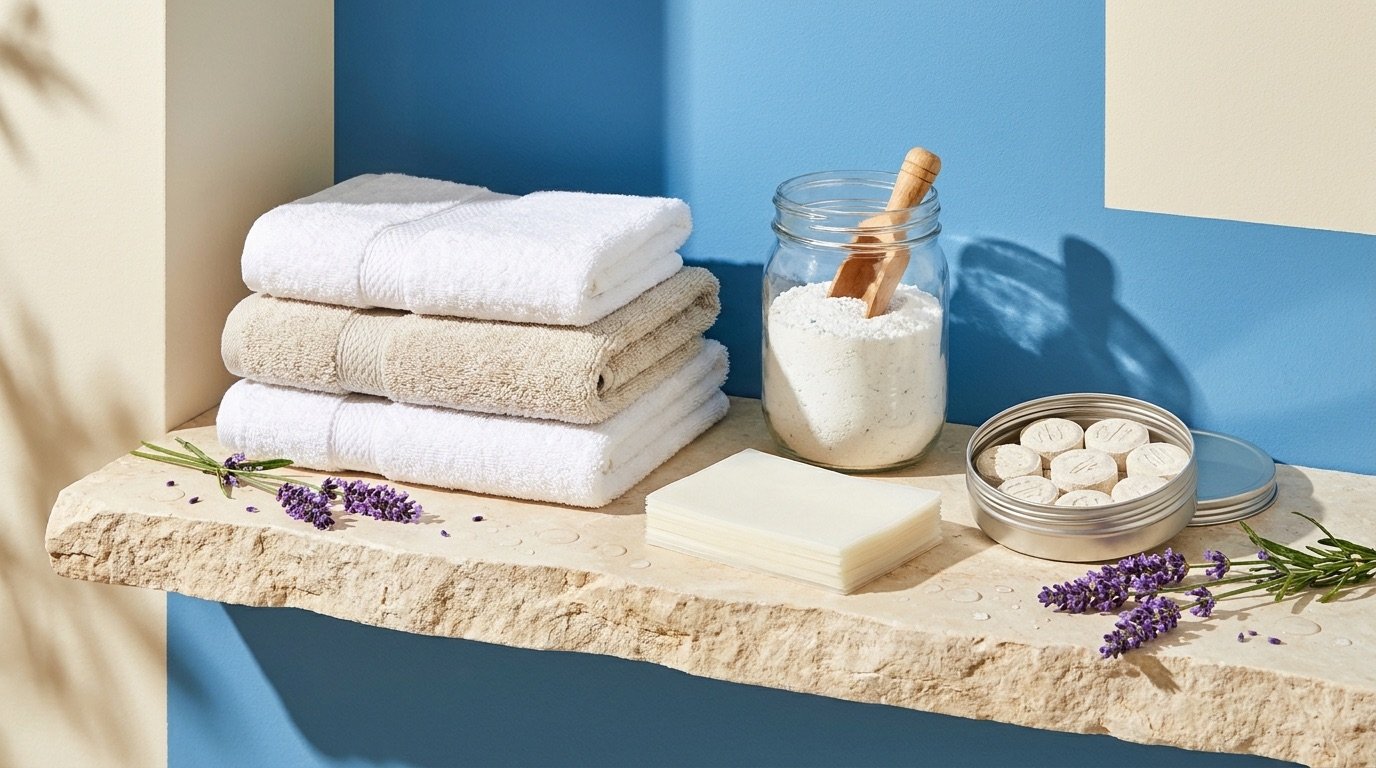
- Best for pod loyalists: Dropps
- Best budget: Meliora
- Best plastic-free sheets: Earth Breeze
- Best for sensitive skin: Molly’s Suds
- Best cheap EWG Verified pick: Attitude
- Best for chemical sensitivity: Branch Basics
| Brand | Format | Start with | Per load | Certifications |
|---|---|---|---|---|
| Blueland | Tablets | Starter Set, 60 tablets, $25 | $0.42 | B Corp, Cradle to Cradle, EPA Safer Choice |
| Dirty Labs | Liquid | Free & Clear, 32 loads, $16 | $0.50 | EPA Safer Choice, USDA Biobased |
| Dropps | Pods | Free & Clear, 64 loads, $28.89 | $0.45 | B Corp, USDA Biobased |
| Meliora | Powder | Plastic-free canister, $20.99 | $0.16 | MADE SAFE, B Corp |
| Earth Breeze | Sheets | 30 sheets, $20 | $0.33 | B Corp, Leaping Bunny |
| Molly’s Suds | Powder | Original, 120 loads, $22.99 | $0.19 | Leaping Bunny |
| Attitude | Liquid | 33.8 oz, $14.95 | $0.37 | EWG Verified |
| Branch Basics | Concentrate | Laundry Kit, $69 | $0.36 | MADE SAFE |
Prices checked on each brand’s own storefront on August 19, 2026, at full price rather than whatever promotion was running. Per-load figures use each brand’s own stated load count. Meliora’s is the HE figure; on standard loads it’s about $0.33.
Blueland: the most certified option on the shelf
Best for: anyone who wants the strongest paperwork and zero plastic | Price: around $25 | Start with: Laundry Starter Set, 60 tablets, $25 (about $0.42 a load) | Certifications: B Corp, Cradle to Cradle, EPA Safer Choice | Ownership: independent
If certifications are your tiebreaker, Blueland wins before the wash even starts. The company is B Corp, Cradle to Cradle and EPA Safer Choice certified, which is a stack almost nobody else in laundry holds all at once. You buy the refillable tin and its first 60 tablets once, then top up with tablets that ship in paper. No plastic jug, ever.
The tradeoff is texture and time. Tablets need a minute to break down, so they suit warm washes better than a quick cold cycle, and on ground-in stains you’ll want to pre-treat. For everyday loads, though, the clean is real and the plastic savings are the best on this list.
Dirty Labs: the one that ends the “natural doesn’t clean” argument
Best for: the strongest clean, if performance is what’s held you back | Price: around $16 | Start with: Free & Clear Bio Laundry Detergent, 32 loads, $16 (about $0.50 a load) | Certifications: EPA Safer Choice, USDA Certified Biobased | Ownership: independent
This is the brand I hand people who swear eco detergent can’t pull its weight. Dirty Labs runs on bio-based enzymes rather than harsh petrochemicals, and it’s USDA Biobased and EPA Safer Choice certified, packed into a recyclable aluminum bottle that runs 32 loads. It’s hyper-concentrated, so a tiny dose does a full load, and it cuts through sweat and body oil better than most conventional liquids I’ve used.
It isn’t cheap, and it’s mostly a direct-to-consumer buy rather than something you grab at the store. But if performance is the thing holding you back from switching, start here. It’ll change your mind.
Dropps: the easy on-ramp from pods
Best for: pod loyalists who want the convenience without the plastic tub | Price: $26–$30 | Start with: Free & Clear Pods, 64 loads, $28.89 (about $0.45 a load) | Certifications: B Corp, USDA Certified Biobased | Ownership: owned by Cot’n Wash, the Propper family business
Most people leaving conventional detergent are coming off Tide Pods, and Dropps makes that jump painless. Same grab-and-go pod format, none of the plastic tub. The pod range is USDA Biobased certified, the company is a B Corp, and everything ships in a plain cardboard box. It also won EPA’s Safer Choice Partner of the Year award, though that was back in 2017 and it’s recognition for the company rather than a current label on the box.
Two honest notes. Pods mean you give up control over dosing, so big or barely-dirty loads both get the same scoop. And a few of the scented versions lean on added fragrance, so go for the fragrance-free line if a clean label is the point.
Meliora: proof that clean laundry can be cheap
Best for: tight budgets and big families replacing a whole shelf | Price: around $0.16 a load | Start with: Laundry Powder, plastic-free canister, $20.99 (about $0.16 an HE load) | Certifications: MADE SAFE, B Corp | Ownership: independent
Here’s the one that breaks the “non-toxic costs a fortune” myth. Meliora’s powder is MADE SAFE certified and works out to around $0.16 a load, which undercuts plenty of conventional brands. It’s a certified B Corp out of Chicago, the ingredient list is four things you can pronounce, and there’s a properly fragrance-free version for reactive skin.
Powder isn’t for everyone. It wants to dissolve fully, so give it a moment in very cold water, and the packaging is plain kraft rather than pretty. But for the price and the certification together, nothing here competes.
Earth Breeze: the plastic-free sheet that fits in your mailbox
Best for: everyday laundry and anyone short on storage | Price: around $20 | Start with: Laundry Detergent Sheets, 30 sheets, $20 (about $0.33 a load) | Certifications: B Corp, Leaping Bunny | Ownership: independent
You’ve maybe seen these in ads. Earth Breeze makes pre-measured detergent sheets that dissolve in any water temperature, ship flat in a cardboard sleeve, and weigh almost nothing. The brand is cruelty-free and vegan, and it donates meals to food banks with every order. No jug to haul, no plastic to recycle, and it takes up about as much shelf space as a paperback.
Sheets run a little softer on set-in stains than a strong liquid, so treat the bad spots first. For everyday laundry and anyone short on storage, though, it’s the easiest low-waste swap going.
Molly’s Suds: the sensitive-skin staple
Best for: babies, eczema, and skin that reacts to everything | Price: $15–$23 | Start with: Original Laundry Powder, 120 loads, $22.99 (about $0.19 a load) | Certifications: Leaping Bunny | Ownership: founder-owned since 2010
Molly’s Suds built its whole reputation on being gentle enough for newborns and eczema-prone skin. The original powder keeps to a short mineral-based recipe, it’s Leaping Bunny certified cruelty-free, and it earns an A rating in EWG’s cleaning guide.
Worth being precise here: an EWG “A” rating is not the same as being EWG Verified. It’s a strong grade, but it’s a rating EWG assigns rather than a mark a brand is audited against, so it sits a notch below Attitude below. This distinction catches out a lot of brands, and a lot of write-ups, including ours in the past. Still, for a cheap, no-drama powder that sensitive skin tolerates, it’s a longtime favorite for good reason.
Attitude: the cheapest EWG Verified line you’ll find
Best for: verified-safe everyday laundry at drugstore prices | Price: $20–$39 | Start with: Laundry Detergent, 33.8 oz, $14.95 (about $0.37 a load) | Certifications: EWG Verified | Ownership: founder-owned since 2006
Attitude, out of Canada, does the same trick in laundry that it pulls in skincare: real certification at drugstore prices. Much of the laundry range is EWG Verified, the ingredient lists are short, and refill options cut down on packaging. If you’re swapping out a whole home’s worth of cleaning products at once, the math works in your favor here.
The formulas are functional rather than luxurious, and on the very worst stains they’re average, not miraculous. For a verified-safe everyday detergent you can restock without wincing at the price, that’s a fair trade.
Branch Basics: one bottle for the chemical-sensitive household
Best for: chemical sensitivity, allergies, and anyone simplifying to one product | Price: around $55 | Start with: Laundry Kit, $69 (about $0.36 a load) | Certifications: MADE SAFE | Ownership: independent
Branch Basics takes a different route. Instead of a laundry-specific bottle, you get a MADE SAFE certified concentrate that you dilute for laundry, dishes, floors, and everything else. It’s fragrance-free by design and built for people with real chemical sensitivities, so it’s the one families reach for after a diagnosis or a bad reaction.
That flexibility is also the catch. It’s expensive up front, and because it’s a do-everything concentrate rather than a specialist detergent, results on heavy laundry stains take a little more effort than a targeted formula. For a truly fragrance-free whole-home system, though, few things match it.
What to avoid on a detergent label
Detergent is the category where the label tells you least, because the two things most worth avoiding never appear on it at all.
1,4-dioxane, which is never listed. It’s a likely human carcinogen, and it isn’t an ingredient. It’s a leftover from the process that makes the cheap foaming agents in conventional detergent, so nobody has to declare it. New York set the first US limit and testing shows the numbers fell hard afterward, which is a rare piece of good news and also the reason a bottle bought today isn’t the bottle from 2020.
Optical brighteners, which don’t clean anything. They’re the reason “brightening” detergent works: they stick to the fabric and convert UV light into visible blue so whites read whiter to your eye. The dirt is still there. We wrote up what they actually do, including why they’re a problem for skin that reacts and for waterways.
The word “fragrance.” One word, dozens of undeclared ingredients, and in laundry it stays on the fabric against your skin for the life of the garment. The loophole that allows it is the same one in cleaning products generally. Unscented is not the same as fragrance-free, either: unscented often means a masking fragrance was added to cover the base smell.
And then the claim itself. “Non-toxic” isn’t regulated and nobody checks it before it goes on a bottle, which is why we lean on certifications instead. What the word actually means on a detergent covers which marks are worth something and which are decoration.
How to actually choose one
Don’t start with the brand. Start with your skin, your washer, and how you like to dose.
If anyone in the house has sensitive skin or eczema, go fragrance-free first and let the certification decide between Molly’s Suds, Meliora, or Branch Basics. If cutting plastic is the goal, Blueland’s tablets or Earth Breeze’s sheets get you there with almost no waste. If you just want the strongest clean and don’t mind paying, Dirty Labs is the one. And if budget rules everything, Attitude and Meliora deliver certified-safe laundry for less than the conventional stuff you’re leaving behind.
The single biggest lever, though, costs nothing to pull: skip anything with “fragrance” or “parfum” on the label. That one choice removes more hidden ingredients than any other swap you can make.
Frequently asked questions
Do non-toxic laundry detergents really clean as well as regular ones?
The good ones, yes. Enzyme-based options like Dirty Labs and Dropps handle sweat, body oil, and everyday dirt as well as conventional liquids, and independent testing backs that up. Where you manage expectations is deep-set stains: with sheets, powders, and tablets, a quick pre-treat on the bad spots closes the gap. The days of eco detergent leaving clothes dingy are mostly behind us.
What ingredients should I avoid in laundry detergent?
Start with “fragrance” or “parfum”, which can hide dozens of undisclosed ingredients under one word. Then optical brighteners, which coat fabric to fake a whiter look, along with synthetic dyes, chlorine bleach, and phosphates. Worth knowing about one more that won’t be printed anywhere: 1,4-dioxane rides along as a manufacturing leftover with ingredients like sodium laureth sulfate. Our non-toxic cleaning guide goes deeper on why these matter and what they do.
Which laundry certifications actually mean something?
Four carry real weight. EPA Safer Choice and MADE SAFE both audit the full ingredient list against strict safety criteria. EWG Verified holds products to EWG’s own strict standard. USDA Biobased tells you how much of the formula comes from renewable sources rather than petroleum. A plain “natural” or “eco” claim with none of these behind it means nothing, and “chemical free” can’t mean anything at all.
Do these work in HE machines, and are they septic safe?
All eight are HE compatible, which matters because HE machines use less water and a high-sudsing detergent leaves residue. Powders and concentrates are the ones to dose carefully, since the scoop is the only thing stopping you overdoing it. On septic systems, the certifications do the work here: EPA Safer Choice and MADE SAFE both screen for what happens downstream, so Blueland, Meliora, Attitude and Branch Basics are the safe assumptions. Skip anything with optical brighteners regardless.
Does non-toxic detergent work in cold water?
Mostly yes, and this is where the enzyme-based ones earn their price. Enzymes break down protein, starch and grease at low temperatures, which is why Dirty Labs cleans as well as it does at 30 degrees. Powders are the weak spot: some don’t fully dissolve in properly cold water, so if you wash cold by default, a liquid or a pre-dissolved tablet is the safer pick.
Powder, liquid, sheet or pod: does the format matter?
For cleaning power, barely. For everything else, quite a lot. Powder is the cheapest per load and the easiest to package without plastic, and it’s the fussiest in cold water. Liquid doses easily and ships heavy, because you’re paying to move water. Sheets and tablets are the lightest and the most storage-friendly. Pods are the most convenient and the hardest to dose down for a small load, and they’re the format where the wrapper itself is worth a thought.
Are natural laundry detergents safe for babies and sensitive skin?
Generally yes, and they’re often the better choice, because the biggest triggers for skin reactions are the fragrance and dyes that these brands leave out. For newborns or eczema-prone skin, pick a fragrance-free, third-party-certified option like Molly’s Suds, Meliora, or Branch Basics, and run an extra rinse cycle for the first few washes.
Related reading
Want the detail behind the picks? We’ve written up each of the things we screened for: what “non-toxic” actually claims, the fragrance loophole, optical brighteners, and 1,4-dioxane and what lab testing found.
Washing cloth diapers, or just the laundry a baby generates? The honest math is in cloth versus disposable diapers, where how you launder swings the result more than the choice does.
Rethinking the rest of the house too? Our guide to the best zero-waste swaps for a plastic-free home covers the kitchen, bathroom, and cleaning cupboard. And if you want to understand the ingredients behind all of this, start with our non-toxic cleaning guide. Each brand above has a scored profile in our brand directory.