The Fragrance Loophole: What One Word Hides in Your Cleaning Products
A team of researchers led by Anne Steinemann did something nobody had bothered to do before. They put air sampling equipment on the outside of residential dryer vents, ran normal loads of laundry, and analyzed what came out.
They found more than 25 volatile organic chemicals venting into the neighborhood air during a load washed with fragranced detergent and dried with a scented sheet. Seven of them are classified by the EPA as hazardous air pollutants. Two of those, acetaldehyde and benzene, are carcinogenic hazardous air pollutants that the agency assigns no safe exposure level.
The acetaldehyde coming out of those vents measured more than 25 times the average level in outdoor air.
That’s the smell people describe as clean.
One word, dozens of chemicals
“Fragrance” on an ingredient list isn’t an ingredient. It’s a category, and in the US it has been treated as a trade secret for decades.
A single scent can be built from dozens of separate chemicals. The blend counts as proprietary, so historically the whole thing collapsed into one word, and neither you nor a regulator could see inside it. Same word, same rule, whether you’re reading a bottle of perfume or a jug of detergent.
You may have assumed this was a cosmetics problem. It’s actually broader in cleaning products, because the exposure works differently. Perfume goes on your wrist. Detergent goes onto every surface your body touches for eight hours at a stretch, and then a share of it goes airborne through a hot dryer and into the room.
Why phthalates ended up in there
Scent is volatile by nature. Left alone it evaporates fast. That’s a problem when you’re selling laundry that still smells like laundry three days later.
So the fix is a fixative. For a long time the cheapest good one was diethyl phthalate, or DEP. It’s a solvent that slows evaporation and makes a scent last. It’s also a phthalate, from the same family we went through in our piece on endocrine disruptors in cosmetics, where the reproductive-effect research sits.
And it was invisible. DEP counts as a fragrance ingredient. Fragrance is one word. So a product could carry a phthalate without a single letter on the label suggesting it.
That’s the loophole in one sentence. Not that phthalates were secretly banned and used anyway. That the disclosure rules had a hole in them exactly the right shape.
The law that fixed the information, not the product
Cleaning products got something cosmetics still don’t have.
California passed the Cleaning Product Right to Know Act in 2017, and Governor Jerry Brown signed it that October. It made California the first state to require full ingredient disclosure on cleaning products. Companies had to publish online lists from the start of 2020 and print disclosure on the label itself from the start of 2021. New York runs a similar disclosure program.
Worth noticing how different this is from what New York did about 1,4-dioxane. That law capped a chemical and forced the product to change. This one didn’t ban anything. It just turned the lights on.
The fragrance part is the sharp end. The Act requires that fragrance allergens on the EU’s Annex III list be named individually when they’re present at or above 0.01 percent, and phthalates sit on the designated list that has to be disclosed, DEP and DEHP and diisobutyl phthalate among them.
So the honest answer to “what’s in the fragrance” stopped being “nobody will tell you.” For a lot of products, it’s now a webpage.
How to actually use that
Manufacturers publish these lists because they’re required to, not because they want traffic to them, so they’re rarely one click from the homepage. Search the brand name plus “ingredient disclosure” or “ingredient communication” and you’ll usually land on it. It should only take a couple of minutes.
What you’re looking for is whether the fragrance breaks down into named chemicals or stays a black box. A brand that lists 30 fragrance ingredients isn’t worse than one that lists none. It’s more likely to be the honest one.
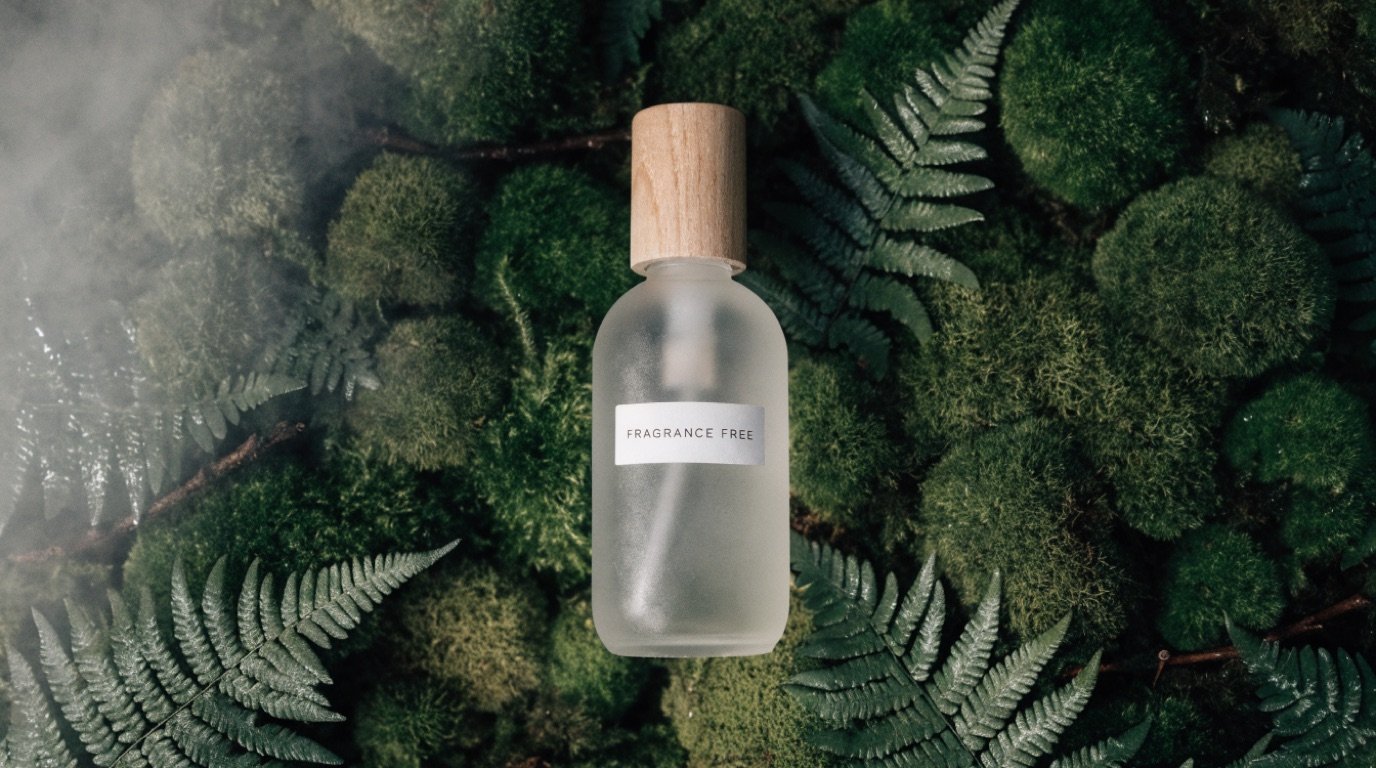
Or take the shortcut. Fragrance-free removes the entire question. No blend, no fixative, nothing to audit, and it costs nothing extra.
What I’d actually do
If someone in your house has asthma, migraines, eczema, or a baby, go fragrance-free and stop thinking about it. That single swap removes more undisclosed ingredients than any other change you can make in the cleaning cupboard, and it’s the one I’d make first every time.
Branch Basics is fragrance-free by design and MADE SAFE certified, built for households where somebody reacts to things. Meliora publishes every ingredient at full strength and sells a properly unscented version, also MADE SAFE certified. Molly’s Suds keeps its powder to five listed ingredients, which is its own kind of disclosure.
And skip the dryer sheets regardless of brand. That study measured its worst numbers on the load that used one, they’re single-use, and wool dryer balls do the anti-static job without venting anything. If you want scent in your laundry, a few drops of essential oil on a wool ball gets you there and you’ll know precisely what’s in it.
One thing I’d push back on: “unscented” and “fragrance-free” are not the same claim. Unscented can mean a masking fragrance was added to cover a base smell, which is more fragrance rather than less. Fragrance-free is the phrase that means what you think it means.
Frequently asked questions
Why is “fragrance” allowed to be a single word?
A scent blend can contain dozens of separate chemicals, and US trade secret protection has historically let all of them sit behind the single word “fragrance.” That can include solvents and fixatives like diethyl phthalate, along with allergens and volatile chemicals that never appear by name.
Do cleaning products have to disclose fragrance ingredients now?
In California, largely yes. The Cleaning Product Right to Know Act of 2017 requires online ingredient lists from 2020 and on-label disclosure from 2021, including individual naming of EU-listed fragrance allergens present at 0.01 percent or more, plus designated chemicals such as phthalates. New York has its own disclosure program. Because brands don’t make separate national formulas, those lists are usually the truth about the bottle you own.
Are phthalates still used in laundry detergent?
Less than they were, and disclosure rules are the reason. Once phthalates had to be named rather than folded into “fragrance,” a lot of brands reformulated rather than print them. Fragrance-free products sidestep the question completely, since a fixative has nothing to fix.
Is scented laundry bad for indoor air quality?
Fragranced laundry products emit volatile organic chemicals during washing and drying, and dryer-vent sampling found more than 25 of them, including acetaldehyde and benzene, which the EPA treats as carcinogenic hazardous air pollutants. Real exposure depends on ventilation and how much you use. Dropping dryer sheets and switching to fragrance-free detergent removes most of the source.
Related reading
For detergents that skip synthetic fragrance entirely, see the best non-toxic laundry detergents. The same one word turns up somewhere with a much worse exposure profile, which we cover in fragrance in diapers. The rest of this series: 1,4-dioxane and what testing found, optical brighteners and why they stay on your clothes, and what “non-toxic” is really claiming. Our non-toxic cleaning guide covers the whole cupboard, and every brand here has a scored profile in the brand directory.
Sources: Steinemann et al., Chemical emissions from residential dryer vents during use of fragranced laundry products, Air Quality, Atmosphere & Health, 2013. California Legislature, SB-258 Cleaning Product Right to Know Act of 2017. Breast Cancer Prevention Partners, California Cleaning Product Right to Know Act.