Clean Wax, Dirty Air: Why How You Burn a Candle Matters More
Here’s a number that should reorganize how you think about candles.
Researchers measuring particulate output from reference candles found paraffin, soy, palm and stearin all landing in the same range: roughly 6 to 10 micrograms of particulate per gram of wax burned. Beeswax came in higher, around 33.
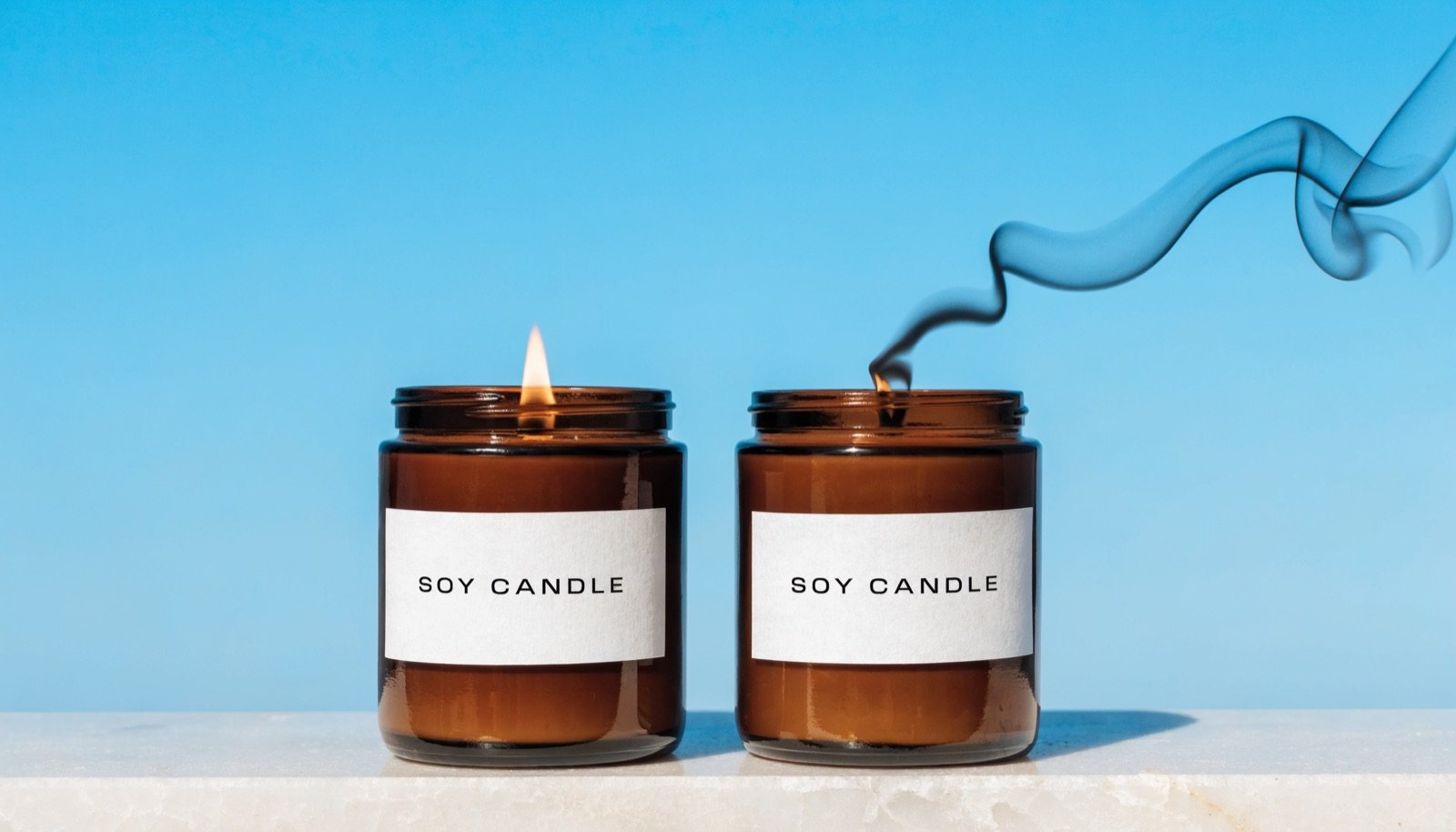
Then they tested candles deliberately set up to burn badly. A high-soot soy candle produced 146. A high-soot paraffin one produced 273.
Read that again. The gap between a good soy candle and a bad soy candle is far larger than the gap between soy and paraffin. The wax on the label is not the variable doing most of the work.
What actually makes soot
Soot is unburned carbon. It appears when the flame gets more fuel than it can completely combust, and the things that cause that are mechanical rather than chemical.
An overlong wick is the main culprit. As a wick grows it draws up more wax than the flame can process, the flame stretches and flickers, and the excess leaves as black carbon.
Drafts do the same thing by a different route. A flame guttering in moving air keeps changing shape, combustion keeps getting interrupted, and each interruption throws particulate.
Container shape and burn length matter too. A candle burned down into a deep narrow jar starves the flame of oxygen, and a very long burn overheats the wax pool.
There’s an uncomfortable corollary here for the clean-candle category. Research on natural candles has found that soy and beeswax candles, and those with wooden or multiple wicks, can promote unstable combustion and more ultrafine particles. The wood wick that crackles so pleasantly is a bigger flame doing a less even job. That doesn’t make wood wicks bad, but it does mean “natural” is not a synonym for “clean-burning.”
Every candle adds particles
The other thing worth being straight about: no candle improves your air. Burning something indoors always adds to what’s in it.
A 2025 study in Scientific Reports tracked scented candle use in a real room and found PM10 peaking at about 1.5 times baseline within five minutes of lighting, with the finer PM2.5 and PM1 fractions still elevated at three and six meters away as time went on. Other work has attributed up to 58% of a home’s ultrafine particle load to as little as two hours of candle burning.
Testing on beeswax found the same thing from the opposite direction. Beeswax candles are often sold as air-purifying, on a claim about negative ions. In measurement, particulate levels never dropped to zero, because a burning candle adds particles to a room rather than removing them.
So the goal isn’t a candle that cleans your air. It’s a candle that adds as little as possible, burned in a way that keeps that number low.
Burning one properly
The practical part is short, and it’s worth more than switching wax.
Trim the wick to about a quarter inch before every single light. This is the highest-value habit available and most people skip it.
Let the first burn go long enough for the melt pool to reach the edge of the container, which prevents tunneling and keeps later burns stable.
Keep it out of drafts: away from open windows, doorways, and air vents.
Cap individual burns at around three to four hours, then let it cool before relighting.
Ventilate. Cracking a window while a candle burns does more for the air in the room than any wax choice on the shelf.
Do all that and the wax question becomes the smaller one. Which is roughly the shape of every honest answer on this site: the purchase matters, and the habit matters more. Our roundup of the best non-toxic candles covers the purchase, and the paraffin question covers what the wax debate is really about.
Frequently asked questions
Does a wood wick burn dirtier than cotton?
It can. Wood wicks produce a wider flame and research on natural candles has linked wooden and multi-wick designs to less stable combustion and more ultrafine particles. Plenty of wood-wick candles burn perfectly well. The point is that the material is not automatically the cleaner choice, and a wood wick still needs trimming, back to about an eighth of an inch, with the charred edge snapped off.
Do beeswax candles purify the air?
No. The negative-ion claim is marketing, and measurement shows particulate in the room goes up rather than down when one burns. Beeswax has genuine merits, including a long slow burn and a natural material with no petroleum in it, but air purification isn’t among them.
Is a candle worse than cooking for indoor air?
Frying and high-heat cooking usually put out far more particulate than a candle does, which is useful context rather than a reason to relax. Both argue for the same fix: ventilation. If you run an extractor fan while cooking, the same instinct applies to a candle in a closed room.
How do I know if my candle is burning badly?
Look for black soot marks creeping up the inside of the jar, a flame taller than about an inch, visible flickering with no draft, or smoke when you blow it out. Any of those means trim the wick and check for moving air.
Related reading
More on what you’re burning: is paraffin wax actually toxic, soy versus beeswax versus coconut, and what’s inside the wick. For the candles we’d buy, see the best non-toxic candles.