Is Stainless Steel Safe? Including the Lead-Seal Question
Did you know that most vacuum-insulated bottles are sealed with a small pellet of lead?
Not the inside. Not the part your drink touches. A pellet at the bottom of the outer shell, covered by a disc of stainless steel, left over from how the vacuum gets sealed. It became a news story in January 2024, and the way it was reported made it both scarier and less useful than it should have been.
Short answer: Stainless steel itself is one of the safest materials you can drink from, though new pans and acidic contents do release detectable nickel and chromium. The lead seal is real on many insulated bottles, sits outside the drink path under a steel cover, and the class action built on it has been dismissed twice. Several brands use lead-free seals and say so openly, which is the easy way to skip the argument.
What stainless steel is, and what comes off it
“18/8” and “304” describe the same thing: an alloy that’s roughly 17.5 to 20% chromium and 8 to 11% nickel. The 316 grade adds 2 to 3% molybdenum, which buys corrosion resistance, and you’ll see it on pricier bottles.
Those metals don’t stay put under every condition. In a 2013 study in the Journal of Agricultural and Food Chemistry, researchers simmered tomato sauce in stainless pans for six hours and found nickel rose as much as 26-fold and chromium 7-fold against a control, with longer cooking pushing both higher still. Two details matter more than the multipliers. New stainless leached the most, and leaching dropped with each wash-and-reuse cycle, stabilising after about the sixth.
Boiling and acidity do the same thing in miniature. An Italian team boiled solutions at pH 2.3, 7.7 and 9 in 18/10 pots and found release rose with time, was higher in unused pots and at low pH, and varied between manufacturers. Their conclusion was the useful part: in every experiment the amounts released stayed below known allergy-triggering thresholds, so these pots are safe for the large majority of nickel- and chromium-allergic people, while someone highly sensitive still has to think about total dietary nickel.
That caveat isn’t niche. Nickel allergy runs at roughly 8 to 19% of European adults, and nickel is consistently the most commonly detected allergen in North American patch testing at 17.5%. If you’re in that group, 316 steel and a bottle you’ve used for a while are both reasonable hedges.
The lead pellet, explained properly
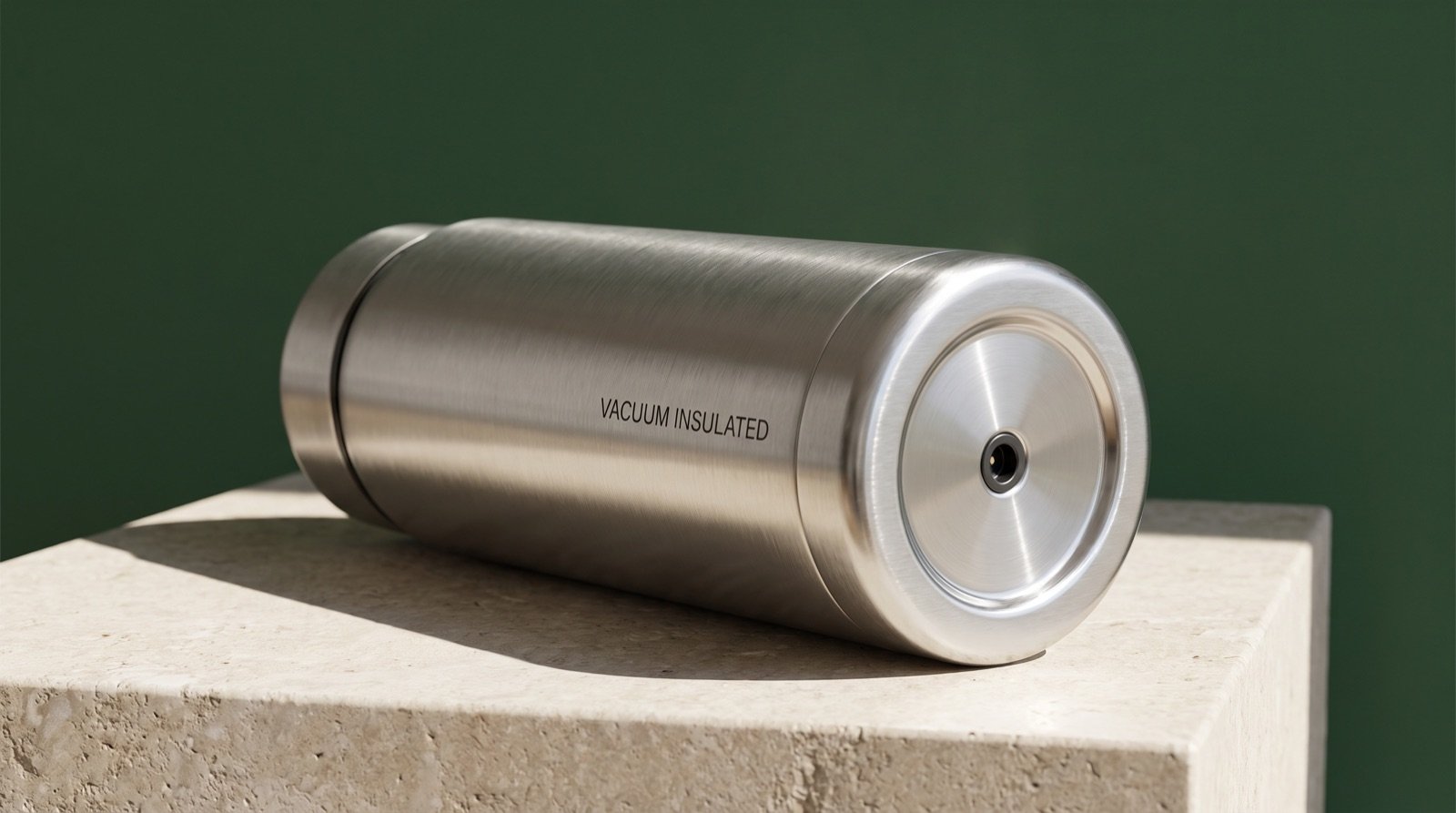
Now the part people actually came for. Vacuum insulation needs a sealed port at the base of the outer wall, and the traditional way to seal it is a bead of leaded solder, covered by a stainless cap.
In January 2024, Stanley confirmed the practice in a statement widely quoted at the time: it seals its vacuum-insulated products with an industry-standard pellet that includes some lead, and the pellet is completely enclosed by a stainless-steel cover, making it inaccessible to consumers. The same post reports XRF readings on exposed pellets consistent with high-lead solder, and reader accounts of covers coming off.
Three things to hold together here.
The seal is outside the drink path. Nothing in what we read describes a route from an intact seal into your water. The exposure scenario people worry about is a cover that falls off, leaving the pellet reachable.
The litigation has gone badly for the plaintiffs. The proposed class action against Stanley’s parent, Pacific Market International, was dismissed again in April 2026, with the judge finding no specific and plausible risk of harm and no evidence the pellets could contaminate contents, be ingested or be inhaled. Plaintiffs were given leave to amend, and an earlier dismissal came in January 2025.
And XRF testing, which is what most viral posts rely on, measures elemental content at the spot it’s pointed at. It doesn’t measure migration into a drink, its depth of penetration is limited, and consumer goods are usually multi-layer, so a reading tells you lead is present somewhere in that spot rather than that it’s reaching you.
The brands that skipped it
The cleanest answer to all of this is a bottle built without the pellet, and three brands say so in their own words.
Klean Kanteen‘s FAQ is the most specific: instead of lead-based products, it uses silica and glass plugs to create the vacuum seal, a material it describes as six to seven times more expensive than the lead-based alternative. Owala states flatly that its bottles are lead free and always have been. Purist says its 316 bottles are lead-free including the vacuum-sealed components.
One counterweight, because a brand statement is a claim rather than a test. In July 2026 a Prop 65 60-day notice named Owala’s 24 oz FreeSip and its retailer over lead exposure, with the alleged route being hand-to-mouth contact rather than the drink itself. A 60-day notice is an allegation that hasn’t been tested, and we’d want to see where it lands before reading anything into it.
| Quick facts | Stainless steel bottles |
|---|---|
| Common grades | 18/8 (304), and 316 with added molybdenum |
| What can leach | Nickel and chromium, most from new steel, acidic contents and long heat |
| Lead | In the external vacuum seal on many insulated bottles, under a steel cover |
| Lead-free seals | Klean Kanteen, Owala and Purist state it publicly |
| Who should care most | People with nickel allergy, and anyone whose base cover has come loose |
What we’d actually do
Buy the bottle you’ll carry daily and stop reading forum threads about it. Steel is inert enough that the real question is nickel for allergic people, not general toxicity.
If the lead seal bothers you, and it’s a reasonable thing to prefer against, buy one of the brands that doesn’t use it. They’re on our list of vetted bottles, and a single-wall bottle has no vacuum seal to argue about at all.
If the cover on the base of your insulated bottle is loose or missing, stop using it. That’s the one scenario where the pellet stops being theoretical.
And if you’re switching away from plastic for this reason, the thing you’re actually escaping is covered in microplastics from plastic bottles and BPA-free doesn’t mean safe.
Frequently asked questions
Does stainless steel leach into water?
Barely, under normal drinking conditions. The leaching studies that found meaningful nickel and chromium used hours of simmering acidic food, and even then the Italian boiling study found levels below known allergy-triggering thresholds. Cold water in a bottle is about the gentlest condition stainless steel ever sees.
Do water bottles contain lead?
Many insulated bottles use a lead-containing pellet to seal the vacuum, covered by a steel disc on the base, outside the drink path. Stanley confirmed the practice in 2024. Klean Kanteen, Owala and Purist all state publicly that their bottles are lead-free, and single-wall bottles have no vacuum seal at all.
Is 316 stainless steel better than 18/8?
For durability and corrosion resistance, yes. 316 adds molybdenum, which helps it resist acids and salt. For everyday water, the difference is small. If you have a nickel allergy or you fill your bottle with citrus or electrolyte mixes, 316 is the safer pick.
Is it safe to put acidic drinks in a stainless steel bottle?
For a day’s drinking, yes. Acidity increases metal release, and the studies that measured it used hours of boiling rather than cold juice in a bottle. Rinse rather than soak overnight, and a used bottle leaches less than a brand-new one.
Can you put stainless steel bottles in the dishwasher?
Most single-wall bottles are fine. Insulated bottles vary, and manufacturers often advise hand washing because repeated heat cycles can stress the seal and finish. We couldn’t find a study measuring metal release from dishwasher cycles specifically, so follow the maker’s instructions rather than internet confidence.
Related reading
The rest of this series: BPA-free doesn’t mean safe, microplastics from plastic bottles, and aluminum bottles and their liners. For vetted picks, see the best non-toxic water bottles. On the cookware side, we’ve looked at whether aluminum pans are safe.
Sources: Kamerud, Hobbie & Anderson, Journal of Agricultural and Food Chemistry, 2013. Guarneri et al., Contact Dermatitis, 2017. Ahlström et al., Contact Dermatitis, 2019. DeKoven et al., Dermatitis, 2018. Reuters via BNN Bloomberg, Stanley lawsuit dismissal, April 2026. California Attorney General, Prop 65 notice 2026-03160.