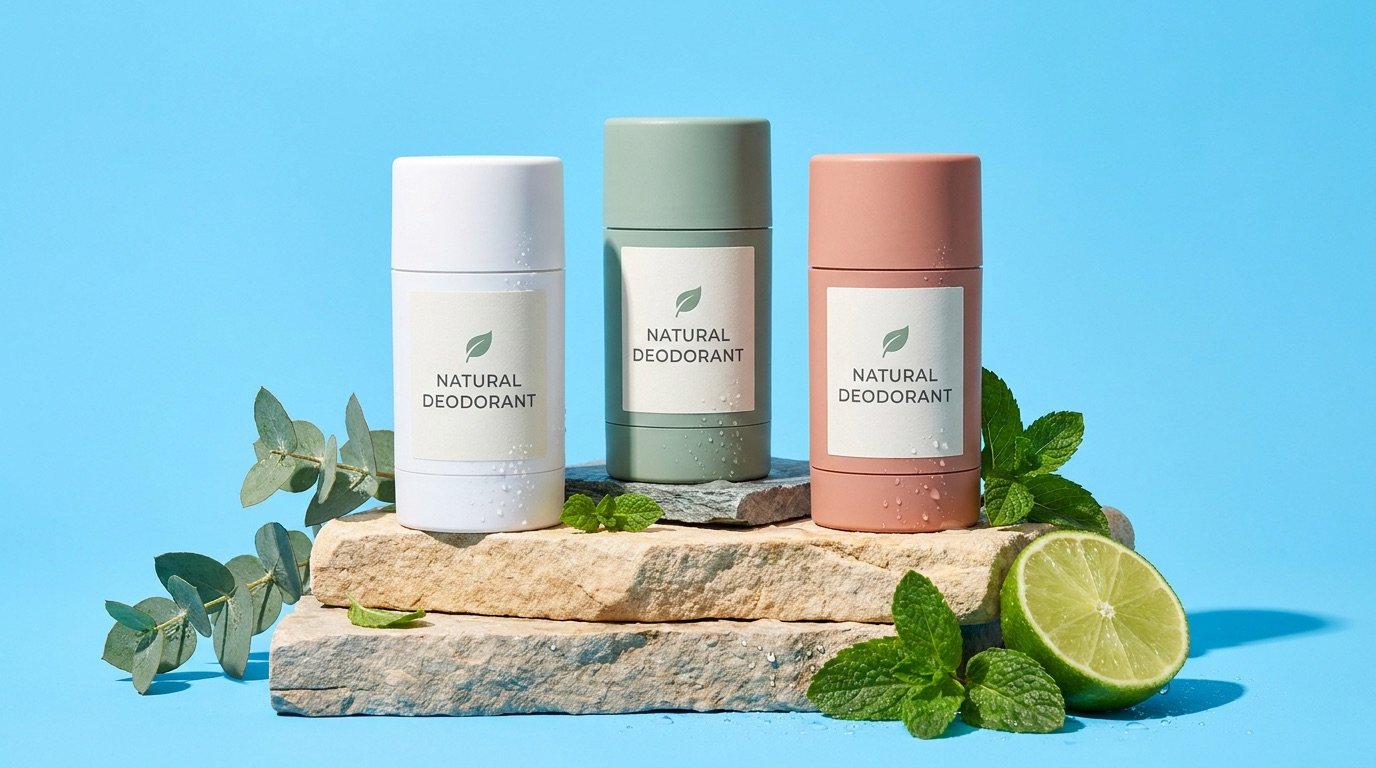
The Best Natural Deodorants That Actually Keep You Fresh
Ever switched to a natural deodorant, made it about four days, then crawled back to the aluminum stuff because you could smell yourself by lunch? You’re not doing it wrong. Most natural deodorants really don’t work that well. A handful do. The gap between those two groups is enormous, and the label won’t tell you which one you’re holding.
So before the picks, two things have to be straight, because they’re where almost everyone goes wrong.
First: natural deodorant is not antiperspirant. It won’t stop you sweating, because stopping sweat is exactly what aluminum does, by plugging your sweat glands shut. A natural stick controls the odor instead. Once you make peace with the fact that you’ll still sweat a little, the good ones are a revelation. If you’re expecting bone-dry pits, no natural formula on earth will get you there.
Second: the “detox” everyone talks about is mostly a myth. Your armpits aren’t purging toxins. What actually happens in those rough first two weeks is your skin’s own bacteria rebalancing after years of aluminum, plus baking soda quietly irritating your skin if the formula has it. Switch to a baking-soda-free option and most of that misery just never shows up.
Why bother at all? Aluminum salts sit on the long list of ingredients worth a second look in personal care, and deodorant is something you press into thin, absorbent skin every single morning. Worth getting right.
Here’s how we picked. Aluminum-free was the floor, not a feature. Beyond that:
- Ingredient list: short and readable.
- Ownership: disclosed every time, not used as a veto (more on why below).
- Performance: it had to hold up through an actual sweaty day, not just a photo shoot.
Our picks at a glance
- Best for sensitive skin: Each & Every
- Best all-day performance: Salt & Stone
- Best AHA formula: Kosas Chemistry
- Best refill system: Wild
- Best fragrance-forward pick: Corpus
- Best for heavy sweat: PiperWai
- Best heritage pick: Weleda
- Best budget: Attitude
- Best drugstore pick: Native
- Best certified pick: Schmidt’s
Each & Every: start here if baking soda has burned you
Best for: sensitive skin and anyone burned by a baking-soda formula before | Price: around $22 | Certifications: EWG Verified, Leaping Bunny | Ownership: independent
If your last natural deodorant left your underarms red and stinging, baking soda was almost certainly the culprit, and Each & Every is the fix. The formula skips it entirely, running on a short list of six or so ingredients built around coconut oil and essential oils. Nothing harsh, nothing clever, just gentle.
It’s aluminum-free, it’s independent, and the scents across the range stay light rather than perfumey. Odor control is solid for a low-drama formula, though heavy sweat days might want a midday top-up.
Salt & Stone: the one for people who actually sweat
Best for: people who sweat for real and still want the aluminum out | Price: around $20 | Certifications: Leaping Bunny | Ownership: founder-owned since 2017
Some naturals are gentle but give up by mid-afternoon. Salt & Stone isn’t one of them. This is the pick for people who sweat for real and still want the aluminum out. It leans on seaweed extracts and probiotics to keep odor down, and it’s vegan, cruelty-free, and Leaping Bunny certified.
The scents (think bergamot, cedar, saffron) feel more like a nice cologne than a drugstore deodorant, which is part of why it’s developed a following. It costs more than the basics. For all-day performance without the aluminum, though, it earns the premium.
Kosas Chemistry: the one that works differently
Best for: anyone who’s been let down by every standard natural stick | Price: around $20 | Certifications: Leaping Bunny | Ownership: independent
Kosas took a different route entirely. Instead of masking odor or absorbing sweat, its Chemistry stick uses AHAs, the same gentle acids you’d find in a skincare exfoliant, to lower the skin’s pH so odor-causing bacteria struggle to grow in the first place. It’s aluminum-free, baking-soda-free, and there’s a fragrance-free version for reactive skin.
If you’ve tried the coconut-and-arrowroot approach and found it lacking, this is worth a shot precisely because it’s not doing the same thing. The tradeoff is that acids can tingle on freshly shaved skin, so give it a beat after shaving.
Wild: the case is the whole point
Best for: cutting packaging waste with a refillable case | Certifications: B Corp, Leaping Bunny | Ownership: owned by Unilever (since 2025)
Most deodorant, natural or not, is a plastic stick you use up and bin. Wild rethinks that. You buy a refillable case once, in metal or a sturdy recycled plastic, then drop in compostable refills that ship in a small cardboard box. The deodorant itself is aluminum-free and plant-based, and the refill model cuts a startling amount of packaging over a year.
It’s a UK brand that ships widely, and the scents rotate seasonally, which is either fun or mildly annoying depending on how attached you get to one. As a low-waste swap it’s still the easiest one here to feel good about.
One thing to know: Unilever acquired Wild in April 2025. The refill system and the formula haven’t changed, and the packaging case still stands up. But it’s no longer an independent brand, and we’d rather you heard that from us.
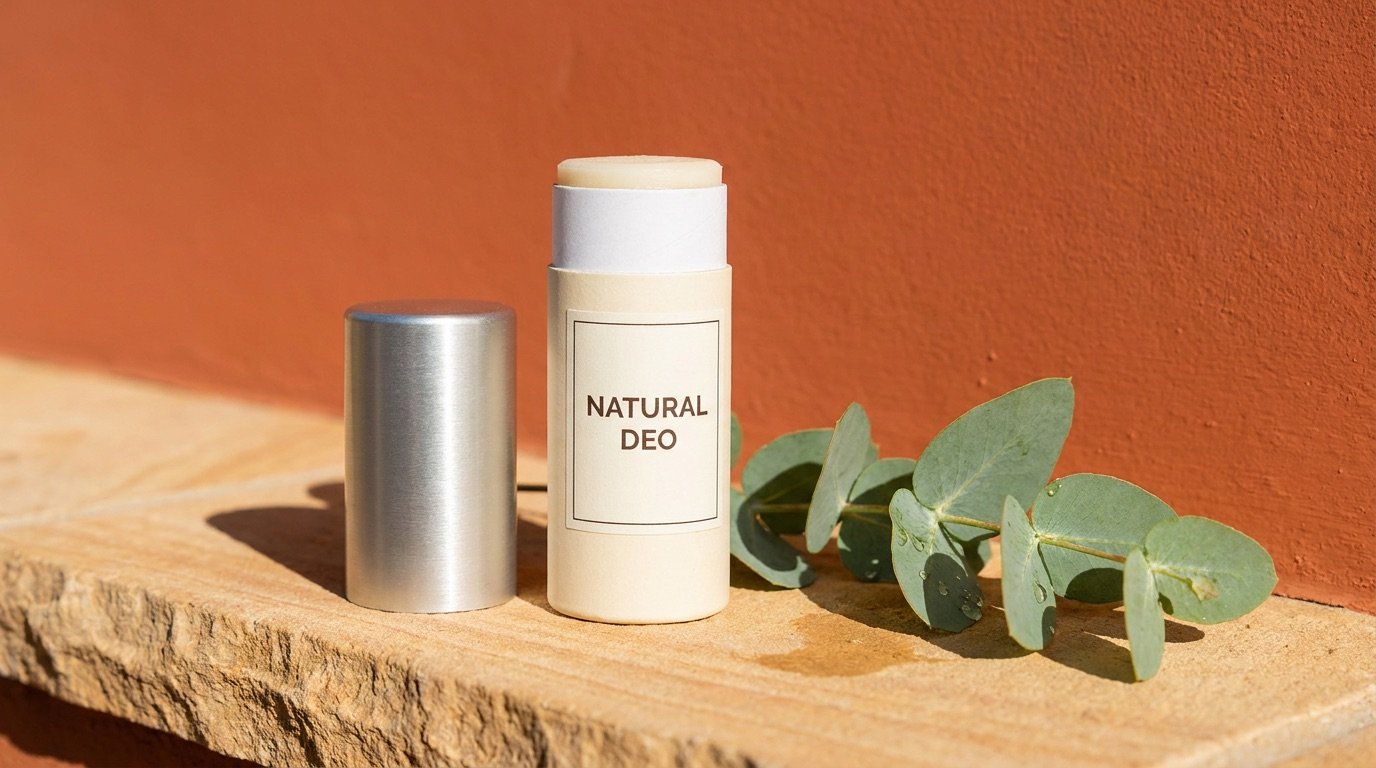
Corpus: deodorant that thinks it’s a fragrance
Best for: treating deodorant as part of getting dressed | Price: around $26 | Certifications: Leaping Bunny | Ownership: independent
If you treat deodorant as part of getting dressed rather than a chore, Corpus is for you. The plant-based, aluminum-free formula is quietly elegant, and the scents are layered and grown-up in a way most naturals don’t attempt. Third Rose and Green are the ones people rave about.
This is squarely a splurge, and the performance, while good, isn’t dramatically better than picks half the price. You’re paying for the scent artistry and the bathroom-shelf look. For some people that’s worth every dollar, and that’s a fair call to make.
PiperWai: activated charcoal for the heavy sweaters
Best for: heavy sweat and skeptics on their last attempt | Price: around $18 | Certifications: Leaping Bunny | Ownership: independent
PiperWai took the heavy-sweat problem to Shark Tank and built a following on one ingredient: activated charcoal, which soaks up wetness and neutralizes odor instead of masking it. It’s aluminum-free, vegan, and still independent, and it comes as both a stick and the original cream-in-a-jar.
If you sweat a lot and every gentle coconut stick has quit on you, the charcoal route is worth trying precisely because it’s doing more work. The tradeoff: the cream version means applying with your fingers, and a heavy hand can leave a faint gray cast, so keep the layer thin.
Weleda: a century of doing this the slow way
Best for: heritage, certification, and a fair price at once | Price: $9–$16 | Certifications: NATRUE, B Corp | Ownership: held by non-profit foundations
Weleda has been making natural body care since 1921, so it was aluminum-free roughly ninety years before that became a selling point. Its deodorants are NATRUE-certified natural, come in a spray as well as a stick, and lean on plant essential oils rather than synthetics. The Citrus spray and the Sage version are longtime favorites.
Sprays control odor without any of the residue or pilling a stick can leave on clothes, though some people miss the direct-application feel. For heritage, certification, and a fair price all at once, very little competes.
Attitude: the cheapest verified pick
Best for: tight budgets and families | Price: around $13 | Certifications: EWG Verified, Leaping Bunny | Ownership: founder-owned since 2006
Attitude, out of Canada, does the same trick in deodorant that it pulls across its whole range: real certification at a low price. Much of the line is EWG Verified, the ingredient lists are short, and there are plastic-free stick options. If you’re swapping out a whole family’s worth of personal care, the math is friendly here.
The scents and staying power are good rather than spectacular, and on the sweatiest days it’s average. For a verified-safe everyday stick you can restock without thinking about it, that’s an easy trade.
Native: the one P&G bought, and it still works
Best for: the drugstore aisle, on a budget, when convenience wins | Price: around $14 | Ownership: owned by Procter & Gamble (since 2017)
Native is probably the aluminum-free stick you’ve already seen, and we went back and forth on whether to include it. Procter & Gamble bought it in 2017 for $100 million, which puts it in the same corporate house as Secret and Old Spice.
Here’s where we landed. The formula is aluminum-free and paraben-free, the ingredient list is short and readable, and comparing it against pre-acquisition records the core formula looks unchanged. It’s cheap, it’s in every drugstore, and for a lot of people it’s the stick that finally got them off antiperspirant. Refusing to mention the most-searched natural deodorant in America would tell you more about our purity than about the product.
What you’re not getting is independence. Your money goes to P&G, and if that’s the thing you’re shopping around, buy Each & Every or Salt & Stone instead. Performance-wise it’s solid rather than exceptional, and the baking soda in some scents irritates the same people it always does.
Schmidt’s: the only one Ecocert will certify
Best for: anyone who wants certification rather than claims, with the sensitive-skin version if baking soda has burned you | Certifications: Ecocert | Ownership: owned by Unilever (since 2017)
Schmidt’s has something no other deodorant on this list does: Ecocert certification, the first and so far only natural deodorant in the US to hold it. Ecocert doesn’t just look at the ingredient list. It audits the sourcing, the factory, the waste handling, the shipping, and even the packaging artwork. In a category where “natural” means whatever the marketing team decided, that’s the strongest third-party answer available.
Jaime Schmidt started it in her kitchen in 2010, making batches of twenty on the stove. Unilever bought it in 2017.
The formula leans on coconut oil, shea butter and jojoba, and it works well. The catch is the one that catches a lot of people here: the original formulas use baking soda, and baking soda is the single most common cause of the rash that makes people give up on natural deodorant. There’s a sensitive-skin line without it, and if your skin is at all reactive, start there rather than with the classic.
One practical note. Schmidt’s stopped selling from its own site in March 2026, so you’ll be buying this at a drugstore, a grocery chain, or an online retailer rather than direct. The brand’s site is now a place to check the certification and find a stockist, not a shop.
A note on ownership
We used to leave conglomerate-owned brands out of roundups entirely. We’ve stopped, because it wasn’t serving you: the brands people actually search for were the ones we refused to discuss.
So the rule now is disclosure rather than exclusion. Native is P&G. Wild and Schmidt’s are both Unilever. We’ll tell you every time, and you can decide whether it matters, because for some readers it’s the whole question and for others it isn’t. What we won’t do is quietly recommend a “natural” brand without mentioning who banks the money. If you want to understand why the ownership question matters at all, our greenwashing guide digs in.
How to actually choose one
Don’t start with the scent. Start with your skin and your sweat.
If baking soda has ever burned you, go straight to a baking-soda-free formula like Each & Every or Kosas. If you sweat heavily and have written naturals off, Salt & Stone or PiperWai are the ones built to keep up. Want to cut waste? Wild’s refill system is the move. And if budget rules, Attitude gets you certified-safe for less than a fancy coffee.
Then give whatever you pick two full weeks before you judge it. That adjustment period is real, it passes, and the deodorant you write off on day three is often the one that would’ve worked by day fifteen.
Frequently asked questions
Do natural deodorants actually stop body odor?
The good ones do, yes, but they work differently from antiperspirant. They don’t stop you sweating (only aluminum does that, by blocking your sweat glands). Instead they neutralize the odor that bacteria create when they meet sweat. Once you accept that you’ll still perspire a little, picks like Salt & Stone and Kosas control smell reliably through a normal day.
Why does switching to natural deodorant cause a “detox” phase?
It isn’t really a detox, despite the name. Your body isn’t purging toxins through your armpits. Those first couple of rough weeks are your skin’s bacteria rebalancing after long-term aluminum use, plus baking soda irritating sensitive skin if your formula contains it. Choosing a baking-soda-free option and waiting out two weeks smooths over most of it.
Is aluminum in deodorant actually bad for you?
The science isn’t a settled panic, but aluminum salts are worth being thoughtful about, especially since you apply deodorant daily to thin, freshly shaved skin. Plenty of people simply prefer to avoid it. We went through the breast cancer claim and the Alzheimer’s one properly, along with the warning that’s printed on every antiperspirant tube for a real reason. If that’s you, every pick on this list is aluminum-free, and none of them ask you to give up odor control to get there.
Which natural deodorant is best for sensitive skin?
Look for baking-soda-free first, since baking soda is the usual trigger for underarm irritation. Each & Every and Kosas Chemistry are both formulated without it and stay gentle. Weleda’s plant-based sprays are another low-irritation route, because a spray never rubs a hard stick against tender skin.
Related reading
New to reading personal-care labels this closely? Start with our guide to the skincare ingredients actually worth avoiding, then see our full roundup of the best non-toxic skincare brands to carry the same standard across your routine. Every brand above has a scored profile in our brand directory if you want the full breakdown on one of them. And if you’ve ever squinted at propylene glycol partway down an ingredient list, here’s why your armpit is the worst place to meet it.