Is Propylene Glycol in Deodorant Safe?
The American Contact Dermatitis Society hands out an Allergen of the Year award. In 2018 it went to propylene glycol, and the paper announcing it called that a dubious honor.
Short answer: it’s safe for most people and it isn’t the antifreeze story the internet tells. But roughly 3 percent of patch-tested patients react to it, deodorant carries it at up to 73 percent, and the underarm is the single worst place on your body to meet it. If you’ve had unexplained deodorant rashes and already ruled out baking soda, this is the next thing to check.
Let’s kill the antifreeze line first
You’ve seen it. Propylene glycol is in antifreeze. Therefore you’re rubbing antifreeze on your skin.
Both halves are true and the conclusion doesn’t follow. ATSDR’s own fact sheet opens by calling it a clear liquid used in antifreeze and deicing solutions, and a few lines later explains the thing that matters: it breaks down at the same rate as ethylene glycol but doesn’t form the harmful crystals.
That’s the whole difference. Ethylene glycol turns into oxalate crystals that destroy kidneys, which is what makes conventional antifreeze lethal. Propylene glycol turns into lactate and pyruvate, ordinary traffic in your cells’ energy cycle. Propylene glycol is the substance that gets used in the antifreeze you’re allowed to have around pets.
The FDA lists it as generally recognized as safe in food, at up to 97 percent in seasonings and flavorings. Higher than anything in your bathroom.
| Quick facts | Propylene glycol |
|---|---|
| Also written | PG, 1,2-propanediol, INCI: Propylene Glycol |
| What it does | Humectant and solvent. Pulls water in, dissolves the actives, keeps a stick from drying out |
| Typical use | 3% to 73% in deodorant, the highest leave-on level in cosmetics |
| Safety review | CIR, 2012: safe as used when formulated to be nonirritating |
| Patch test positives | 3.5% of 23,359 patients (1996 to 2006), 2.8% in a later series |
| The catch | Both an irritant and a weak allergen, at its worst under occlusion on shaved skin |
So why did dermatologists single it out
Two reasons. Where it shows up, and how often it turns up in patch test results.
The North American Contact Dermatitis Group tested 23,359 patients between 1996 and 2006 and 810 of them, 3.5 percent, reacted to propylene glycol. A later series covering 2013 to 2014 found 2.8 percent. Personal care products were the leading source, at over half of the relevant cases, with topical steroids second.
Here’s the awkward part that the award paper names directly: propylene glycol acts as both a weak sensitizer and an irritant, which muddies the patch tests themselves. A red patch might mean your immune system has learned to attack it, or it might just mean the skin got chemically annoyed. Those need different advice and the test can’t always tell them apart.
Your armpit is the hard case
Deodorant is where propylene glycol hits its ceiling. The Cosmetic Ingredient Review’s survey found it in 313 of 580 deodorant products, at 3 to 73 percent, and flagged that as the highest leave-on level anywhere in cosmetics.
Now stack up what makes the underarm hard. High concentration. Occlusion, warmth, moisture, and skin that may have been shaved an hour ago.
The industry’s own use studies mostly came back fine. Thirty-day underarm trials of sticks at 35, 65 and 73 percent produced no irritation or sensitization. Then there’s the one larger test, a repeat insult study on 101 people using a 73 percent stick, where mild scores appeared throughout and four participants dropped out during the induction phase with repeat moderate reactions.
Four out of 101. Which is roughly what the clinic numbers predict, and a reasonable summary of the whole picture: fine for most, and if you’re not one of them you’ll find out on your own skin rather than in a study.
The honest limits of both sets of numbers
We’d rather show you the seams than hand you a clean answer that isn’t.
The 3.5 percent figure comes from people who were already sent to a patch test clinic because something was giving them dermatitis. That’s an enriched group, not the general public, so the true population rate is lower. Nobody has measured it well.
The reassuring trials run the other way. They were manufacturer-supplied, most enrolled 24 to 40 people, and 30 days is short for a sensitization question. The CIR’s 2012 conclusion is worth reading exactly as written: safe as used, when formulated to be nonirritating. That last clause is doing real work, and it quietly replaced the older assessment’s hard 50 percent ceiling.
In Europe, propylene glycol appears in no annex of the cosmetics regulation. Not banned. Not restricted. No expert opinion on file. On this one, the two regulators broadly agree.
What we’d tell a friend
If your deodorant has never bothered you, this isn’t your problem and you can stop reading.
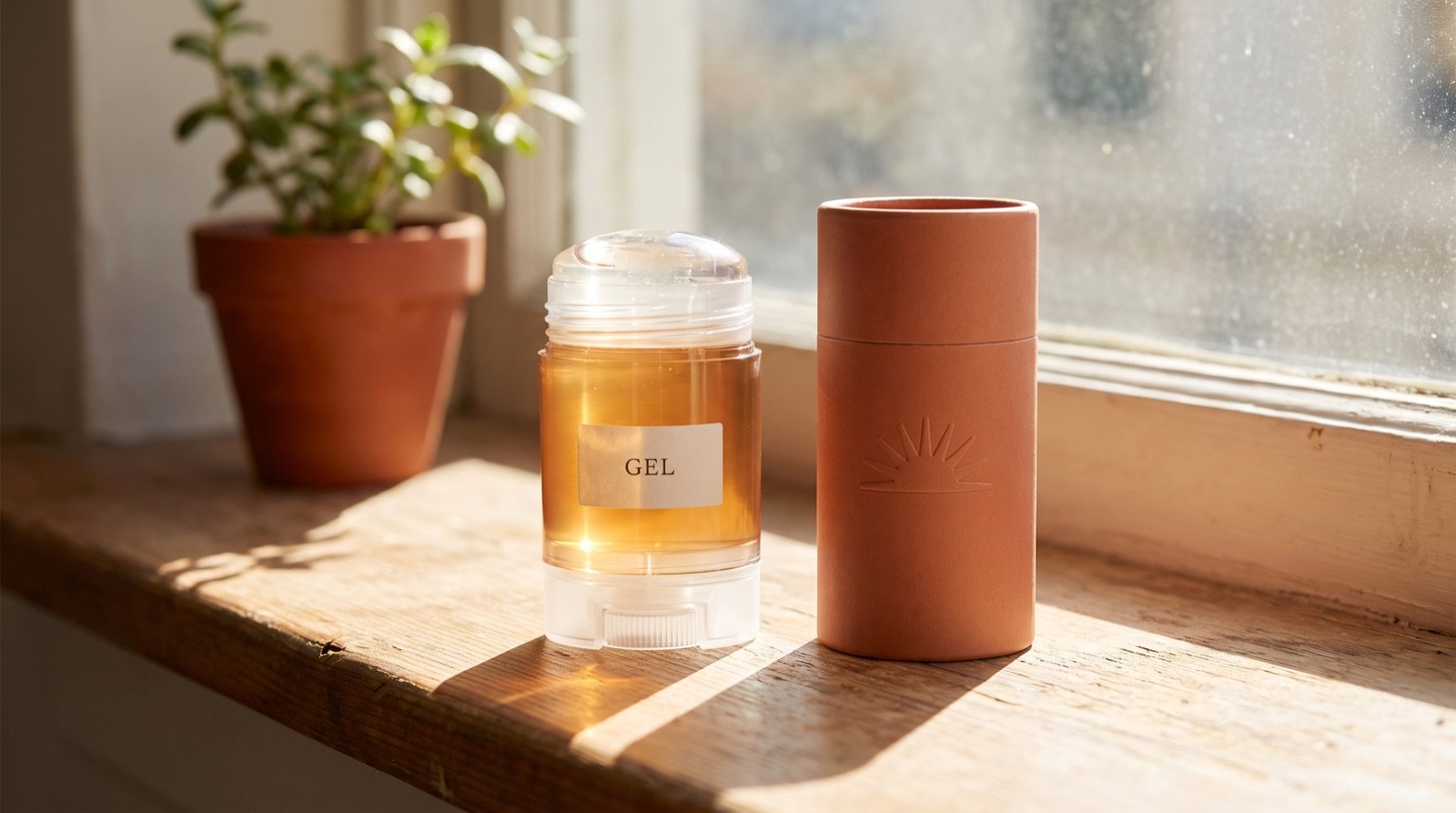
If you get recurring underarm rashes: rule out baking soda first, since it irritates far more people and does it faster. Then look at fragrance. Then propylene glycol, which is easy to spot because it’s usually in the top three ingredients on clear gel sticks.
If you have eczema or a damaged barrier already, we’d skip it. Not because it’s dangerous, but because a humectant that doubles as a weak allergen isn’t worth the coin flip on skin that’s already struggling. Most of the natural deodorants we recommend don’t use it, and that’s mostly because they’re not clear gels.
And if a brand tells you propylene glycol is antifreeze in your armpit, notice what they’re doing. It’s a true fact deployed to mean something it doesn’t, which is the most common move in greenwashing and a decent reason to distrust everything else on the page.
Frequently asked questions
Is propylene glycol the same as the antifreeze that poisons dogs?
No. That’s ethylene glycol, a different chemical, which metabolizes into oxalate crystals that damage kidneys. Propylene glycol breaks down into lactate and pyruvate, which your cells process routinely. It’s used in the pet-safer antifreeze products marketed as an alternative, and it’s FDA-approved as a direct food ingredient.
How do I know if propylene glycol is causing my rash?
Stop using anything containing it for two weeks and see if the skin settles. It’s in a lot of products, so read labels on deodorant, moisturizer and any prescription cream too. If you want certainty, ask a dermatologist for patch testing, which is the only way to separate an allergy from plain irritation.
Which deodorants avoid propylene glycol?
Anything solid, waxy or in a paper tube almost certainly does, because the ingredient exists to keep a clear gel from drying out. Balm-style and stick deodorants built on coconut oil, shea butter or arrowroot have no use for it. Clear gels and roll-ons are where it’s most common.
Does propylene glycol let other ingredients into your skin?
It’s a penetration enhancer, yes, and that’s part of the argument against it. It helps whatever it’s carrying get further into the skin, which is useful for a medicated cream and less appealing when it’s carrying fragrance. That effect is real but modest, and it isn’t a reason for panic on its own.
Related reading
The rest of what’s in your deodorant: the aluminum question, answered honestly, and why baking soda burns. For the wider picture, see the ingredients worth avoiding in personal care and our natural deodorant picks.