Hydroxyapatite vs Fluoride: Which Toothpaste Active Wins?
For most of the last fifty years, “fluoride-free toothpaste” meant a tube that cleaned your teeth and did nothing to protect them. You were trading cavity prevention for a shorter ingredient list, whether or not anyone told you that.
That trade is no longer the only option, and the reason is a mineral called hydroxyapatite.
It’s worth understanding properly, because this is one of the few places where the natural-products world has a genuine evidence base rather than a vibe, and it’s also a place where overclaiming is easy.
What each one actually does
Your enamel is roughly 97% hydroxyapatite, a calcium phosphate mineral. Every time you eat something acidic, a little dissolves out. Every time your saliva does its job, some goes back. A cavity is what happens when the dissolving outpaces the repair for long enough.
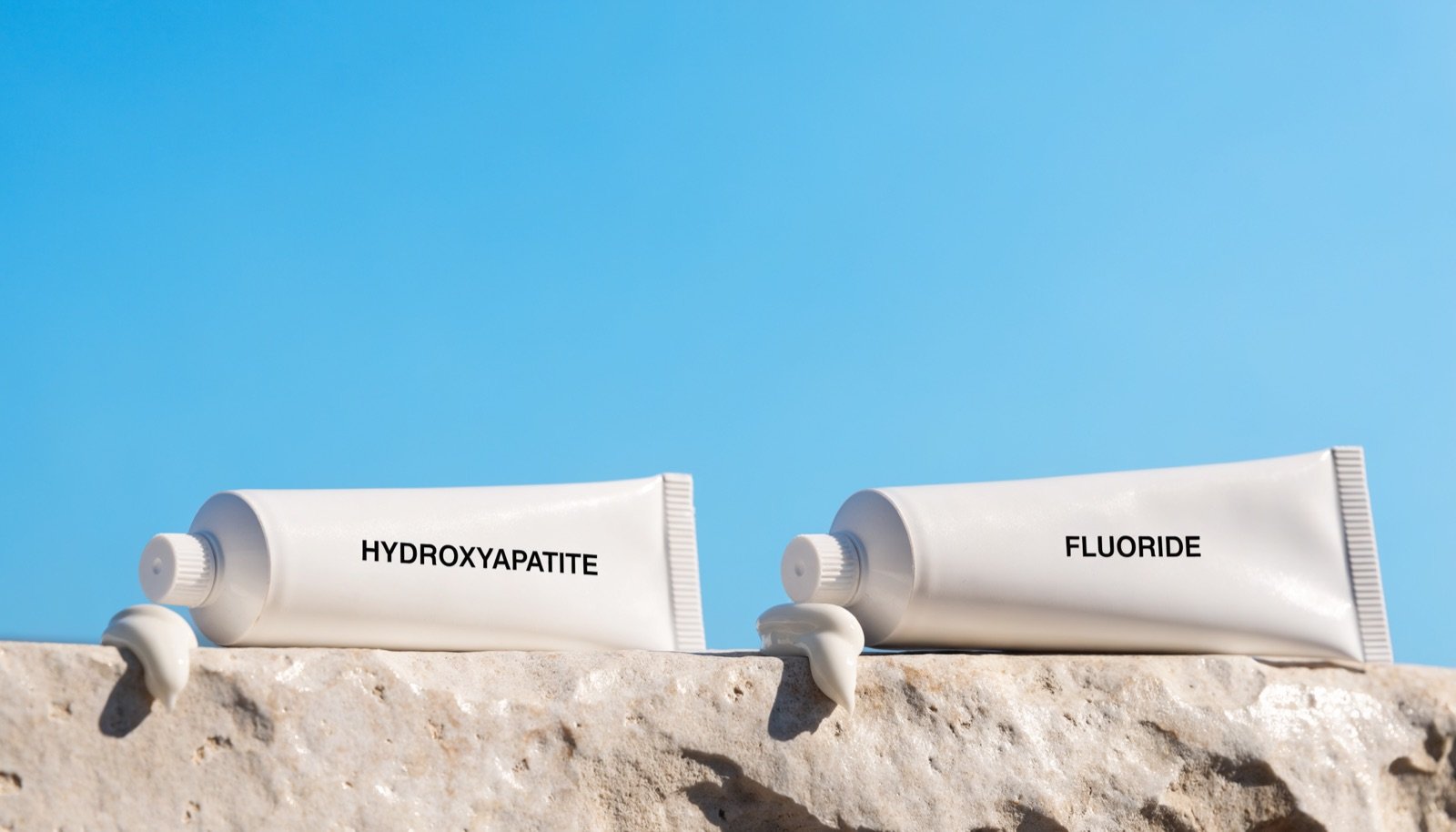
Fluoride intervenes chemically. It swaps into the mineral structure to form fluorapatite, which is harder to dissolve than what was there before. It also interferes with the bacteria that produce the acid. It has been studied for decades, it works, and it is the most thoroughly evidenced preventive measure in dentistry.
Hydroxyapatite takes the direct route: it supplies the same mineral your enamel is made of, in particles fine enough to settle into the microscopic damage and rebuild it. Rather than making enamel chemically tougher, it puts enamel back.
Both end up in the same place, which is remineralized tooth surface. They just get there differently.
What the trials found
This is where the conversation usually gets sloppy in both directions, so here is the actual state of the research.
A randomized, double-blind non-inferiority trial compared microcrystalline hydroxyapatite against fluoride for caries prevention and found hydroxyapatite not inferior. Non-inferiority is a specific statistical claim: not “better”, but “not meaningfully worse”.
An 18-month double-blinded randomized trial published in Frontiers in Public Health in 2023 found a caries-preventing effect for hydroxyapatite toothpaste in adults. A separate one-year randomized trial looked at early childhood caries and reached a similar conclusion.
So the honest summary: hydroxyapatite has real randomized evidence behind it, of a quality most “natural” alternatives never produce. Fluoride still has far more of it, accumulated over a much longer period and across far more people.
That difference matters less than the internet on either side suggests. Fluoride partisans who call hydroxyapatite unproven are behind the literature. Fluoride-free brands implying fluoride is dangerous at toothpaste concentrations are ahead of it, in the wrong direction.
So which should you use
If you are cavity-prone, have a history of decay, or your dentist has flagged weak spots, use fluoride. It has the deepest track record for exactly that situation, and this is not the place to experiment.
If you want to avoid fluoride, for whatever reason, hydroxyapatite is now a legitimate choice rather than a compromise. That was not true fifteen years ago.
If you have small children who swallow toothpaste, hydroxyapatite has a real practical advantage, since swallowing it is not a concern the way excess fluoride is during enamel development.
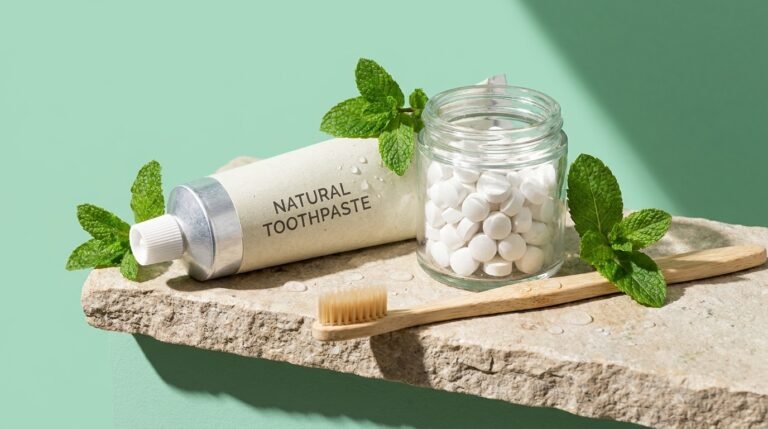
And if you are choosing between a hydroxyapatite toothpaste and a fluoride-free toothpaste with no active at all, that is the easy one. The second is just flavored cleaning paste. Our roundup of the best natural toothpaste only includes tubes with a real active, in both camps.
Whichever you pick, do not rinse with water straight after brushing. Spit, and leave it. Rinsing washes the active off your teeth before it can do anything, which quietly undoes the entire decision you just made.
Frequently asked questions
Is nano-hydroxyapatite safe to swallow?
It is the same mineral your enamel and bone are made of, and it is widely used in toothpaste marketed for children specifically because swallowing a pea-sized amount is not a concern. Some debate exists about nanoparticle sizes in general, though the dental use has a long safety record, above all in Japan where these toothpastes have been sold for decades.
Does hydroxyapatite whiten teeth?
Mildly, and not the way a bleaching product does. By filling in microscopic surface damage it makes enamel smoother and more light-reflective, which reads as slightly brighter. If you want a real shade change, that is a different product category and worth being honest with yourself about.
Can I use both?
You do not need to, and there is no evidence that alternating helps. Pick the active that suits your situation and use it consistently, because consistency does more than the choice between them.
Is fluoride in toothpaste dangerous?
At the concentrations in toothpaste, used as directed and spat out, the evidence does not support that. The genuine concerns around fluoride relate to excessive intake during childhood enamel formation, which is why children use smaller amounts and lower concentrations. Choosing hydroxyapatite because you prefer it is reasonable; choosing it because you believe fluoride toothpaste is poisoning you is not what the research shows.
Related reading
The rest of what’s in the tube: why SLS is in toothpaste at all, whether charcoal toothpaste is worth it, and what happened to triclosan. For tubes with a real active, see the best natural toothpaste.