The Best Clean Fragrance and Natural Perfume Brands Worth Wearing
Pick up almost any perfume and try to read the ingredients. You can’t. The entire formula hides behind one word, “fragrance” or “parfum,” which US law lets a brand use as a catch-all for dozens, sometimes hundreds, of ingredients it never has to name. It’s the single biggest disclosure gap in the beauty aisle. Europe closed part of it in July 2026 by requiring 80-plus fragrance allergens to be named; the US still requires none.
Some of what’s hiding in there is worth caring about. Phthalates, the plasticizers that help a scent cling and linger, are one of the usual residents, and they’re the kind of hormone-disrupting ingredient we flag in our guide to the endocrine disruptors in cosmetics.
Clean fragrance is the pushback. And it splits into two real camps that get muddled together. One is natural perfume, built from essential oils and plant extracts instead of lab-made scent. The other is “clean” synthetic fragrance, which still uses safe synthetics but discloses them and skips the flagged ones. Both are valid. Neither is automatically the winner, and we picked from both. Worth knowing before you shop that “clean fragrance” has no legal definition, and that natural doesn’t mean lower allergy risk.
So here’s how we chose. Three things had to line up:
- Disclosure: full ingredient disclosure, so you can actually read what’s in the bottle.
- No phthalates: and no undisclosed “fragrance” catch-all for them to hide in.
- Independence: brands that lean independent rather than a designer house slapping “clean” on a decades-old formula.
The short version: Phlur is the one we’d buy, because Missing Person at $99 is the rare clean fragrance that doesn’t smell like a compromise. If your skin reacts to everything, Skylar is built for exactly that and costs about the same.
These made the cut.
Our picks at a glance
- Best for sensitive skin: Skylar
- Best overall: Phlur
- Best genderless pick: DedCool
- Best luxury pick: Ellis Brooklyn
- Best fully natural: Heretic
- Best everyday scent: Maison Louis Marie
| Brand | Start with | Size | Price | Ownership |
|---|---|---|---|---|
| Skylar | Salt Air Eau de Parfum | 50 ml | $96 | Starco Brands, founder still leads |
| Phlur | Missing Person Eau de Parfum | 50 ml | $99 | TSG Consumer Partners, since 2025 |
| DedCool | Fragrance 01 Taunt | 50 ml | $90 | Independent, minority stake held |
| Ellis Brooklyn | MYTH Eau de Parfum | 50 ml | $115 | Independent, venture-backed |
| Heretic | Dirty Grass Parfum | 50 ml | $165 list | Independent, minority stake held |
| Maison Louis Marie | No.04 Bois de Balincourt | 50 ml | $100 | Independent, founder-owned |
Prices checked on each brand’s own storefront on August 19, 2026, at full list price. One to watch: Heretic discounts heavily and often, so the $165 above is rarely what you’d actually pay. Note also that every brand here settles on 50 ml as the standard bottle, which makes these unusually easy to compare.
Skylar: the one built for sensitive skin
Best for: sensitive skin, shared offices, and anyone perfume usually gives a headache | Price: around $96 | Start with: Salt Air Eau de Parfum, 50 ml, $96 | Ownership: owned by Starco Brands, founder still leads it
If perfume gives you headaches or your skin reacts, start with Skylar. The whole brand is built around being hypoallergenic and fully transparent: every ingredient is listed, there are no phthalates, parabens, or undisclosed fragrance, and the scents are designed to be light enough for a shared office without announcing themselves. It’s clean synthetic done properly.
The trade is that the scents lean fresh and wearable rather than heavy and dramatic, so if you want a bold signature statement, this isn’t it. But for a scent you can wear around sensitive people and skin without a second thought, nothing here is safer.
Phlur: clean fragrance that still feels like a real perfume
Best for: a scent with real presence, without the mystery formula | Price: around $99 | Start with: Missing Person Eau de Parfum, 50 ml, $99 | Ownership: owned by TSG Consumer Partners (since 2025)
Phlur is proof that “clean” doesn’t have to mean watered-down. Its scents (Missing Person earned a genuine cult following) are complex and long-lasting, but the brand discloses its ingredient breakdown, skips phthalates, and formulates vegan and cruelty-free. It’s the pick for someone who wants a scent with real presence without the mystery formula.
It sits at a mid-to-premium price, and because the scents are richer, a little goes a long way. For a disclosed clean fragrance that still smells like a proper perfume, though, it’s the one to beat.
DedCool: clean, vegan, and a little rebellious
Best for: people who find most clean beauty a bit precious | Price: around $90 | Start with: Fragrance 01 Taunt, 50 ml, $90 | Ownership: independent, founder-led, Sandbridge Capital holds a minority stake
DedCool makes clean fragrance for people who find most clean beauty a bit precious. The scents are genderless and unisex, the formulas are vegan and phthalate-free with the ingredients disclosed, and the brand extends the same clean approach to laundry detergent and hair-and-body mists so you can layer one scent head to toe. Fragrance 01 (Taunt) is the gateway.
The vibe is deliberately cool-kid, which won’t be everyone’s thing, and the scents skew modern rather than classic. For a clean, vegan fragrance with actual personality, it’s a standout.
Ellis Brooklyn: perfumer-grade, sustainably minded
Best for: clean fragrance with the depth of a fine perfume house | Price: around $115 | Start with: MYTH Eau de Parfum, 50 ml, $115 | Ownership: independent, founder-led and venture-backed
Ellis Brooklyn is where clean fragrance meets real perfumery. Founded by a fragrance writer, it works with respected perfumers, uses sustainably sourced and biodegradable ingredients where it can, and stays free of phthalates while disclosing far more than the industry norm. Myth and Salt Air are the ones people reach for.
The perfumer-grade quality means perfumer-grade pricing, and the range is broad enough to take a minute to work through. But for clean fragrance with the depth and craft of a fine perfume house, this is the sophisticated pick.
Heretic: 100% natural, no synthetics at all
Best for: purists who want botanicals only and nothing synthetic | Price: $74–$165 | Start with: Dirty Grass Parfum, 50 ml, $165 list and often half that | Ownership: independent, founder-led, Sekhmet Ventures holds a minority stake
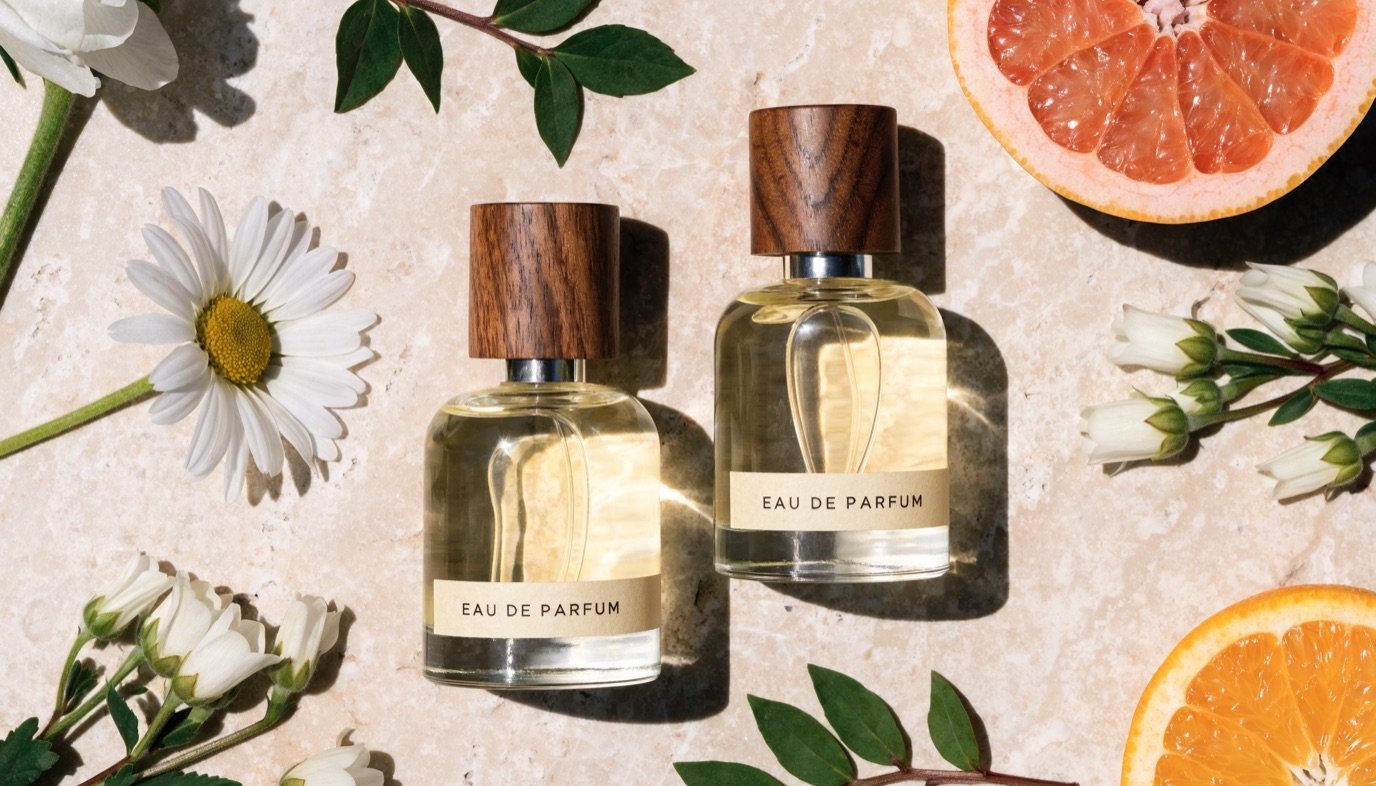
For the purists who want zero synthetics, Heretic is the answer. Its perfumes are made almost entirely from natural, plant-derived ingredients, no synthetic musks or phthalates anywhere, and the brand is refreshingly blunt about what natural perfume can and can’t do. Dirty Vanilla and Dirty Lemon are the entry points.
Here’s the honest caveat: all-natural scents fade faster than synthetic ones and shift more on the skin, because that’s how naturals behave. If you want a plant-based perfume with nothing lab-made in it, and you’re okay reapplying, Heretic is in a class of its own.
Maison Louis Marie: the easy natural everyday scent
Best for: an effortless natural everyday scent that plays well with everyone | Price: around $65 | Start with: No.04 Bois de Balincourt Eau de Parfum, 50 ml, $100 | Ownership: independent, founder-owned
Maison Louis Marie is the natural fragrance that quietly took over. Its No.04 Bois de Balincourt scent is everywhere for a reason: warm, woody, unisex, and built on natural and plant-based ingredients without phthalates or parabens. The perfume oils are a lower-key, roll-on way in, and the whole range doubles as a home-scent line.
It’s more of an easygoing everyday signature than a dramatic evening perfume, and the natural formula sits close to the skin rather than filling a room. For an affordable, natural scent you’ll actually wear daily, it’s the easy recommendation.
What we left off, and why
Two things kept brands off this list. First, the “natural equals safe” myth: some of the most common allergens in fragrance are natural, like citrus oils and oakmoss, so a botanical perfume isn’t automatically gentler than a well-made synthetic one. We didn’t reward the word “natural” on its own. Second, the designer houses now marketing “clean” versions while still hiding the formula behind “parfum.” A clean claim means nothing without the ingredient list to back it. Disclosure is the whole game here, and the brands above actually play it.
Reading a fragrance label, such as it is
Perfume is the one product category that legally hides its entire ingredient list behind a single word, so the usual advice about reading labels barely applies. Three things are worth knowing instead.
“Fragrance” or “parfum” is the whole problem. One word can stand in for dozens of undeclared ingredients, protected as trade secret. The EU now requires more than 80 fragrance allergens to be named individually on a label. The US requires none of them, which is why a European bottle of the same scent often carries a longer list than the American one.
Phthalates, which are the reason the loophole matters. They’re used to make a scent last, they fall inside the fragrance trade-secret exemption, and they’re the specific ingredient class most often raised in the endocrine disruption research. A brand that publishes its full formula has nowhere to hide them, which is the whole reason full disclosure is our first criterion.
“Clean” and “natural” mean different things, and neither is regulated. Natural perfume uses botanical materials only. Clean fragrance usually means synthetics are allowed but disclosed and screened. Neither is automatically safer, and botanical does not mean hypoallergenic: some of the most common fragrance allergens are natural essential oil components. We pulled the two camps apart here.
How to actually choose one
Don’t start with the scent notes. Start with your skin and how much mystery you’ll tolerate.
If your skin reacts or scent gives you headaches, Skylar. If you want a rich, disclosed perfume with staying power, Phlur or Ellis Brooklyn. If you want something modern with attitude, DedCool. If you want nothing synthetic at all, Heretic, knowing you’ll reapply. And if you just want an easy natural scent for every day, Maison Louis Marie.
One tip: buy the discovery set or a rollerball before the full bottle. Fragrance is deeply personal and shifts on your skin, so a $10 sample saves you from a $100 mistake.
Frequently asked questions
What does “clean fragrance” actually mean?
There’s no legal definition, which is exactly the problem. In practice, a truly clean fragrance discloses its full ingredient list instead of hiding behind “fragrance” or “parfum,” leaves out phthalates and other flagged ingredients, and is often vegan and cruelty-free. The word alone guarantees nothing. The disclosed ingredient list is what you’re actually looking for.
Is natural perfume safer than synthetic?
Not automatically. Natural perfumes avoid lab-made musks and phthalates, which is a real plus, but many common fragrance allergens (citrus oils, certain florals, oakmoss) are natural too. A well-formulated clean synthetic can be gentler than a raw botanical one. What matters most is disclosure and whether the specific ingredients suit your skin, not whether they came from a plant or a lab.
Why are phthalates in perfume a concern?
Phthalates, often the type called DEP, are used to make scent last longer and dissolve evenly. The concern is that some phthalates are endocrine disruptors, meaning they can interfere with hormones, and perfume is applied directly to skin and reapplied daily. Because they can hide inside the undisclosed “fragrance” ingredient, choosing a brand that explicitly states it’s phthalate-free and discloses its formula is the reliable way to skip them.
Does clean fragrance last as long?
Usually a bit less, and the reason is chemistry rather than quality. Traditional perfume relies on synthetic fixatives, phthalates among them, to slow evaporation and hold a scent to skin for eight hours or more. Fully natural perfume without those fixatives often fades in two to four. The clean brands that use disclosed synthetics, like Phlur and Skylar, sit in between and generally wear closer to a conventional fragrance than a purely botanical one does.
Will a natural perfume still trigger my fragrance headaches?
It might, and it’s worth knowing before you spend $100 finding out. Many of the compounds that set off fragrance headaches and contact reactions are natural essential oil components: linalool, limonene, citronellol, eugenol. Those are exactly the substances the EU singles out for mandatory labeling. If perfume reliably gives you a headache, a disclosed formula matters more than a natural one, because it lets you identify which specific material to avoid next time.
How do I find out what’s actually in my perfume?
Look for a brand that publishes a full ingredient breakdown rather than ending its list with “fragrance” or “parfum.” The clean brands on this list disclose theirs. For a perfume you already own, you can check the brand’s site or ingredient databases, but if the formula ends in a vague “fragrance,” there’s a real limit to what you’ll be able to learn.
Related reading
Want the detail behind the picks? We’ve written up both things we screened for: what “clean fragrance” actually means and fragrance allergens and the labeling gap.
Cleaning up what you put on your skin? Start with our guide to the toxic skincare ingredients worth avoiding, and see how the same “fragrance” loophole plays out in your cupboards in our piece on the fragrance loophole in cleaning products.