The Thread Count Myth: Why 1000 Is Usually Worse Than 300
The thread count myth survives because it gave shoppers a single number to compare, and a single number is a wonderful thing to sell against.
Thread count means threads per square inch, horizontal and vertical. Simple enough. Except that a “thread” can be made of several thinner strands twisted together, called plies, and some manufacturers count each ply.
So a fabric with 250 actual threads per inch, woven from four-ply yarn, gets marketed as 1000. The number quadrupled. The sheet didn’t.
Why the inflated ones often feel worse
This is where a marketing quirk becomes a real buying mistake.
To pack more threads into a square inch you need thinner yarn, and thin multi-ply yarn is usually spun from shorter cotton fibers because they’re cheaper. Cram a lot of it into a dense weave and you get fabric that’s heavier, warmer, less breathable, and prone to pilling as those short fibers work loose.
Meanwhile a 300-thread-count percale woven from long-staple cotton uses fewer, better, single-ply threads. It breathes, it gets softer with washing instead of pilling, and it lasts years longer.
So the honest version is that thread count above roughly 400 is either an unusually fine fabric or an inflated number, and it’s far more often the second.
The thing that predicts quality isn’t a number
It’s the fiber. Three things, really.
Staple length is how long the individual cotton fibers are. Long-staple and extra-long-staple cotton spins into smoother, stronger yarn with fewer loose ends, which is why it feels better and pills less. You’ll see it sold as Egyptian, Pima or Supima, and the last of those is a trademarked term with verification behind it, which makes it the most trustworthy of the three. “Egyptian cotton” on its own is a geographic claim that’s been abused for decades.
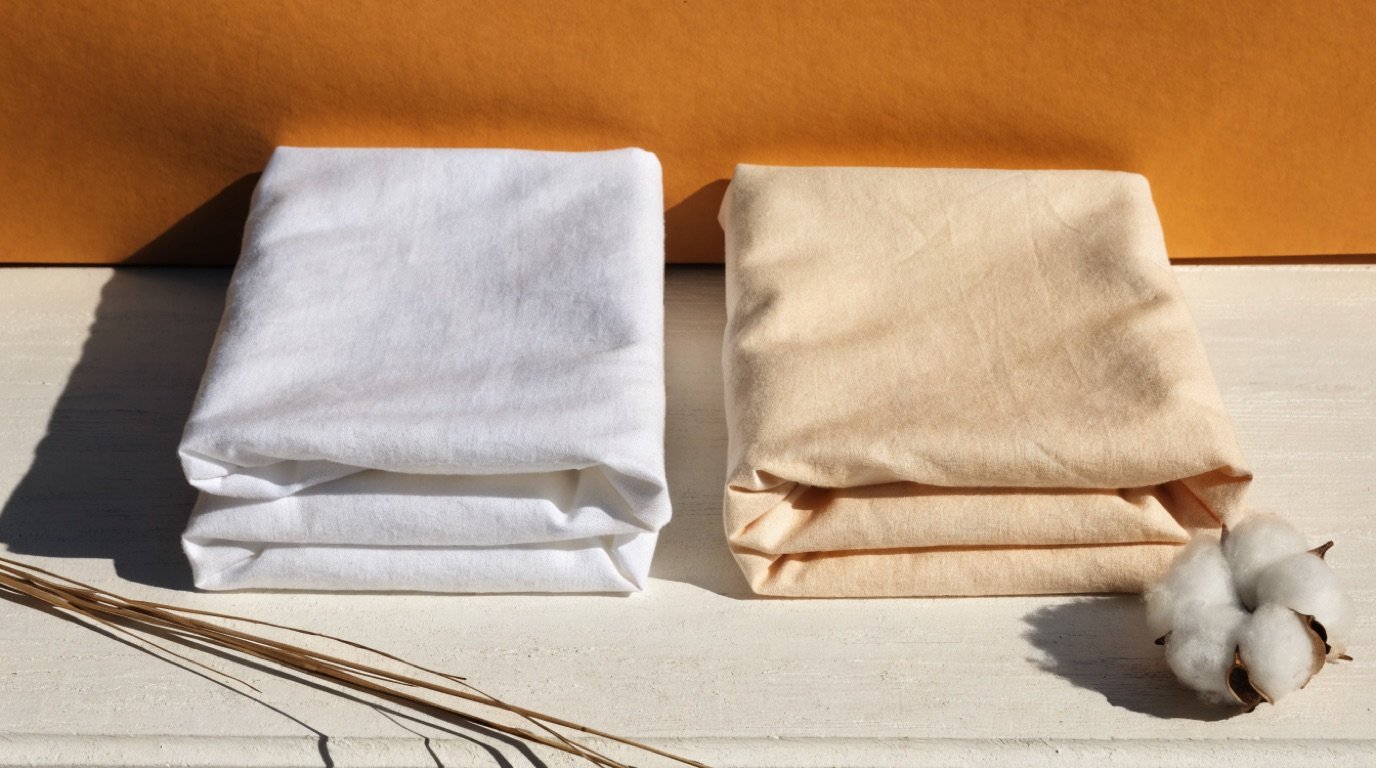
Weave decides how it feels. Percale is a plain over-under weave: crisp, matte, cool, the hotel-sheet feel. Sateen floats more threads on the surface: smoother, slightly warmer, with a soft sheen. Neither is better. They’re preferences, and knowing which you want tells you more than any number.
Finish is the one nobody mentions. A sheet treated to resist wrinkles has been through a formaldehyde-releasing resin, and that finish changes how the fabric feels and breathes, usually for the worse over time.
Put those three together and you can predict how a sheet behaves. Thread count adds almost nothing.
Reading a label properly
Look for four things. Single-ply construction, long-staple or extra-long-staple cotton, a named weave, and a thread count somewhere between about 200 and 400 for percale or 300 to 600 for sateen.
If a listing shouts 1000 thread count and says nothing about ply or staple length, that’s the answer to what it’s hiding. And if a brand publishes ply and staple and weave but keeps the thread count modest, that’s a brand confident in the fabric.
Certification helps here too, for a slightly indirect reason. GOTS governs processing rather than thread count, but the brands willing to go through it tend to be the ones sourcing better fiber in the first place, and its processing rules rule out the wrinkle-resistant finishes that mask a mediocre weave.
That’s how the picks in the best organic bedding and sheets are sorted: by fiber, weave and finish rather than by a number on the front of the pack. Each brand has a scored profile in our brand directory.
Frequently asked questions
Is a higher thread count better?
Not past a point, and often the opposite. Counts above roughly 400 are usually inflated by counting the plies within each thread, and hitting them honestly requires thin yarn spun from shorter, cheaper fibers. That makes fabric that’s warmer, less breathable and quicker to pill.
What thread count should I buy?
Around 200 to 400 for percale and 300 to 600 for sateen, provided the yarn is single-ply and the cotton is long-staple. Those ranges cover essentially every sheet worth owning. A higher number isn’t a bonus, it’s a question.
What does single-ply mean?
That each thread is one strand rather than several twisted together. It matters because multi-ply construction is how thread counts get inflated: a 250-thread fabric woven from four-ply yarn can be advertised as 1000. Single-ply from long-staple cotton is the marker of quality.
Is percale or sateen better?
Neither. Percale is a plain weave that’s crisp, matte and cool, closer to a hotel sheet. Sateen floats more threads on the surface for a smoother, softer feel with a slight sheen and a bit more warmth. Pick by whether you sleep hot and whether you prefer crisp or silky.
Related reading
The rest of this series: GOTS vs OEKO-TEX and formaldehyde in bedding. For vetted picks, see the best organic bedding and sheets. Our greenwashing guide covers how a true-but-narrow number gets sold as a quality signal.
Sources: Supima, About Supima cotton. Cotton Incorporated, Fabric construction and performance. Global Organic Textile Standard, The standard.