Is Ceramic Cookware Safe? Start With the Fact It Isn’t Ceramic
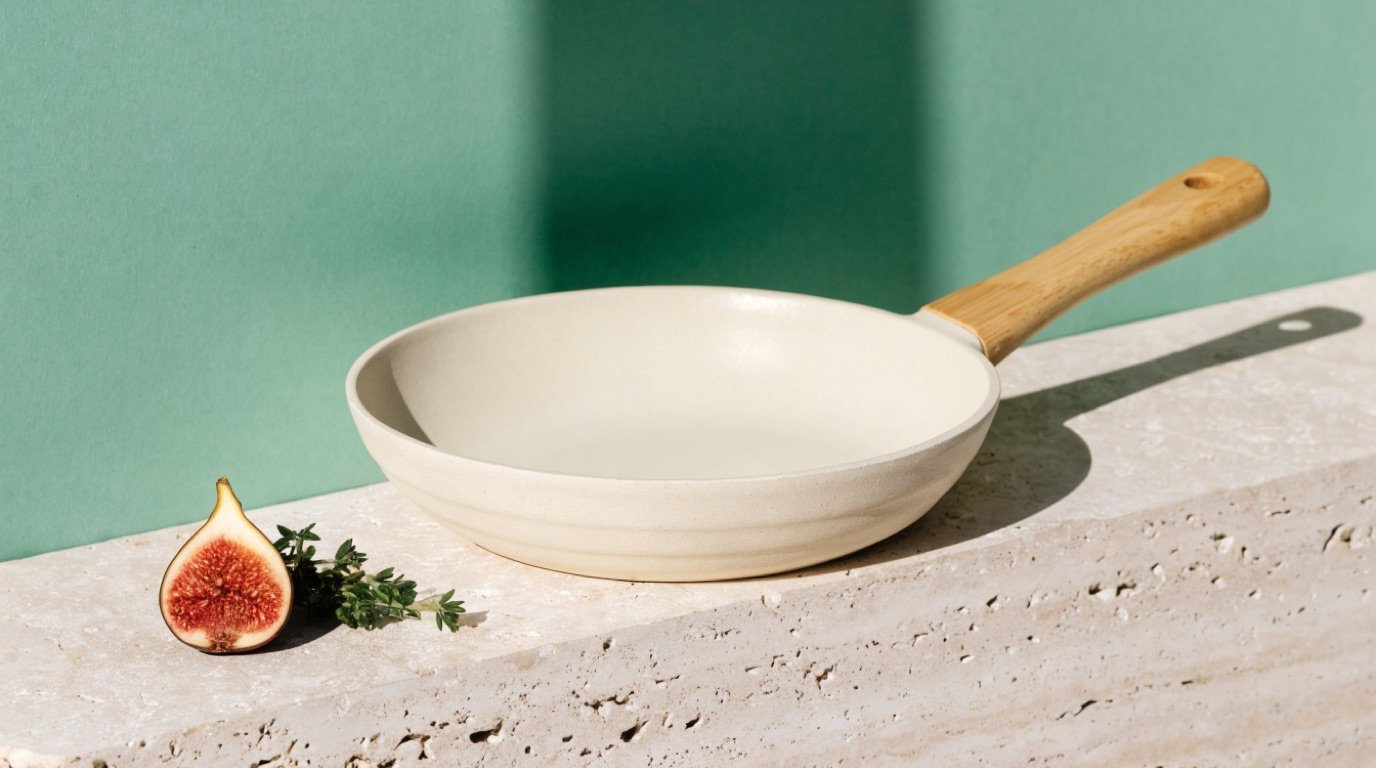
The pan you bought because it was the safe alternative to Teflon is, in almost every case, an aluminum pan sprayed with a thin layer of liquid glass.
That’s what “ceramic nonstick” is. A sol-gel coating, silica-based, cured onto metal. It contains no PFAS, which is the whole reason it exists and a real point in its favor. It’s also not ceramic in the way a mug is ceramic, and the gap between those two things explains almost every complaint people have about these pans.
Why the distinction matters to you
Because it’s a coating, and coatings wear.
A sol-gel layer is thin and somewhat brittle. Heat cycling degrades it, high heat degrades it faster, and the slick surface fades over roughly one to three years of regular use. Not because you did anything wrong. Because that’s the material.
Compare that to what people expect. “Ceramic” sounds like the pot your grandmother had, which is fired clay all the way through and has no coating to lose. Xtrema makes that kind, and it behaves completely differently: nothing to scratch off, nothing to wear away, and also no nonstick properties to speak of.
So there are two entirely different products sharing one word on the shelf. The coated kind is a consumable you’ll replace. The solid kind is furniture.
The safety question, answered honestly
For the coated pans, the answer is reassuring with one asterisk.
Sol-gel coatings don’t contain PFAS or PTFE. When they wear out they lose their slickness rather than shedding the way a scratched Teflon surface does, and silica is about as unremarkable a substance as you can put in a kitchen. As a swap away from forever chemicals, this is a real one.
The asterisk is that “ceramic” is not a regulated term on cookware. Nobody audits the word. A reputable brand’s coating and a no-name import’s coating can carry the same description and be made to very different standards, and the cheap end is where you’d worry about what else is in the mix.
There’s a separate and older concern worth not confusing with this: lead and cadmium in glazed ceramic. That’s about traditional fired-and-glazed pottery, especially decorative or imported pieces not intended for cooking, not about sol-gel nonstick pans from established brands. Different product, different problem. If you’ve got a hand-glazed dish of uncertain origin, that’s the one to look up.
The heat rule nobody tells you at checkout
Ceramic nonstick fails early mostly because people cook on it the way they cooked on Teflon.
Keep it to low and medium heat. Use wooden or silicone tools. Hand wash it, because dishwasher detergent is abrasive and hot cycles accelerate exactly the degradation you’re trying to avoid. Don’t take it from a hot burner to a cold sink.
Do that and you get years out of it. Skip it and you’ll be back inside twelve months wondering why everyone recommended these.
One more, and it’s the one that surprises people: don’t use cooking spray. Aerosol spray leaves a residue that polymerizes onto the surface and builds an invisible sticky film, and it’s the single most common way a good ceramic pan stops being nonstick. Oil from a bottle is fine.
Is it worth buying
Yes, for the right job, and I’d rather be specific than enthusiastic.
Buy ceramic nonstick if you want eggs and fish to release easily, you’re willing to treat it gently, and you accept replacing it every few years. That’s a fair trade and it’s the pan most households actually reach for on a Tuesday.
Don’t buy it expecting a lifetime purchase, and don’t buy it as your searing pan. High heat is the thing it’s worst at, and searing is the thing cast iron and stainless are best at.
The sensible kitchen has one of each. A cheap cast iron skillet from Lodge or a lighter one from Field Company for heat, stainless from Made In for everything else, and one ceramic pan for eggs. Our Place is the ceramic one most people buy, and it’s built around replacing several pans with one, which suits a small kitchen.
If coatings bother you on principle, Xtrema is solid ceramic throughout with nothing applied to the surface at all. It’s the most conservative option here and it asks the most of you in return. All of these are sorted by material in the best non-toxic cookware.
Frequently asked questions
What is ceramic cookware actually made of?
Usually not ceramic. Most “ceramic nonstick” is a silica-based sol-gel coating applied to an aluminum or stainless base, which is glass-like rather than ceramic. Solid ceramic cookware, made of fired clay throughout with no coating, does exist and behaves very differently: nothing wears off, and it isn’t nonstick.
Does ceramic cookware contain PFAS?
Sol-gel ceramic coatings don’t use PFAS or PTFE, which is the main reason to choose them over conventional nonstick. Worth knowing that “ceramic” isn’t a regulated term on cookware, so the claim carries more weight from an established brand than from an unbranded import.
How long does ceramic nonstick last?
Typically one to three years of regular use before the release starts to fade. Low to medium heat, wooden or silicone tools, hand washing and skipping aerosol cooking spray all extend it. Treat it like Teflon and you’ll be replacing it inside a year.
Should I choose ceramic or cast iron?
They’re for different jobs. Ceramic gives you easy release for eggs and fish and wears out. Cast iron handles high heat and searing, needs seasoning, and lasts generations. Most kitchens are better off owning both than trying to make one do everything.
Related reading
The rest of this series: PFAS in nonstick cookware and is aluminum cookware safe. For picks sorted by material, see the best non-toxic cookware, and our zero-waste kitchen swaps guide covers the rest of the kitchen. Every brand named has a scored profile in the brand directory.
Sources: US Food and Drug Administration, Lead in cookware, tableware and food. Minnesota Pollution Control Agency, 2025 PFAS prohibitions. Environmental Working Group, Guide to cookware and PFAS.