Does Dental Floss Contain PFAS?
An EPA-certified lab testing dental floss in 2024 recorded the highest level of organic fluorine it had ever measured in any consumer product.
Not a raincoat. Not a frying pan. A spool of floss.
Short answer: yes, some floss contains PFAS, and the slippery PTFE-coated kind is where it concentrates. A 2019 study found women who flossed with one popular Teflon-based brand had about 25 percent higher blood levels of one PFAS than women who didn’t. That brand has since reformulated. Most floss on the market tested clean, and switching is easy and cheap.
The study that started it
Researchers measured 11 PFAS in the blood of 178 middle-aged women in California and cross-referenced the results against what the women reported using day to day.
The finding: women who flossed with Oral-B Glide had 24.9 percent higher median serum PFHxS than women who didn’t, holding after controls for diet, occupation and other known sources. The same team tested 18 floss products, and all three Glide varieties came back positive for fluorine.
It was the first work to name dental floss as a route of PFAS exposure at all, which is why it traveled.
Read it carefully though. It’s cross-sectional, it relies on self-reported product use, and it’s 178 people. That’s an association, not proof, and Glide users may differ from non-users in ways nobody measured. It’s a strong signal and it isn’t a smoking gun.
Then somebody tested the shelf
In August 2024 Mamavation had 39 floss products tested at an EPA-certified lab for total organic fluorine, with a detection threshold of 10 parts per million.
Twenty-six came back non-detect. Thirteen, a third of the sample, had detectable organic fluorine, and the spread between them was enormous: from 11 ppm at the low end to 248,900 ppm at the top.
That top figure was Oral-B Glide Pro-Health Deep Clean. Behind it came Amazon’s Solimo at 94,200, Colgate Total Mint Waxed at 91,400 and Target’s Up and Up at 74,400. The silk floss in the test was non-detect.
Two things worth holding onto. Organic fluorine is a screening marker, not identification of any specific PFAS, so a high number tells you fluorinated chemistry is present rather than which one. And parts per million in the floss says nothing about how much reaches a person. Nobody has established a dose.
Why “you’re flossing with Teflon” is the wrong story
This is the part that surprised us, and it makes the case more interesting rather than less.
PTFE is a PFAS under the standard definition. It’s also a very large, very stable, water-insoluble polymer that doesn’t get absorbed. It’s not what turned up in anyone’s bloodstream.
What was elevated in the 2019 study was PFHxS: a small, mobile PFAS that moves through the body and sticks around. That’s most plausibly a residual or a breakdown-related contaminant traveling along with the PTFE coating, not the coating itself.
So the mental model of swallowing tiny shreds of Teflon is wrong. The likelier explanation is worse: it’s what came with the Teflon.
The same distinction runs through the PFAS story in nonstick cookware, where the pan’s coating and the chemistry used to make it are two different conversations.
The brand actually changed it
Here’s the ending you don’t usually get. As of March 2026, Oral-B has eliminated PFAS from the Glide line. Procter and Gamble says the reformulated product uses a micro-textured fiber instead, and that none of its floss is made with PFAS.
That’s a real outcome from a small academic study plus a lot of public attention, and it’s worth saying when it happens.
It also means the advice has a shelf life. If you have an old spool in the cabinet, it predates the change. If you’re buying new, the specific brand people were told to avoid is no longer the one to avoid.
What we’d buy instead
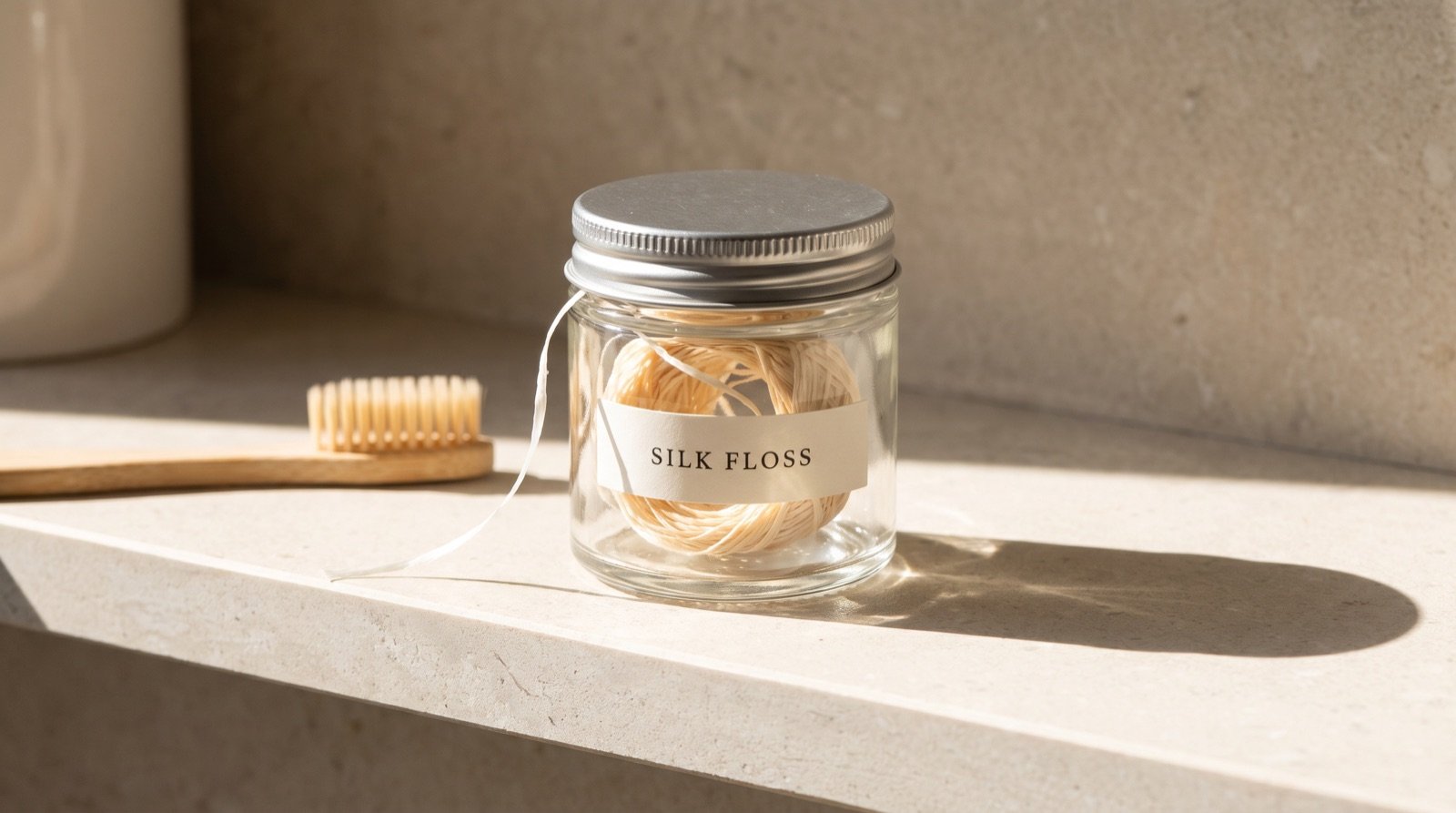
Silk floss is the simplest answer. It’s compostable, it comes in refillable glass jars, and it tested non-detect. Not vegan, which matters to some people.
For a vegan option, look for PLA or nylon coated with plant wax rather than anything described as glide, slick, or coated for easy sliding. That language is doing a job on the packaging, and it’s the language that correlates with fluorine.
Simplest rule of all: if the pitch is that it slides effortlessly between tight contacts, ask what’s making it slide. Most floss doesn’t need any of it. This is one of the cheapest swaps in the zero-waste bathroom list, and unlike a lot of them it doesn’t ask you to change how you do anything.
Frequently asked questions
Is PTFE floss dangerous?
PTFE itself is a large, stable polymer that isn’t absorbed, so the risk isn’t the coating. The concern is the smaller PFAS that can accompany it, and one study found people using PTFE-coated floss had higher blood levels of one of them. No one has established a dose or a health outcome from floss specifically.
Which dental floss has no PFAS?
Silk floss tested non-detect in independent testing, and so did most of the 39 products tested. Avoid anything marketed on how smoothly it glides, which is where PTFE coatings live. Oral-B reformulated Glide to remove PFAS as of March 2026, so newer spools of that brand are also clear.
Should I stop flossing?
No. Flossing has clear dental benefits and the PFAS question is about which floss, not whether. Swap the product, keep the habit.
How can I tell if floss contains PFAS from the label?
Usually you can’t, since there’s no requirement to disclose it. The reliable signals are indirect: PTFE or Teflon named outright, or marketing language about gliding and sliding, both of which point at a fluorinated coating. Floss described as silk, nylon, or plant-wax coated is the safer default.
Related reading
More on PFAS: what’s really behind nonstick cookware, what “quick-dry” swimwear is often doing, and the one that reaches most people, PFAS in drinking water, with our vetted water filters. For the rest of the bathroom, see our zero-waste bathroom swaps and the natural toothpaste picks.