Does Brita Remove PFAS? What the Testing Actually Shows
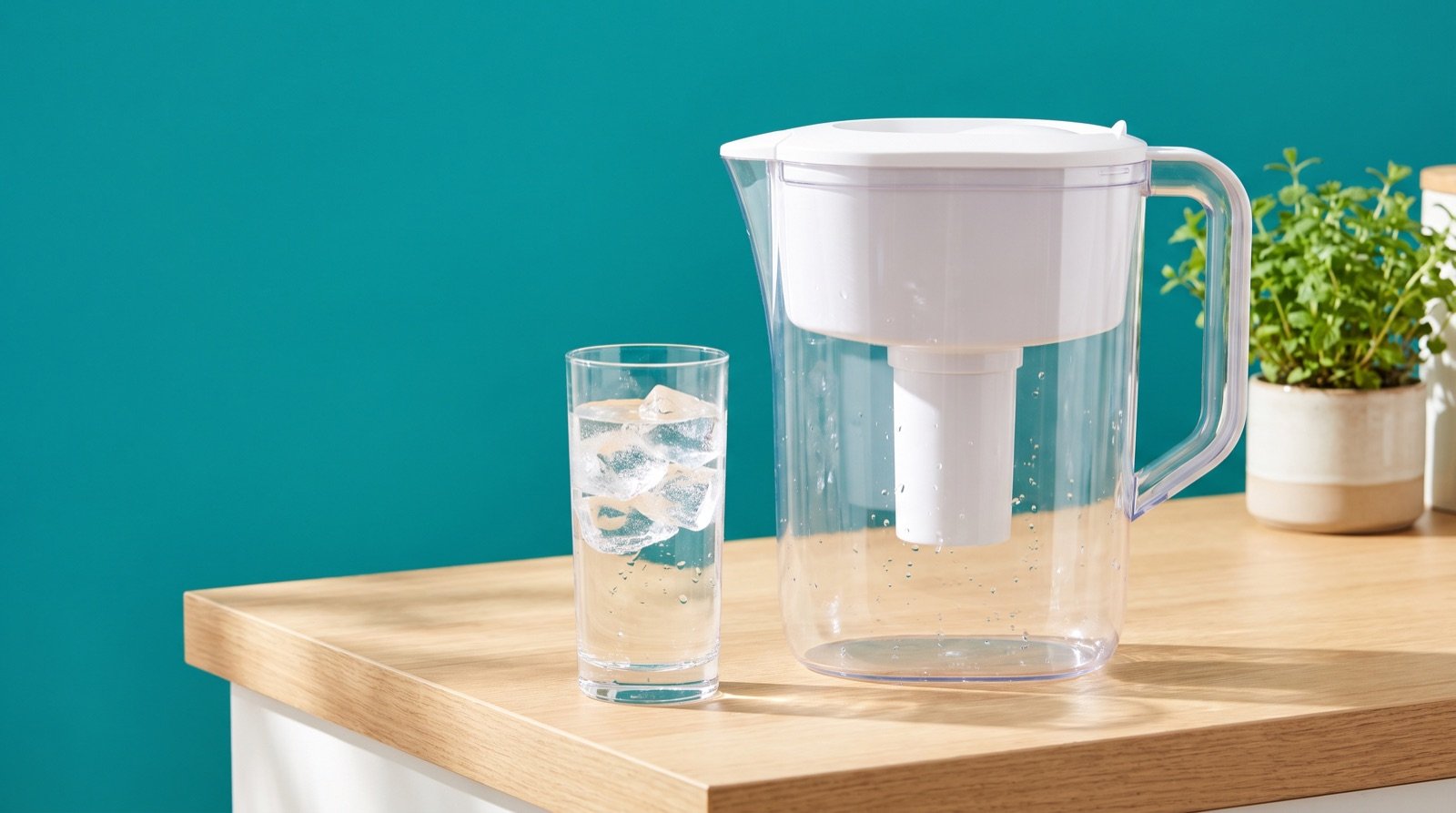
You bought the pitcher, you keep the filters changed, and somewhere along the way you assumed it was handling the scary stuff. Then PFAS started showing up in the news, and the question gets uncomfortable: is the thing in your fridge door doing anything about it?
Short answer: the standard Brita filter is not certified to reduce PFAS. The Brita Elite filter is certified against NSF/ANSI 53 for two specific PFAS, PFOA and PFOS, and a 2024 peer-reviewed study found its removal of a broad 75-compound PFAS mix fell from about 36% early in the filter’s life to roughly 8% by the end of it. If PFAS is the reason you’re filtering, a standard Brita isn’t the tool.
That’s not a scandal, exactly. It’s a mismatch between what the product was built for and what people now assume it does.
What a Brita filter is actually built to do
The original Brita filter was designed around taste. Chlorine, odor, a bit of copper and mercury, and the cloudy flavor that makes tap water unpleasant. It does that job well, which is most of why the brand became a verb.
That target is written into its certification. The standard filter is certified to NSF/ANSI 42, the aesthetic-effects standard, which covers chlorine, taste and odor. Aesthetic. The word is doing real work there, because it’s the standard that governs how water seems rather than what’s dissolved in it that could hurt you. Health-effects contaminants live under a different standard entirely, which we break down in our guide to what the NSF water filter certifications actually cover.
So a standard Brita was never lying to you. It just answers a different question than the one you’re now asking.
The Elite filter, and the two chemicals it covers
Brita’s answer to the PFAS conversation is the Elite filter, and it does carry a real certification: IAPMO certified it against NSF/ANSI 53 for the reduction of PFOA and PFOS.
Here’s the catch, and it’s a big one. PFOA and PFOS are two chemicals. The PFAS family runs to thousands, and the ones being manufactured today are largely the newer replacements, precisely because PFOA and PFOS were phased out of US production years ago. A filter certified for the two legacy chemicals is certified against yesterday’s problem. The same pattern shows up across consumer goods, from nonstick cookware to dental floss: the famous chemical gets replaced, the family stays.
What happened when researchers tested it properly
A 2024 study in Frontiers in Environmental Chemistry ran pitcher filters against 75 different PFAS chemicals, which is a far harder test than the two-compound certification.
They found the Brita Elite removed about 36% of that PFAS mix early in the filter’s life, after roughly 20 liters. By 160 liters, near the end of the filter’s rated life, removal had fallen to about 8%. Averaged across the whole filter, weighted by volume, it came out around 20%.
That decline is the part worth sitting with. A certification is measured at a point in the filter’s life. Your pitcher is used across all of it. So the number on the box and the number coming out of your tap in week ten are not the same number, and nothing on the packaging tells you that.
| Quick facts | Brita and PFAS |
|---|---|
| Standard filter | Certified to NSF/ANSI 42, aesthetic effects. No PFAS claim. |
| Elite filter | IAPMO certified to NSF/ANSI 53 for PFOA and PFOS reduction |
| PFAS covered | Two, out of thousands in the family |
| Independent testing | ~36% of a 75-PFAS mix at 20L, ~8% at 160L, ~20% volume-weighted (2024) |
| Owner | Brita’s North American business is a Clorox brand |
| The catch | Certified performance is a point measurement; real removal falls as the filter loads up |
So what should you actually do
If your water is fine and you filter for taste, a Brita is a reasonable object and you can stop reading. That’s the job it was built for and it does it.
If you’re filtering because of PFAS, you want a different mechanism. Reverse osmosis handles PFAS well because it isn’t relying on the contaminant sticking to carbon, and a well-built activated carbon block certified to NSF/ANSI 53 with a broad PFAS claim is the other credible route. We compare the two in reverse osmosis versus carbon filters, and the systems that clear our bar are in our roundup of the best water filters.
One step first, though, and it’s free: find out what’s actually in your tap water. PFAS might not be your problem. Lead might be. Buying a filter before you know which is how people end up with the wrong one.
Frequently asked questions
Does the standard Brita filter remove any PFAS?
It carries no PFAS certification, so there’s no verified claim to rely on. Activated carbon does adsorb some PFAS incidentally, and independent tests have measured varying amounts, but “some, sometimes, declining as it clogs” isn’t a basis for a decision. If PFAS is your reason for filtering, choose something certified for it.
Is the Brita Elite filter worth it for PFAS?
It’s better than the standard filter and it holds a real certification, but only for PFOA and PFOS. Given that broad-mix testing showed removal dropping to single digits late in the filter’s life, it’s a partial answer at best. For a household specifically worried about PFAS, reverse osmosis or a carbon block with a broad NSF/ANSI 53 PFAS claim is the stronger choice.
What is NSF P473, and why don’t filters advertise it anymore?
P473 was a standalone NSF protocol for PFOA and PFOS reduction. It was retired and folded into NSF/ANSI 53 and 58 in 2017, and the 2022 revisions added five more PFAS plus a combined “Total PFAS” claim. Some product pages still reference P473 out of habit. Today the thing to look for is a 53 or 58 certification that names PFAS.
How often do I need to change the filter for it to work?
At minimum, on the schedule the manufacturer states, and sooner if your water is heavily contaminated. This matters more than most people realize: the testing above showed removal falling as the filter processed more water. A filter left in past its rated life isn’t a weaker filter so much as an unreliable one.
Related reading
If you’re working out which system fits your house, start with reverse osmosis versus carbon filters and what the NSF certifications mean. Then see our vetted picks in the best water filters. For the wider PFAS picture, we’ve covered them in nonstick cookware and swimwear.