The Best Water Filters for PFAS and Real Contaminants
In May 2026, the EPA kept its limits on the two most notorious PFAS in drinking water at 4 parts per trillion, proposed rescinding the limits on four others, and pushed the compliance deadline for utilities out to 2031. Read that again. The chemicals didn’t change. The paperwork did.
Which is the honest reason a water filter is worth thinking about right now. Not panic, just arithmetic: the enforcement timeline moved and the water didn’t. If you want the short version of what follows, AquaTru is the system we’d point most people toward when PFAS is the actual worry, because reverse osmosis handles it by physics rather than by hoping a contaminant sticks to carbon. If that’s more machine than you want on your counter, Clearly Filtered is the pitcher with the broadest published testing.
Before any of that, though: the most useful thing on this page is free. Your utility publishes an annual report of what’s in your supply, and reading it takes ten minutes. Filters address specific contaminants. Buying one before you know which contaminant you have is how people end up with an excellent chlorine filter and a nitrate problem.
What had to line up:
- A certification or real lab data: NSF/ANSI 53 or 58 naming the contaminant, or published testing from an accredited lab with the report available, not a “99% of contaminants” banner.
- Claims that match the mechanism: carbon does organics, membranes do dissolved solids. A product claiming everything with the wrong hardware didn’t make it.
- Ownership disclosed: two of these five are owned by large parent companies. That doesn’t disqualify them, but you hear it from us rather than finding out later.
Our picks at a glance
- Best overall for PFAS: AquaTru
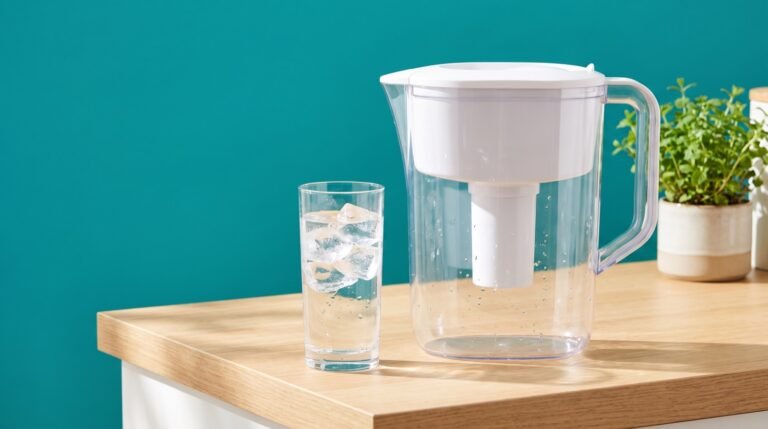
- Best pitcher: Clearly Filtered
- Best independent brand: Epic Water Filters
- Best under-sink: Hydroviv
- Best value: LifeStraw
| Brand | Type | Start with | Price | Certified to | Ownership |
|---|---|---|---|---|---|
| AquaTru | Countertop reverse osmosis | AquaTru Classic | $475 | NSF/ANSI 42, 53, 58, 401 (via IAPMO) | Ideal Living |
| Clearly Filtered | Pitcher | Clean Water Pitcher | $110 | NSF/ANSI 42 and 372; PFAS claims from independent lab testing | Privately held, no parent disclosed |
| Epic Water Filters | Pitcher | Pure XP Pitcher | $84 | Independent lab testing against NSF/ANSI 53 and 58 protocols | Independent, founder-led |
| Hydroviv | Under-sink | Under Sink Water Filter | $267 | Built to your local water report; components NSF-certified | Culligan International |
| LifeStraw | Gravity dispenser | Home Dispenser | $65 | NSF/ANSI 42, 53 and 401 across the Home line | Independent, Vestergaard Frandsen Group sister company |
Prices checked on each brand’s own storefront on August 30, 2026, at list price rather than whatever promotion was running. Clearly Filtered’s pitcher was showing at $99 against a $110 list at the time of checking.
AquaTru: countertop reverse osmosis without the plumbing
Best for: PFAS, nitrate, arsenic and anything dissolved | Price: $375–$495 | Start with: AquaTru Classic, $475 | Ownership: owned by Ideal Living
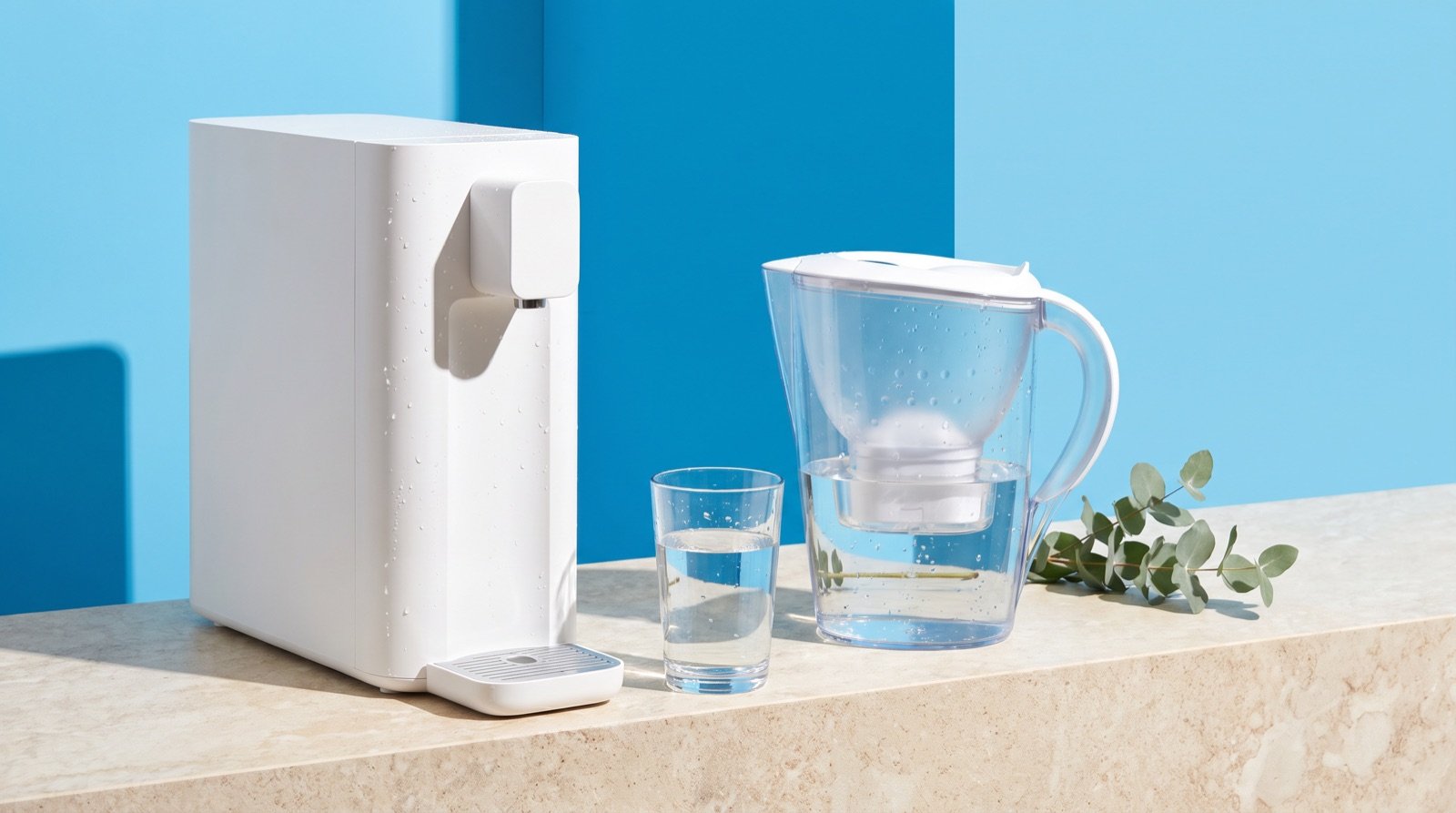
If your reason for filtering is a specific contaminant rather than taste, this is the one. Reverse osmosis removes PFAS the way it removes everything else dissolved, by pushing water against a membrane that simply won’t pass it, and that mechanism doesn’t degrade into “somewhat” the way carbon adsorption can. AquaTru carries IAPMO certifications against NSF/ANSI 42, 53, 58 and 401, which is an unusually broad stack: taste, health effects, reverse osmosis performance and emerging contaminants, all four. Most competitors hold one or two.
The countertop format is the reason it’s here rather than a plumbed-in system. No installation, no plumber, nothing under the sink, which matters enormously if you rent. You fill a tank, it fills a carafe.
The tradeoffs are real and you should know them before spending $475. It takes up meaningful counter space, it’s slow because it fills a reservoir rather than pouring on demand, replacement filter sets are an ongoing cost, and like all reverse osmosis it discharges some water as concentrate. It also strips beneficial minerals, which is why the alkaline mineral option exists at a small premium. If none of that bothers you, nothing else here removes more.
Clearly Filtered: the pitcher with the broadest contaminant list
Best for: wide coverage without a machine on the counter | Price: around $110 | Start with: Clean Water Pitcher, $110 | Ownership: Clearly Filtered, Inc., privately held, no parent company disclosed
Clearly Filtered publishes the most aggressive testing claims of any pitcher we looked at, and unusually, it publishes the data behind them. Its Clean Water Pitcher is tested by an accredited independent laboratory against a list running past 380 contaminants, with per-contaminant reduction figures rather than a single headline percentage: fluoride, microplastics, lead, PFOA and PFOS all listed individually with their own numbers.
Now the honest part, and it’s the thing most reviews of this pitcher skip. Its NSF certifications are Standard 42, which covers taste and odor, and Standard 372, which certifies that the product itself is lead-free rather than that it removes lead. The big contaminant claims rest on the independent lab data, not on NSF certification of those claims. That’s a legitimate position and the data is specific and public, which is more than most brands offer. It is still a step below certification, and we’d rather say so than let the words “NSF certified” do work they haven’t earned. Our guide to what each NSF number actually covers unpacks exactly this distinction.
Beyond that: it’s slow to pour, the filters are expensive, and the pitcher is bulky in a fridge door. For the widest published coverage you can get without plumbing or counter space, though, it’s the pitcher we’d buy.
Epic Water Filters: the independent pick, made in the US
Best for: an independent brand at a sane price | Price: around $84 | Start with: Pure XP Pitcher, $84 | Ownership: independent, founder-led since 2015
Epic is the one on this list that answers to nobody. Founded in 2015 and run by its founders out of Boulder, Colorado, with manufacturing in Florida, it stayed independent while most of its competitors were bought. Given how much of this category now rolls up to two or three parent companies, that’s worth something in itself.
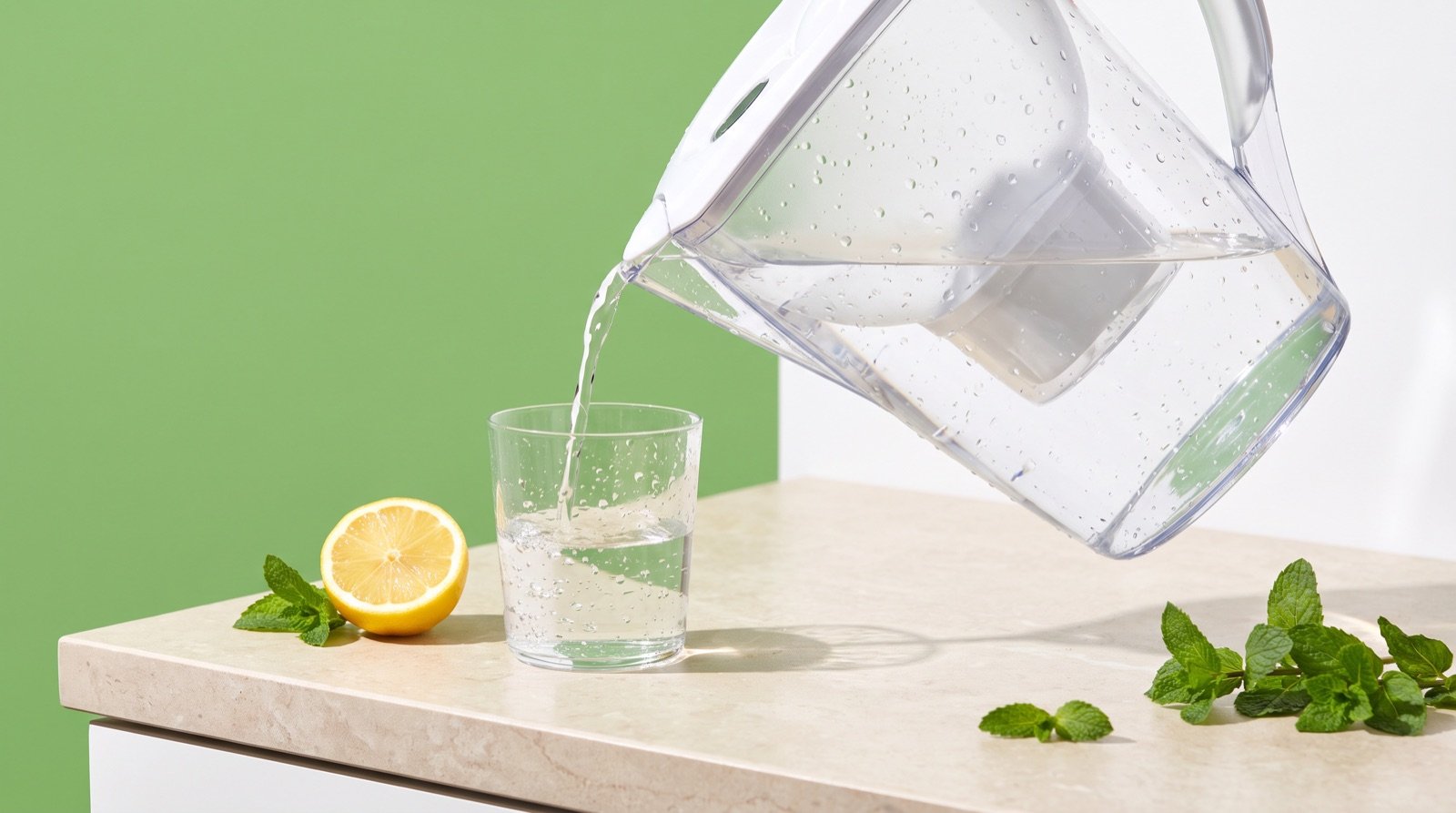
The Pure XP Pitcher is the everyday recommendation at $84, targeting fluoride, PFAS and parasites, and the brand publishes independent lab testing conducted against NSF/ANSI 53 and 58 protocols. There’s a Nano XP at $82 that adds bacterial reduction if you’re on well water or somewhere with boil-water advisories.
Same caveat as Clearly Filtered, and Epic is upfront about it: this is testing against the protocols rather than certification to them. Filters also need changing on schedule, which is true of every carbon filter here and matters more than people think, because carbon’s performance falls as it loads up. For an independent brand with published data at a price that isn’t punishing, this is the value pick of the pitchers.
Hydroviv: built around your local water report
Best for: a specific known contaminant, and renters who can plumb one fitting | Price: around $267 | Start with: Under Sink Water Filter, $266.65 | Ownership: owned by Culligan International (since 2021)
Hydroviv does something none of the others do: it asks where you live and builds the filter around the answer. You give them your address, they pull your municipality’s water quality data, and they configure the media in your cartridge for what’s actually in your supply rather than shipping everyone the same generic block. The company was founded by a water chemist after the Flint crisis, and the science-first positioning isn’t marketing gloss, it’s the actual product.
Ownership disclosure, because it’s the thing you’d want to know: Hydroviv was acquired by Culligan International in 2021. Founder Eric Roy stayed on as chief scientist. Culligan is a very large water treatment company, and if buying from an independent brand is part of why you’re here, that’s a real consideration. It doesn’t change what the filter does.
The under-sink format is the trade. It needs a fitting installed, which is a straightforward job but not nothing, and it’s the least portable option here if you move often. At $267 it’s also a serious purchase. For matching a filter precisely to a known local problem, though, nothing else on this list is even trying.
LifeStraw: the most water per dollar
Best for: households, outages, and anyone who wants volume cheaply | Price: around $65 | Start with: Home Dispenser, $64.95 | Ownership: independent since 2020, a sister company to Vestergaard in the privately held Vestergaard Frandsen Group
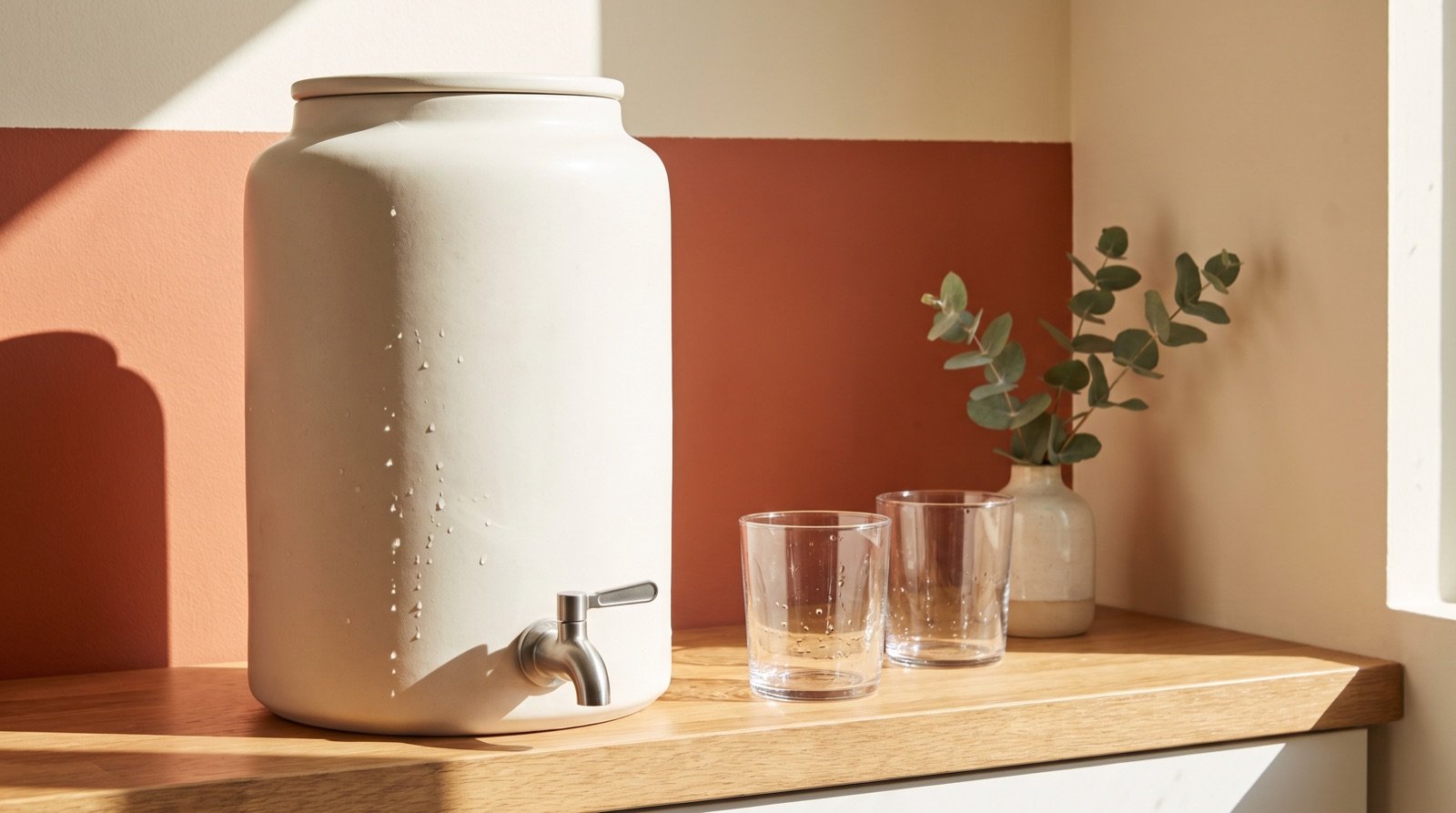
LifeStraw came out of humanitarian water work, and it shows in the engineering priorities: the products are built to move a lot of water reliably with no power and minimal fuss. The Home Dispenser is $64.95, holds far more than a pitcher, and the Home line carries NSF/ANSI 42, 53 and 401 certifications, which is a stronger certification position than either pitcher above.
It’s also the one that keeps working when the power doesn’t. Gravity is the whole mechanism, so a dispenser on the counter during a boil-water notice or an outage is doing its job while an electric system sits dead.
Two limits. The dispenser is large, and it’s a counter object rather than something you tuck away. And while the Home line’s certifications are solid on lead, chlorine and emerging contaminants, this isn’t the pick if PFAS specifically is your reason for buying, where reverse osmosis is the stronger answer. For the most certified filtered water per dollar, though, nothing here beats $65.
What to avoid when you’re shopping
The water filter aisle runs on words that sound technical and certify nothing.
“Purifier” and “purified” mean nothing on their own. Neither term is regulated in this context. A product can call itself a purifier while holding no health-effects certification at all. The number after “NSF/ANSI” is the actual claim, and we’ve broken down what each one covers.
“Tested to NSF standards” is not certification. It’s the manufacturer describing its own test. Certification means an accredited third party such as NSF, IAPMO or the Water Quality Association verified it, audits the factory, and lists the product publicly. The wording gap between “certified to” and “tested to” is doing enormous work, and it’s deliberate.
TDS meters as proof of anything. The little pen that shows a satisfying number drop measures total dissolved solids, which is mostly minerals. It cannot see PFAS, which are present at parts per trillion, and it cannot see lead in any meaningful way. A TDS reading is a parlor trick, not a safety test.
Alkaline and ionizer marketing. Claims about pH, “structured” water and antioxidant potential are health marketing rather than contaminant removal, and they’re often bolted onto filters whose actual filtration is unremarkable. If a product leads with what it adds rather than what it removes, read the removal claims very carefully.
“Removes 99% of contaminants.” Ninety-nine percent of which contaminants, measured over what volume, verified by whom? Real data is specific: named contaminants, individual reduction percentages, the lab named, and the test volume stated. Anything less is a sentence engineered to sound like data. It’s the same pattern we map in our greenwashing guide.
What we left off, and why
Berkey is the notable absence, and it’s a regulatory story rather than a water quality one. In December 2023 the EPA issued a stop-sale order over the silver used in Black Berkey elements, on the basis that silver acts as a pesticide and requires registration under federal pesticide law. Manufacturer New Millennium Concepts sued the EPA in August 2023; the case was dismissed in 2024 on jurisdictional grounds and the appeal was still before the Fifth Circuit as of 2026, with standalone replacement elements sold out at authorized dealers in the meantime. We’re not saying the filters don’t work. We are saying we won’t recommend a system whose core consumable is caught in an unresolved federal enforcement action, because the thing you’re really buying is a decade of replacement filters.
Standard Brita and PUR pitchers are excellent at what they were built for, which is taste. The standard Brita filter holds no PFAS certification, and even the Elite is certified only for PFOA and PFOS, two chemicals out of thousands. We went through the peer-reviewed testing in detail, including how sharply removal falls as the filter ages.
How to actually choose one
Don’t start with the brand. Start with your water report, then match the mechanism.
If PFAS, nitrate or arsenic showed up, you want reverse osmosis, which means AquaTru. If it’s lead, chlorine and general municipal water, a certified carbon filter is enough and cheaper, so LifeStraw or Epic. If you want the widest published coverage in a pitcher, Clearly Filtered. If you have one specific known local contaminant and can install a fitting, Hydroviv builds around it. And if you’re on a well, test first, because none of this applies until you know what you have. Our comparison of the two mechanisms is the piece to read before spending anything.
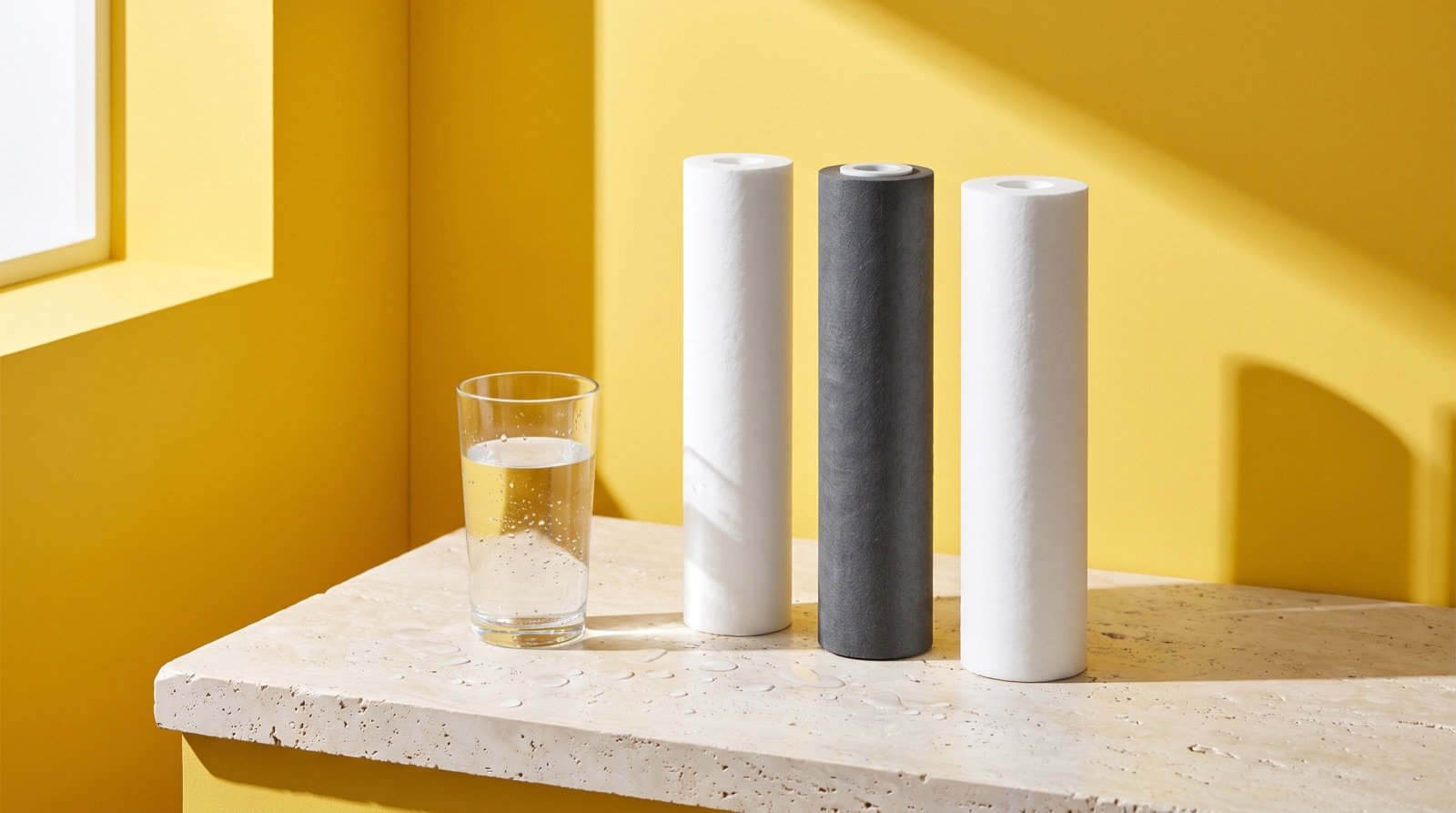
One habit matters more than which of these you buy: change the filter on schedule. Every carbon filter on this list degrades as it loads up, and the testing shows removal falling off well before people typically replace them. A mid-priced filter changed on time outperforms an expensive one left in for a year.
Frequently asked questions
What kind of water filter removes PFAS?
Reverse osmosis is the most reliable, because it excludes PFAS physically at the membrane rather than depending on adsorption. A carbon filter can also do it, but only one certified to NSF/ANSI 53 with PFAS named in its claims, and its performance declines as the filter loads with use. Look for the contaminant named explicitly, not a general “reduces contaminants” statement.
Do I need a water filter if my utility says the water is compliant?
Compliance means your utility met the enforceable legal limits, which isn’t the same as the water containing nothing you’d rather avoid. Some limits are decades old, and EPA’s own health-based goals for several contaminants sit at zero while the enforceable limit is higher. Read your annual report, see what was detected, and decide from the actual numbers rather than from the word “compliant.”
Is reverse osmosis worth it over a pitcher?
If a specific dissolved contaminant is your reason for filtering, yes, because a pitcher cannot address nitrate, arsenic or fluoride at all and reverse osmosis handles all three. If your concern is chlorine taste and general water quality, a good certified pitcher does the job for a fifth of the price. The mechanism should match the problem.
How often should I replace the filter?
At minimum on the manufacturer’s schedule, and sooner if your water is heavily contaminated or you’re filtering a lot of volume. This matters more than most people assume: independent testing on pitcher filters has shown contaminant removal dropping substantially between the start and end of a filter’s rated life. An overdue filter isn’t a slightly weaker filter, it’s an unpredictable one.
Does a water filter remove fluoride?
Ordinary activated carbon does not. Reverse osmosis does, and a few pitchers reduce it using additional media such as activated alumina rather than the carbon itself. If fluoride reduction is specifically why you’re buying, check that the product states it as a claim with a number attached, because most filters that don’t mention it simply don’t do it.
Are expensive water filters actually better?
Not automatically, and price tracks format more than performance here. A $65 gravity dispenser with NSF/ANSI 53 certification has a stronger verified position on lead than some pitchers costing more. What you’re paying for at the top of the range is usually reverse osmosis hardware, which really does remove more. Match the certification to your contaminant and buy the cheapest thing that clears it.
Can I use a filter pitcher with well water?
Only carefully. Private wells aren’t tested by anyone unless you arrange it, and they’re more likely to carry nitrate, arsenic or bacteria, none of which an ordinary carbon pitcher addresses. Test the water at an accredited lab first, then choose a system that names your specific contaminant. Some products add bacterial reduction, but that has to be stated explicitly rather than assumed.
Related reading
Filtering at home and still buying bottled water on the go? Our vetted water bottles are chosen on steel grade, linings and whether the brand will say its vacuum seal is lead-free.
The three pieces behind these picks: what’s actually in your tap water and how to read your utility’s report, reverse osmosis versus carbon filters on which mechanism suits which contaminant, and what the NSF certifications cover so the claim on the box means something. We also went deep on whether a Brita removes PFAS.
For the wider PFAS picture, see PFAS in nonstick cookware and in dental floss. And if you’re working through the kitchen generally, our zero-waste kitchen swaps and non-toxic cookware roundups pair with this one.