The Best Zero-Waste Bathroom Swaps for a Plastic-Free Routine
Count the plastic in your bathroom sometime. The toothbrush you toss every few months, the razor, the shampoo bottle, the conditioner bottle, the body wash, the floss picks, the cotton rounds. Almost all of it gets used briefly and thrown out. And almost all of it has a swap that lasts years instead. Years, not weeks.
We covered the whole-home version of this in our zero-waste swaps guide. The bathroom, though, earns its own list. It’s where the plastic hides in plain sight, and where the easy wins pile up fastest. None of this asks you to go fully crunchy overnight. Pick one, live with it, add another when you’re ready.
Here’s where we’d start.
Swap the plastic toothbrush for bamboo
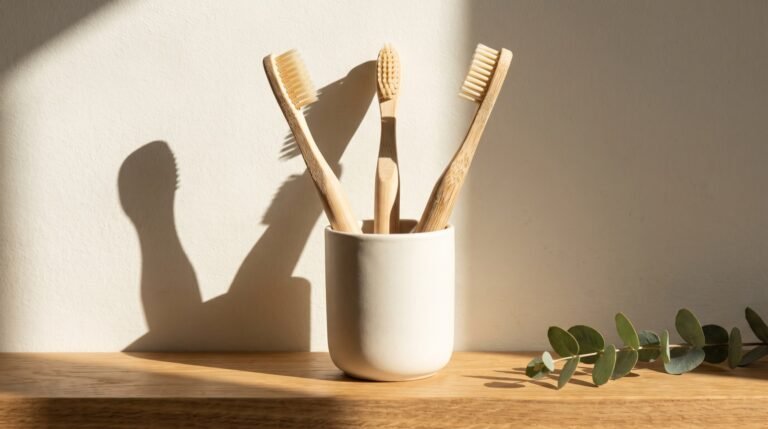
Dentists tell you to replace your toothbrush every three months. Do that math and it’s four plastic brushes a year per person, none of which ever break down. Brush With Bamboo makes the switch painless: a bamboo handle, plant-based bristles, and a box you can compost. Jungle Culture makes a good one too, if you’re already ordering from them.
The only habit to build is letting the handle dry out between uses so it doesn’t stay damp. That’s the whole learning curve. The bristles are the part worth reading up on before you compost anything, because they aren’t compostable on any bamboo brush you can buy, whatever the box implies.
The safety razor you buy once
If you make a single swap on this whole list, make it this one. Disposable razors are a slow, pricey drip: plastic handles binned every few weeks, cartridge refills that cost a small fortune per pack. A metal safety razor flips the math completely. You buy the handle once and it lasts years. The blades cost pennies. And the shave comes out closer than the plastic three-blade thing you’ve been putting up with.
The safety razor from Jungle Culture is the one I keep pressing on people: solid, nicely weighted, and it ships with a starter pack of blades. Give it a week to get the angle right. After that you’ll never buy a disposable again.
Start here if: you want the swap that saves the most plastic and the most money at once.
Shampoo and conditioner, minus the bottles
One shampoo bar replaces two or three plastic bottles and lasts about as long as all of them. Ethique, out of New Zealand, more or less built this category, with 11 shampoo bars split by hair type. It’s no longer in B Lab’s directory of certified B Corps, though it spent years there. Worth picking carefully, because bars don’t suit everyone equally. HiBAR is the US pick, with salon-style formulas that lather far better than most people expect a bar to. Way better.
Bars want a draining dish or they go soft, same as any soap. Give yours a spot that isn’t a puddle and it’ll last. And if your bar barely lathers, that’s a water problem rather than a bar problem. We got into why hard water fights shampoo bars, and what actually fixes it. Ethique’s shampoo bar range splits by hair type, which is worth two minutes before you pick one.
Toothpaste tablets instead of the tube
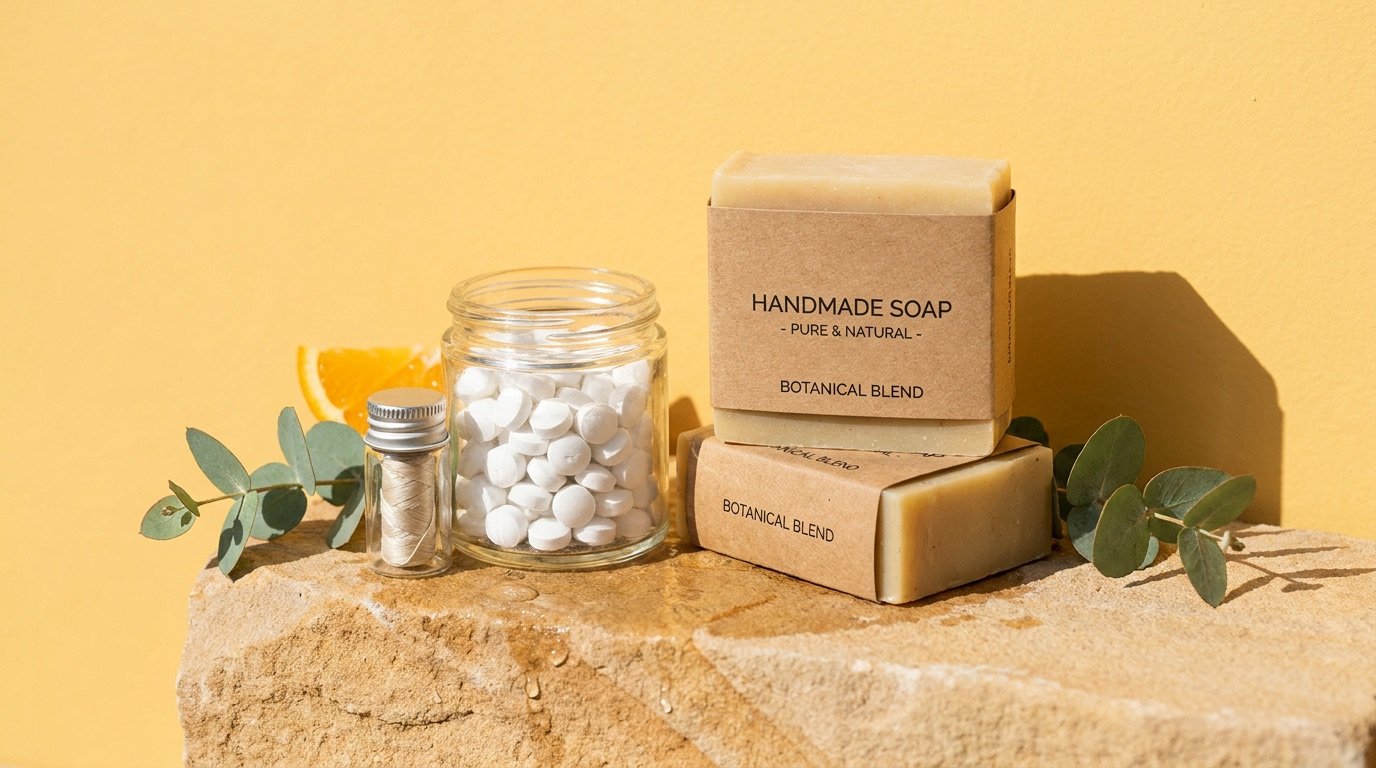
Here’s one almost nobody thinks about: toothpaste tubes are close to impossible to recycle, because they fuse plastic and metal layers into one thing no facility can easily separate. Bite skips the tube completely with little toothpaste bits in a refillable glass jar. You bite down, brush, and it foams up like regular paste. Huppy makes a similar tablet if you want to compare.
The texture feels odd for exactly one morning. By day two, it’s just brushing your teeth.
Floss that isn’t spun plastic
Regular floss is nylon, coated in more plastic, wound onto a plastic spool you throw away. Dental Lace swaps all of it for compostable silk in a small refillable glass vial: buy the vial once, top it up with refills after that. Prefer to skip silk? Georganics makes a plant-based version that works the same way.
There’s barely a tradeoff here, honestly. It flosses exactly like what you’re used to, minus the plastic that outlives us all. No spool. No waste.
Worth knowing what you’re leaving behind, too. Conventional floss glides because of a coating, and one lab recorded the highest organic fluorine it had ever seen in a consumer product on a spool of the stuff.
Reusable rounds and swabs for the everyday stuff
Cotton rounds and swabs are so small it’s easy to forget you’re binning a handful every single day. LastObject makes reusable versions of both, the LastRound and the LastSwab, that wash and reset hundreds of times over. Jungle Culture’s reusable cotton rounds do the same job for makeup and toner.
The tradeoff is a tiny mesh laundry bag of rounds going through the wash now and then. Wash, dry, reuse. Small price for retiring a whole drawer of single-use cotton.
Start here if: you go through makeup rounds or cotton buds daily.
Bar soap over the body wash bottle
The plastic body wash bottle has an ancient competitor that never needed a bottle at all: a bar of soap. Dr. Bronner’s castile bars are a widely available, honest place to begin: USDA Organic, Fair Trade ingredients, and a label short enough to actually read. The company dropped its B Corp certification in 2025, on the grounds that B Lab had gone too easy on multinationals, and kept everything else. You can pick a scent from its castile bar range. One bar easily outlasts a big bottle of shower gel.
Same rule as the shampoo bars: a draining dish keeps it from dissolving into mush. Standing water is the only enemy.
A deodorant that refills instead of restocks
Deodorant is the bathroom plastic almost nobody counts, a fresh plastic stick every month or so, headed straight for landfill. Wild solves both halves of that: a refillable case you keep for good, plus aluminum-free refills that compost. If you want the full rundown of which natural deodorants actually hold up through a real day, we ranked the best natural deodorants separately.
One honest caveat: a natural deodorant isn’t an antiperspirant, so you’ll still sweat a little. The odor control on the good ones, though, is the real thing.
You don’t have to do it all at once
Nobody swaps a whole bathroom in a weekend, and trying is how these things fizzle. Pick the swap that bugs you most or costs you most, change that one, and let it stick before you reach for the next.
If you want a running start, the razor and the toothbrush are the cheapest, easiest wins with the biggest plastic payoff. The bars and refills follow naturally once you’ve got the habit. One swap is one less plastic thing cycling through your home, week after week, for years. It adds up. Faster than it feels like it should.
Frequently asked questions
Where’s the easiest place to start with a zero-waste bathroom?
A bamboo toothbrush and a metal safety razor. They’re cheap, they’re a straight one-for-one replacement for something you already buy, and together they retire a surprising amount of plastic. The razor also starts saving you money almost immediately, since replacement blades cost a fraction of cartridge refills.
Do shampoo bars actually clean as well as bottled shampoo?
The good ones do, yes. Brands like Ethique and HiBAR lather and rinse much like bottled shampoo once you learn to rub the bar between your hands or straight onto wet hair. Give it a week or two. And if your hair feels coated rather than clean, that’s usually hard water reacting with the bar, not the bar failing.
Are safety razors hard to use?
There’s a short learning curve, not a hard one. The trick is to let the weight of the razor do the work and hold it at roughly a 30-degree angle instead of pressing down. After a few shaves it feels natural, and most people end up preferring it to a cartridge razor.
Is a zero-waste bathroom more expensive?
Upfront, a little. Over time, usually cheaper. The reusables cost more on day one but retire dozens of disposable purchases, and the safety razor in particular pays for itself fast. Bars and refills often work out cheaper per use than the bottled versions they replace.
Related reading
Want the rest of the house too? Our zero-waste home swaps guide covers the kitchen and cleaning cupboard, and we went deep on laundry in our roundup of the best non-toxic laundry detergents. To understand the ingredients behind conventional cleaning products, start with our non-toxic cleaning guide. Every brand we recommend gets a scored profile in our brand directory.