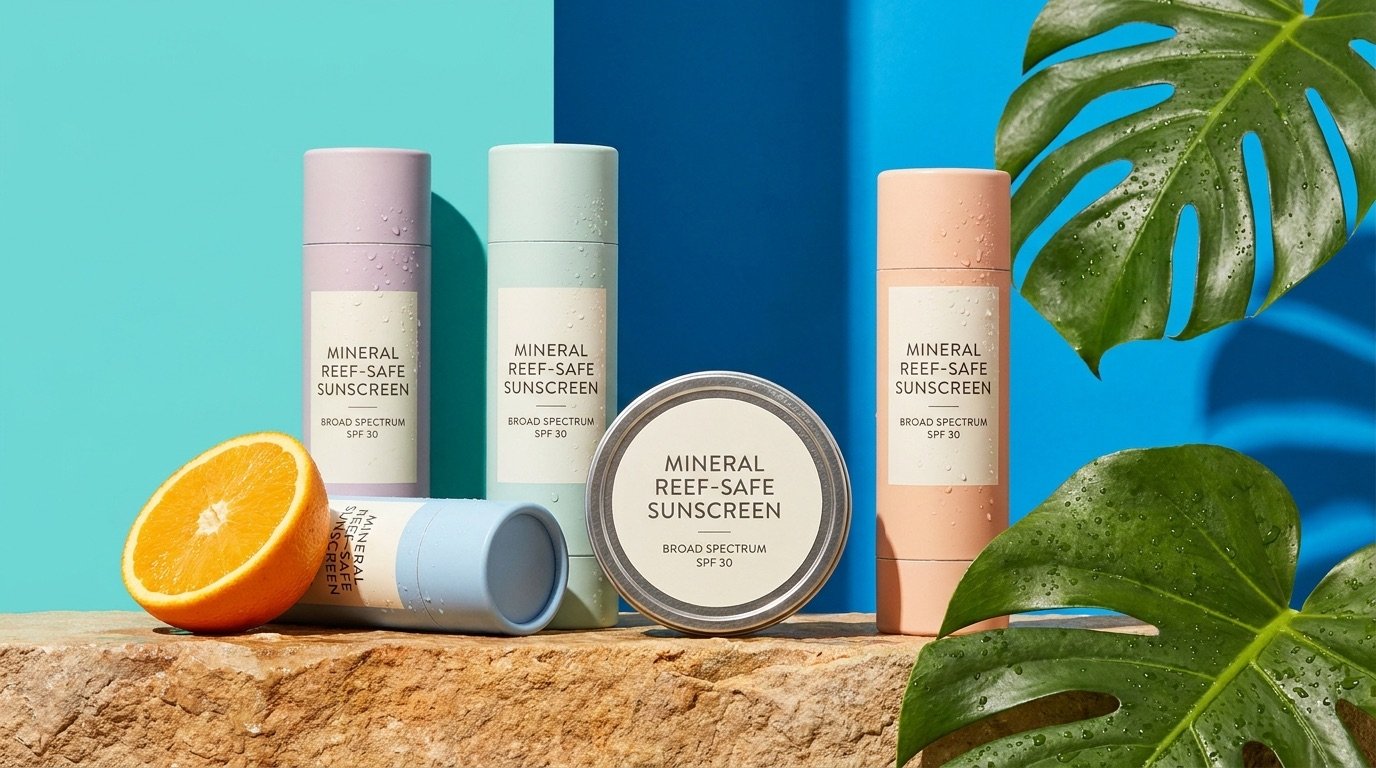
The Best Reef-Safe Sunscreens That Actually Rub In
Ever smeared on a “reef-safe” mineral sunscreen and walked around looking like a mime for the rest of the afternoon? That white cast is the reason most people quietly go back to the chemical stuff. Fair. Early mineral sunscreens were thick, greasy, and impossible to blend. A few still are.
But the good ones have caught up, and the reason to switch is bigger than clean beauty.
Two ingredients are the whole problem: oxybenzone and octinoxate. They’re the chemical UV filters in most conventional sunscreens, and they’re the reason Hawaii and the US Virgin Islands have banned certain sunscreens from sale outright. They wash off your skin in the ocean and bleach and deform coral. They’re also on the list of hormone disruptors worth avoiding in cosmetics, which is a second reason to skip them whether you’re near a reef or not.
Key West passed a ban too, in 2019. It never took effect: Florida’s legislature stripped every city in the state of the power to regulate sunscreen, and the governor signed that in June 2020, six months before the Key West rule was due to start. Which tells you how hard this gets fought.
Mineral sunscreen sidesteps all of it. Instead of absorbing UV with chemicals, it sits on top of your skin and physically bounces it away, using zinc oxide or titanium dioxide. Nothing to wash off into the water, nothing to soak into you. Those two minerals aren’t interchangeable, though, and only zinc covers the full UVA and UVB range on its own.
So here’s how we picked. Four things had to line up:
- Zinc: non-nano zinc oxide, the particle size that can’t slip through skin or harm coral.
- Filters: no oxybenzone or octinoxate.
- Ingredients: a short and readable list.
- Wearability: it had to actually rub in without turning you into a ghost.
We also leaned toward independent brands, for reasons we’ll get to.
These are the ones that made it.
Our picks at a glance
- Best overall: Badger
- Best for snorkeling and diving: Stream2Sea
- Best for sport and sweat: Raw Elements
- Best for everyday wear: All Good
- Best track record: Thinksport
- Best premium pick: Kokua Sun Care
- Best budget: Attitude
Badger: the one with nothing to hide
Best for: anyone who wants the shortest, most readable ingredient list | Price: $14–$25 | Certifications: B Corp, USDA Organic | Ownership: family-owned
If transparency is your tiebreaker, start with Badger. This is a small, family-run, employee-owned company in New Hampshire, and its sunscreens are about as simple as they come: non-nano zinc oxide and a handful of organic oils, often five or six ingredients total. You can read the whole label in one breath.
The mineral formulas run a little thick, which is the tradeoff for that short ingredient list, so warm it between your hands before applying. For a clean, no-mystery sunscreen you can trust on the whole family, nothing here is more honest.
Stream2Sea: the one built for the water
Best for: snorkeling, diving, and swimming over reefs | Price: $19–$29 | Certifications: Protect Land + Sea, EWG Verified | Ownership: independent, woman-owned
Stream2Sea earned its spot the hard way. Its sunscreens are tested and certified under the Protect Land + Sea standard, meaning an independent lab confirmed they’re free of the chemicals shown to harm coral and marine life. The brand was started by a diver, and it shows in every formula.
It’s non-nano zinc, biodegradable, and the packaging is sugarcane-based rather than petroleum plastic. If you actually snorkel, dive, or swim over reefs, this is the pick that’s proven, not just promised.
Raw Elements: the sport pick, made in Hawaii
Best for: sport, surf, and heavy sweat | Price: $18–$25 | Certifications: Protect Land + Sea | Ownership: founder-owned
For anyone who sweats through sunscreen by noon, Raw Elements is the one to beat. It’s formulated and made in Hawaii, packs a high dose of non-nano zinc, and holds up to surfing, sweating, and hours in the water better than almost any mineral formula going. Surfers swear by it for a reason.
It comes in a tin as well as a tube, which cuts down on plastic, though the tin takes a finger-scoop and a little patience to apply. Rugged, effective, and it exceeds Hawaii’s own reef-safe law rather than just meeting it.
All Good: the everyday one that blends
Best for: everyday wear that actually blends in | Price: around $18 | Certifications: B Corp, Leaping Bunny | Ownership: independent, woman-owned
Here’s the one that solves the white-cast problem best without giving up on ingredients. All Good is a certified B Corp out of California, and its sunscreens strike a rare balance: clean non-nano zinc formulas that still rub in and wear well under daily life. The brand also grows a lot of its own organic botanicals on a regenerative farm.
It’s not the highest-zinc option, so reapply on long beach days. But for the sunscreen you’ll actually reach for every morning, this is the easy one.
Thinksport: the one that keeps winning tests
Best for: a well-tested pick for sport, kids, and everyday | Price: around $15 | Certifications: EWG Verified | Ownership: founder-led since 2009
Thinksport (and its Thinkbaby sibling) shows up at the top of clean-sunscreen rankings year after year, and it holds one of the better safety ratings from independent reviewers. It’s non-nano zinc, water-resistant for a solid stretch, and it spreads more easily than its high SPF would suggest.
The scent and finish are a touch more “sport” than “spa,” which some people love and some don’t. For a well-tested, widely available mineral sunscreen that performs, it’s hard to argue with the track record.
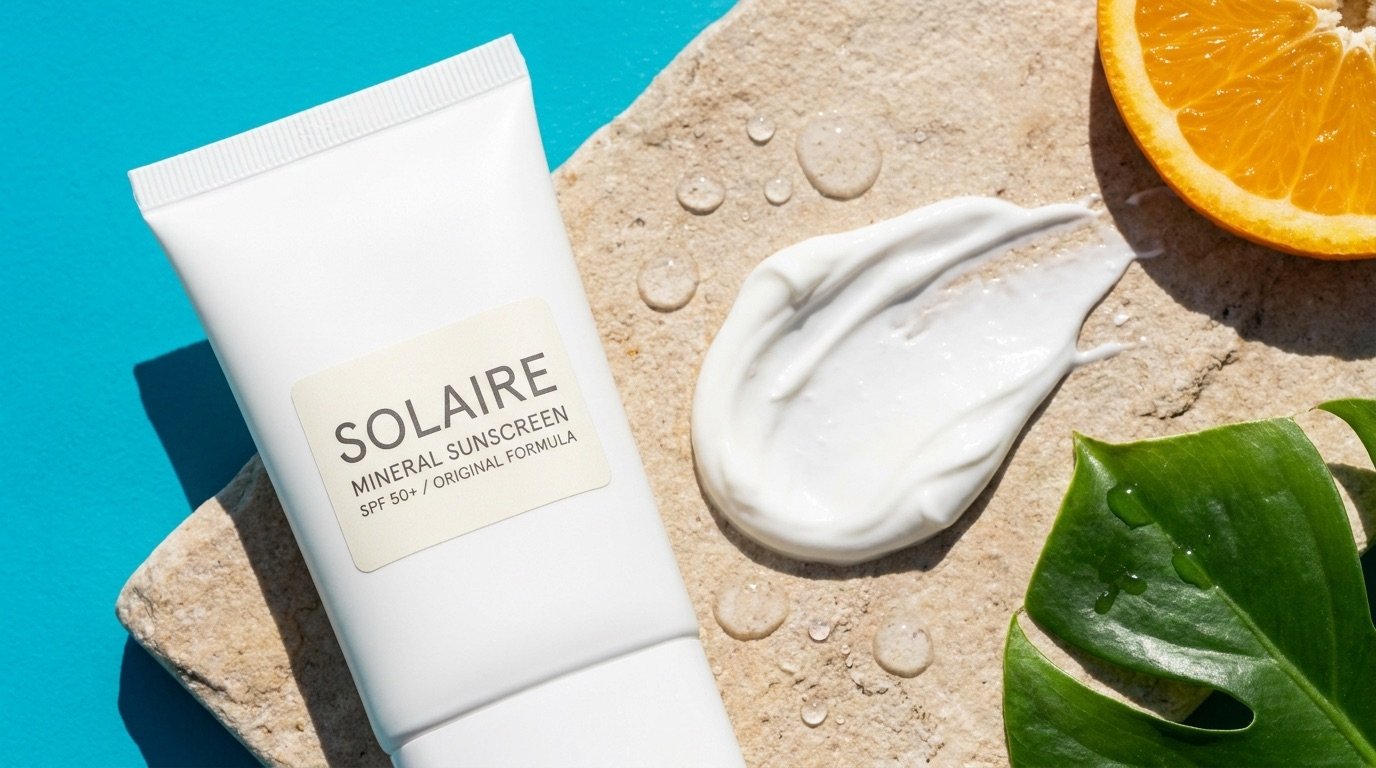
Kokua Sun Care: the premium Hawaiian one
Best for: a premium, skincare-like mineral formula | Price: around $33 | Certifications: EWG Verified | Ownership: independent
Kokua is the splurge, and it earns it. Made in Hawaii in small batches, it carries a high 25% non-nano zinc load plus antioxidants like Hawaiian spirulina, kukui oil, and macadamia, so it protects while feeling more like skincare than sunblock. The finish is surprisingly light for that much zinc.
You pay for the small-batch quality, and it’s mostly a direct-to-consumer buy. If you want the most luxurious mineral sunscreen on this list and don’t mind the price, this is it.
Attitude: the cheapest verified pick
Best for: families and tight budgets | Price: around $23 | Certifications: EWG Verified | Ownership: founder-owned since 2006
Attitude, out of Canada, does the same trick in sunscreen that it pulls across its whole range: real certification at a low price. Much of its mineral sun line is EWG Verified, it’s non-nano zinc, and there are plastic-free options in a refillable stick. If you’re buying sunscreen for a whole family and going through it fast, the math is friendly here.
The formulas are functional rather than fancy, and on the very sweatiest days they’re average. For an affordable, verified-safe mineral sunscreen you can restock without wincing, it’s the value winner.
What we left off, and why
You’ll notice no Sun Bum, no Banana Boat, no drugstore “reef-safe” spray. Two reasons.
First, most of them still use chemical filters. A bottle can say “reef-friendly” on the front and list oxybenzone, octinoxate, or octocrylene on the back, because that phrase has no legal definition and nobody’s checking. Flip the bottle. If it isn’t zinc or titanium doing the work, it isn’t mineral.
Second, a lot of the big “clean” sunscreen names now sit under the same conglomerates we shop around. We’d rather tell you about a parent company than pretend it settles the question, so that isn’t what struck these off. It matters here because those are the same names leaning hardest on “reef-friendly” wording while the chemical filters stay in the bottle. If you want to understand how that label game works, our greenwashing guide breaks it down.
How to actually choose one
Don’t start with the SPF number. Start with what you’re doing.
If you just need daily face and arm coverage, All Good or Attitude blend in easily and won’t break the bank. If you’re getting in the water (snorkeling, surfing, swimming over reefs), Stream2Sea and Raw Elements are the ones built to stay put and proven not to harm coral. If simplicity is what you’re after, Badger’s five-ingredient formula is the cleanest. And for kids or reactive skin, Thinkbaby and Badger are the gentle, well-tested picks.
One rule that never changes: reapply. Mineral sunscreen works the second it’s on, but it wears off like any other, so top up every couple of hours and after you towel off.
Frequently asked questions
What makes a sunscreen actually reef-safe?
Two things. It has to skip the chemical filters shown to harm coral, mainly oxybenzone and octinoxate (and ideally octocrylene), and it should use non-nano mineral filters instead, meaning zinc oxide or titanium dioxide in a particle size too large to be ingested by coral. “Reef-safe” isn’t a regulated term, so the only way to be sure is to read the active ingredients yourself.
Do mineral sunscreens actually protect as well as chemical ones?
Yes. Non-nano zinc oxide is a broad-spectrum filter that blocks both UVA and UVB, and it starts working the moment it’s on, with no wait time. The old knock on mineral sunscreen was the white cast and thick feel, not the protection. The formulas on this list have largely fixed the feel while keeping the protection.
Is the white cast avoidable?
Mostly, yes. Newer mineral formulas like All Good and Thinksport blend far better than the chalky versions of a few years ago. Warming the product between your hands before applying helps a lot, and slightly tinted mineral sunscreens disappear on more skin tones. A little rubbing-in goes a long way.
Why avoid oxybenzone beyond the reef issue?
Oxybenzone is a hormone disruptor, which is why plenty of people avoid it even far from the ocean. It also absorbs through skin readily: in FDA testing it reached blood levels more than 500 times the threshold the agency uses to decide whether an ingredient needs further safety study. Skipping it protects the reef and takes one more endocrine disruptor out of your daily routine, which we cover in our guide to the ingredients worth avoiding in skincare.
Related reading
Want the detail behind the picks? We’ve written up each thing we screened for: is oxybenzone safe, octinoxate, the banned filter nobody talks about, and zinc oxide versus titanium dioxide.
Building a cleaner routine top to bottom? See our roundup of the best non-toxic skincare brands, and if you want to understand the ingredients behind all of this, start with our guide to endocrine disruptors in cosmetics. Each sunscreen brand above has a scored profile in our brand directory.