The Best Hydroxyapatite Toothpastes, and the Ones We Left Off
Did you know hydroxyapatite isn’t on the FDA’s list of anticavity ingredients? Every hydroxyapatite toothpaste in the US is sold as a cosmetic, which means nobody checks the particle size, the percentage or the claims before it hits the shelf.
That would matter less if 2025 hadn’t been the year of lead in toothpaste. An independent tester published lab results for dozens of brands, lawsuits followed, and some of the best-known hydroxyapatite names ended up in them. So we vetted this list on more than the active ingredient. If you want the short version, RiseWell is the one we’d start with at $12, and Elims is the one we’d pick if you want nano-hydroxyapatite with the specs on the label.
We checked each brand’s storefront, ingredient list, published testing, legal record since 2023, and who owns it. Four made it. The list of brands that didn’t is longer, and we think it’s the more useful part.
Here’s how we picked:
- Hydroxyapatite as the active, with the form stated. Nano or micro, ideally with a percentage. The difference matters, and a brand that won’t say which it uses is asking for trust it hasn’t earned.
- Lead and legal records checked. We looked at independent lab results where they exist, California Prop 65 notices and lawsuits. An open lead case or lead notice kept a brand off the list until it resolves. Those are allegations, not findings, and we’d rather wait than guess.
- Price from the brand’s own storefront, at the regular one-time price, checked October 22, 2026.
- Ownership named. All four are founder-run, which is less common in this category than you’d think.
Our picks at a glance
- Best overall: RiseWell
- Best nano-hydroxyapatite: Elims
- Best plastic-free: Bite
- Easiest to find in stores: NOBS
| Brand | Start with | Price | Hydroxyapatite | Lead Safe Mama result | Ownership |
|---|---|---|---|---|---|
| RiseWell | Mineral Toothpaste, Wild Mint, 3.4 oz | $12.00 | Micro, 10% | 26 ppb (kids’ Cake Batter) | Founder-led |
| Elims | 10% Nano-Hydroxyapatite Toothpaste, 4 oz | $16.00 | Nano, 10%, 60 nm | Not tested | Founder-owned |
| Bite | Toothpaste Bits, Fluoride-Free, 62 bits | $12.00 | Nano, percentage not stated | Not tested | Founder-owned, one outside investor |
| NOBS | Toothpaste Tablets, 62 tablets | $15.00 | Nano, 5% | 54.4 ppb (NOBS Jr. Bubblegum) | Founder-led |
Prices checked on each brand’s own storefront on October 22, 2026. Lead results are from Lead Safe Mama’s April 2025 toothpaste chart: one community-funded lab test per product, in parts per billion. They’re lab results, not regulatory findings. For scale, the FDA’s draft guidance for lip products and skin cosmetics recommends no more than 10 parts per million, which is 10,000 ppb. That guidance doesn’t cover toothpaste, and we found no FDA lead limit that does.
RiseWell: micro-hydroxyapatite and the cleanest record
Best for: most people switching from fluoride, kids included | Price: around $12 | Start with: Mineral Toothpaste, Wild Mint, 3.4 oz, $12 | Ownership: independent and founder-led
Of every brand we vetted, RiseWell came out cleanest. Its kids’ Cake Batter paste had the lowest lead result of any brand in the independent chart that we looked at, 26 parts per billion. It has no Prop 65 notices. And the founders, John and Kori Estrada with dentist Derek Gatta, still run it.
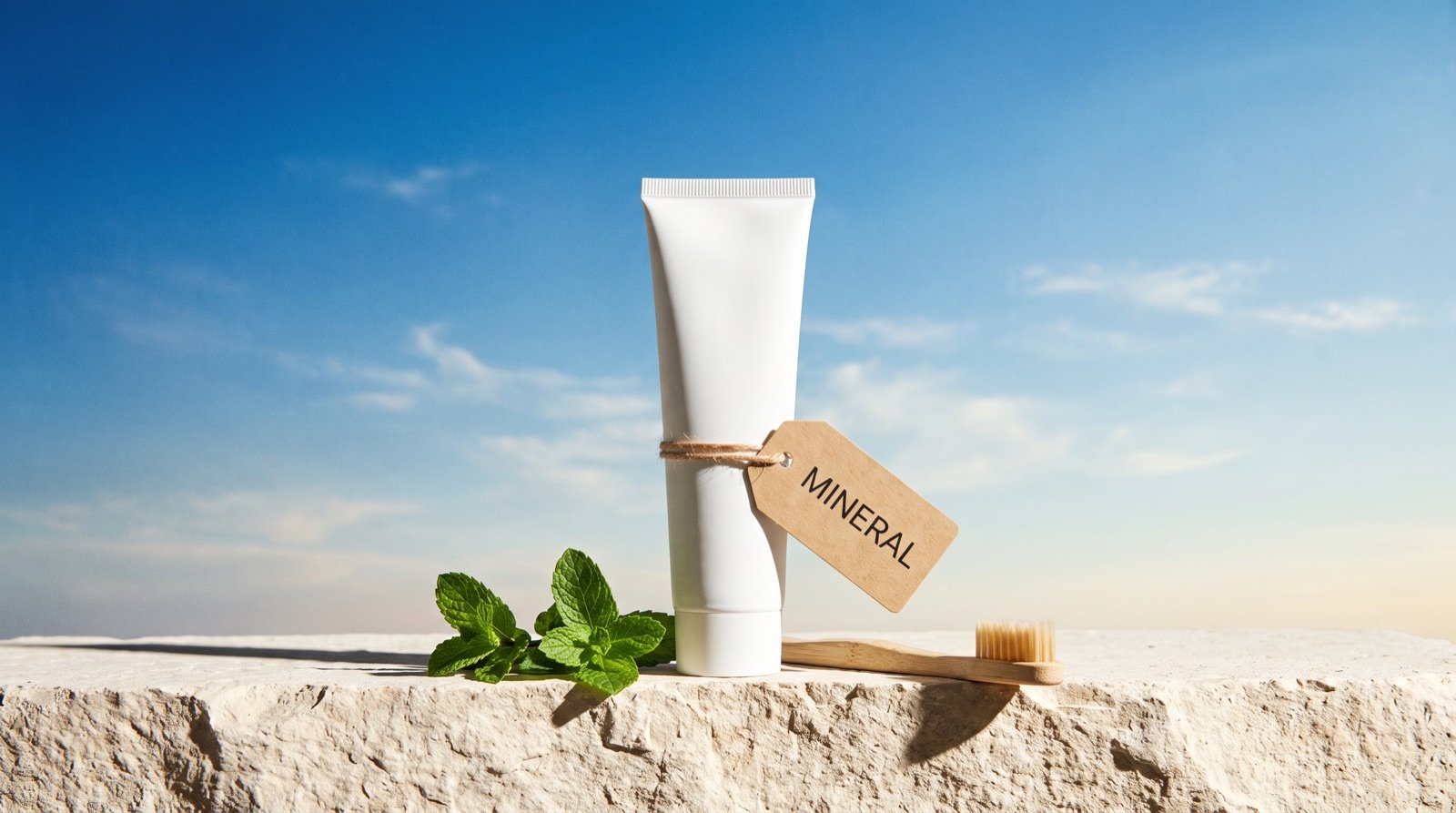
The original Mineral Toothpaste uses 10% micro-hydroxyapatite, the larger particle form, which sidesteps the nano question entirely. It’s sweetened with stevia, erythritol and xylitol, with no fluoride and no SLS, at $12 for 3.4 oz. A PRO version at $22 adds nano particles to the mix.
Two things to know. RiseWell’s testing page says its products are Prop 65 compliant for lead, arsenic, cadmium and mercury, but it doesn’t publish numbers or name the lab. And it’s had its share of court time: a 2024 suit over PFAS and a “natural” claim on the kids’ paste was voluntarily dismissed a month after filing with no settlement, and RiseWell is suing a competitor, Happy Tooth, alleging it got hold of RiseWell’s formula through RiseWell’s manufacturer. That case is open.
Skip it if: you want nano-hydroxyapatite specifically, or a brand that publishes its lab numbers.
Elims: the nano pick that tells you the particle size
Best for: people who want nano-hydroxyapatite and want to know what’s in it | Price: around $16 | Start with: 10% Nano-Hydroxyapatite Toothpaste, Pineapple Orange Mint, 4 oz, $16 | Ownership: independent, founder-owned
Most nano-hydroxyapatite brands say “nano” and stop there. Elims gives you the percentage, 10%, and the particle size, 60 nanometers, right on the product page.
That matches the 10% used in the best-known children’s trial, and it’s the EU’s legal limit for nano-hydroxyapatite in toothpaste. The Pineapple Orange Mint is $16 for 4 oz, fluoride-free, preserved with benzoic acid. Belinda Lau and Dr. Casey Lau, a dentist, founded it without outside funding, and it describes itself as certified woman-owned.
What it doesn’t tell you is whether the particles are rod-shaped and uncoated, which is the rest of the EU’s safety specification, and it doesn’t publish lead testing. It also wasn’t in the independent chart, so there’s no outside number either way.
Skip it if: published heavy metal testing is your deciding factor.
Bite: hydroxyapatite tablets in a glass jar
Best for: a plastic-free bathroom | Price: around $12 | Start with: Toothpaste Bits, Fluoride-Free, 62 bits, $12 | Certifications: B Corp | Ownership: founder-owned, with one outside investor
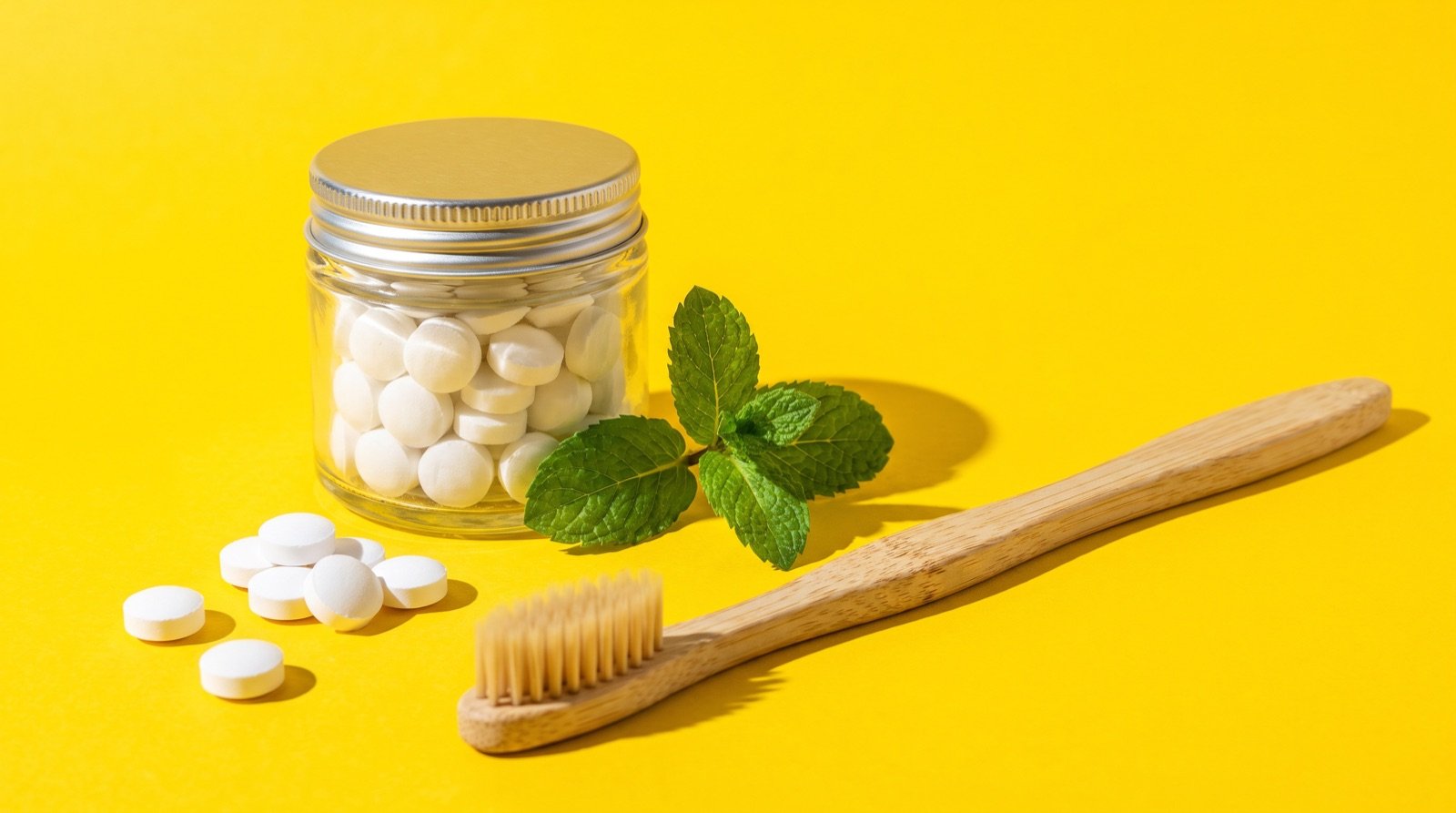
No tube, no water, no plastic. Bite makes toothpaste as dry tablets you chew and then brush, sold in a refillable glass jar.
The fluoride-free bits use nano-hydroxyapatite with erythritol and xylitol, at $12 for 62 bits. Bite is a certified B Corp, and founders Lindsay McCormick and Asher Hunt run it as a public benefit company, with one outside investor holding an undisclosed stake. It’s also one of the few natural brands that sells a fluoride version, if your household is split.
Here’s the gap. The product page doesn’t give the hydroxyapatite percentage, Bite doesn’t publish heavy metal testing, and it wasn’t in the independent chart.
Skip it if: chewing a tablet before you brush sounds like one step too many.
NOBS: tablets you can pick up at Target
Best for: buying in person instead of online | Price: around $15 | Start with: Toothpaste Tablets, 62 tablets, $15 | Ownership: founder-led; funding not disclosed
Sometimes the best toothpaste is the one you can buy today. NOBS tablets went into Target stores nationwide in February 2026, which makes them the easiest hydroxyapatite option here to find without ordering.
They use 5% nano-hydroxyapatite, half the level of the other nano pick, at $15 for 62 tablets. The kids’ NOBS Jr. Bubblegum tested at 54.4 parts per billion lead in the independent chart. The company was co-founded by a dentist, Dr. Ilon Choai, with CEO Calvin Klaski.
One ingredient might make you look twice: sodium lauryl sulfoacetate. It isn’t SLS, though it’s a foaming agent with a confusingly similar name. NOBS doesn’t publish testing, and we couldn’t find who’s funding it.
Skip it if: you’d rather have the 10% level the trials used.
What to avoid in hydroxyapatite toothpaste
Most of the risk in this category is in what the label claims rather than what’s in the tube.
Start with “nano” and nothing else. Europe only cleared nano-hydroxyapatite for rod-shaped, uncoated particles after three rounds of review, and US labels don’t have to tell you the shape, the size or even that it’s nano. Here’s what the EU decided. If a brand can’t answer, a micro-hydroxyapatite paste avoids the question.
Be skeptical of cavity and whitening promises. Hydroxyapatite isn’t an FDA anticavity active, so US brands can’t legally claim it prevents cavities. And the whitening effect is real but small, a surface brightening rather than bleaching, as the research on hydroxyapatite whitening shows. Even the ad industry’s own review body has told one big brand to drop both kinds of claims.
“Prop 65 compliant” without numbers is a reassurance, not a result. Several brands use the phrase, and none of the four here publishes a full lab report. A brand that does would move straight to the top of this list.
Fluoride-free isn’t automatically better, either. Fluoride has decades more evidence, and natural brands that still sell it exist. Then the usual suspects: skip SLS if you get canker sores, and skip charcoal entirely.
What we left off, and why
Davids is the hardest one to leave off, because it’s a pick in our natural toothpaste roundup. But a class action filed in May 2025 alleges lead and arsenic in its Hydroxi nano-hydroxyapatite paste, and it’s still open. A Prop 65 notice over lead followed in July 2025. The suit leans on the independent chart, where Davids’ Natural Peppermint paste showed 457 ppb lead and 202 ppb arsenic, the highest of any brand we looked at. And the Hydroxi paste contains carrageenan.
Dr. Jen makes a 10% nano paste and received a Prop 65 notice over lead in September 2025, which hasn’t resolved. Boka is owned by Essor, an investor-backed group of consumer brands, and in 2025 the ad industry’s National Advertising Division and its appeals board told Essor to stop claiming Boka remineralizes and whitens teeth, because none of its evidence tested Boka itself. The challenge came from Procter & Gamble.
Happy Tooth is a well-liked micro-hydroxyapatite paste, and it’s self-funded. But its Vanilla Frosting tested at 283.7 ppb lead, about ten times RiseWell’s kids’ paste, and when two formulas are this similar we’d pick the lower number. Wellnesse’s children’s strawberry tested at 273 ppb lead and 133 ppb arsenic, it doesn’t publish testing, and we couldn’t confirm its ownership from a primary source.
Tom’s of Maine now makes a hydroxyapatite paste, sold only on Amazon for now. It’s owned by Colgate-Palmolive, and in November 2024 Tom’s received an FDA warning letter after inspectors found bacteria in water used at its Maine plant. Apagard, the Japanese brand that started all of this, has no US storefront of its own. And Lumineux’s store only sold two-packs, which were sold out when we checked.
How to actually choose one
Start with whether you care about nano.
If you’d rather avoid the question, RiseWell’s micro formula. If you want nano and the specs, Elims. If the plastic tube is what bothers you, Bite. If you need it today, NOBS from Target. For kids under six, a hydroxyapatite paste is easier to live with than fluoride because swallowing it isn’t the same concern, and RiseWell’s kids’ line had the lowest lead result we found.
Then use the right amount. A pea-sized dab, two minutes, twice a day, and don’t rinse right after. That does more for your enamel than any brand switch.
Frequently asked questions
Which hydroxyapatite toothpaste is best?
We’d start with RiseWell, a 10% micro-hydroxyapatite paste at $12 from a founder-led brand with the lowest lead result in independent testing and no Prop 65 notices. For nano-hydroxyapatite, Elims states both its 10% level and its 60 nm particle size.
Is nano or micro hydroxyapatite better?
Both have trial evidence. Nano particles are smaller and were cleared by EU regulators only as uncoated rods, while micro-hydroxyapatite falls outside the EU’s nanomaterial rules altogether. The best-known children’s trial used the micro form. If a brand won’t say which it uses, pick one that does.
Does hydroxyapatite toothpaste contain lead?
Some does, in small amounts. An independent 2025 chart found lead in many natural toothpastes at levels measured in parts per billion. The FDA hasn’t set a lead limit that covers toothpaste, and most brands don’t publish their own numbers, so the chart is often the only data available.
Is hydroxyapatite toothpaste safe for kids?
It’s popular for young children because swallowed hydroxyapatite dissolves in stomach acid, according to EU regulators, so it doesn’t carry the fluorosis risk of swallowed fluoride. Use a small amount and check the brand’s lead record.
Can hydroxyapatite toothpaste replace fluoride?
Randomized trials in children and adults found hydroxyapatite non-inferior to fluoride for preventing cavities, though most were funded by one manufacturer. Fluoride has decades more evidence. If you’re cavity-prone, ask your dentist.
How much hydroxyapatite should toothpaste have?
Around 10% is the level used in the best-known children’s trial and the EU’s current legal limit for nano-hydroxyapatite in toothpaste. A 2025 EU safety opinion found up to 29.5% safe, but that limit isn’t law yet.
Related reading
The three explainers we wrote alongside this list: is nano-hydroxyapatite safe, does hydroxyapatite toothpaste whiten teeth, and natural toothpaste with fluoride. We’ve also compared hydroxyapatite against fluoride, rounded up the best natural toothpastes, and looked at PFAS in dental floss.