SLS in Toothpaste: Why It’s There, and Who Should Avoid It
Foam feels like cleaning. That’s the whole reason sodium lauryl sulfate is in your toothpaste.
SLS is a surfactant, a detergent. It’s in shampoo and dish soap for the same reason: it lowers surface tension, spreads the product, and produces a satisfying lather that signals “this is working.”
For your teeth, it isn’t working. The cleaning is done by the mild abrasive and the brushing; the protection is done by the fluoride or hydroxyapatite. Foam is a user-experience feature, and it’s the reason a low-foam natural toothpaste feels wrong the first week even when it’s doing the same job.
For most people that’s a curiosity rather than a problem. For a specific group, it’s worth acting on.
The canker sore evidence
Recurrent aphthous stomatitis is the clinical name for the mouth ulcers that keep coming back. If you get them regularly, the toothpaste connection is worth knowing about.
A 2019 systematic review in the Journal of Oral Pathology and Medicine pooled four crossover studies covering 124 participants. Comparing SLS-free toothpaste against SLS-containing toothpaste, it found statistically significant reductions in the number of ulcers, how long they lasted, how many episodes occurred, and how much they hurt.
The individual studies are less uniform than that summary implies, which is worth saying plainly. One trial of 90 people found no significant difference in the number of ulcers or episodes, while still finding that duration and pain dropped on SLS-free paste.
So the fair reading is: if you get recurring ulcers, switching to an SLS-free toothpaste is a cheap, low-risk change with reasonable evidence that it will at least make episodes shorter and less painful, and may reduce how often they happen. That’s a better-supported intervention than most things sold for mouth ulcers.
The proposed mechanism is straightforward. SLS is a detergent, and detergents strip the thin protective mucin layer over the soft tissue in your mouth, leaving it more exposed to irritation.
Everyone else
If you don’t get ulcers and your mouth is comfortable, SLS is not something to be frightened of. It’s approved, it’s been used for decades, and at toothpaste concentrations for the seconds it’s in contact with tissue, it isn’t a health threat.
There is a second reason to prefer without, and it’s smaller: a randomized trial comparing SLS and SLS-free dentifrices looked at plaque, gingivitis and gingival abrasion, and the absence of SLS did not cost anything in plaque control. If it isn’t buying you cleaning performance, the argument for keeping it is mostly habit.
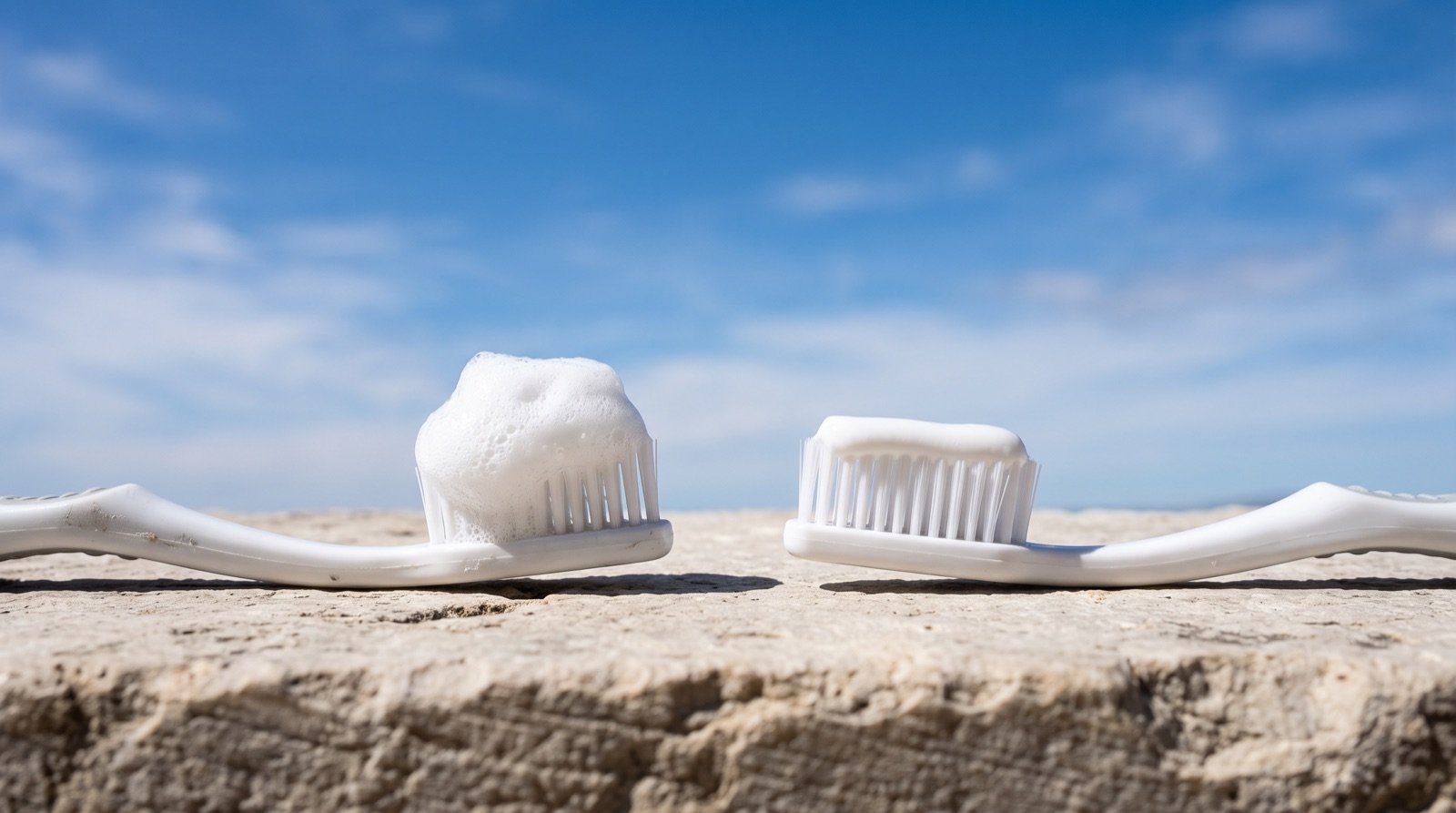
Do expect an adjustment. SLS-free toothpaste produces much less foam, and people routinely read that as “not working” and use more paste to compensate. Give it a week. A pea-sized amount is all you need either way, and the active is doing the work regardless of how much lather appears.
Most of the brands in our roundup of the best natural toothpaste skip SLS as a matter of course, usually replacing it with a gentler plant-derived surfactant or nothing at all.
Frequently asked questions
Is SLS in toothpaste linked to cancer?
No. This is a persistent internet claim with no support behind it, and it comes up for SLS in shampoo too. The real, evidenced concern is oral irritation and mouth ulcers in susceptible people, which is a much more mundane problem and an easier one to act on.
What replaces SLS in SLS-free toothpaste?
Often a milder surfactant such as cocamidopropyl betaine or a plant-derived saponin, and sometimes nothing at all. Formulas with no surfactant feel the least familiar, since they barely foam, but they clean perfectly well. Note that cocamidopropyl betaine is itself a known contact allergen for a small number of people.
How long before I notice a difference with ulcers?
The crossover studies ran over weeks rather than days, so give it at least a month before judging. If ulcers keep recurring on SLS-free paste, the cause is likely elsewhere: stress, deficiencies in iron, folate or B12, and some underlying conditions all drive recurrent ulcers, and those are worth a conversation with a doctor or dentist.
Does SLS-free toothpaste clean as well?
Yes. A randomized trial comparing the two on plaque, gingivitis and gingival abrasion found dropping SLS did not reduce plaque control. Foam and cleaning are separate things, which is the single most useful thing to understand about this ingredient.
Related reading
The rest of what’s in the tube: hydroxyapatite versus fluoride, whether charcoal toothpaste is worth it, and what happened to triclosan. For SLS-free tubes with a real active, see the best natural toothpaste.