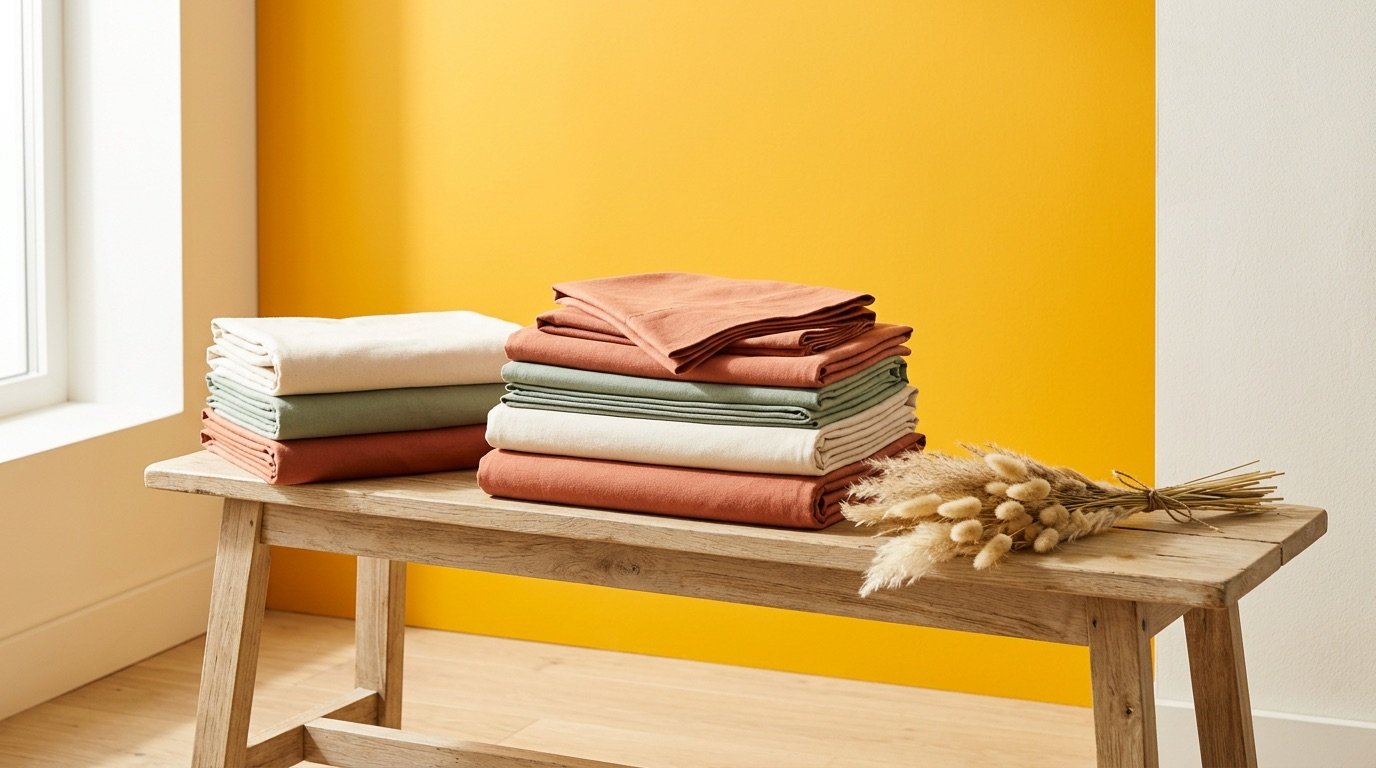
The Best Organic Bedding and Sheets for a Cleaner Night’s Sleep
You spend about a third of your life in bed. Your face is pressed against those sheets for eight hours at a stretch, breathing in whatever they’re made of. So it’s worth knowing what that is. For most conventional bedding, the answer is cotton grown with one of the heaviest pesticide loads of any crop, often finished with wrinkle-resistant chemistry that can include formaldehyde.
That “wrinkle-free” and “easy care” label is the tell. The finish that keeps sheets crisp is usually a formaldehyde-based resin, and formaldehyde is a known irritant and carcinogen you’d rather not sleep in. There’s no US federal limit on how much can be in a textile, and no requirement to mention it.
Organic bedding skips both problems. Two fixes, one purchase. It’s grown without synthetic pesticides, finished without the formaldehyde resins, and the best of it is certified so you’re not just taking a brand’s word for it. It also tends to feel better and last longer, because organic long-staple cotton is simply nicer fiber. If you’ve already upgraded the mattress underneath, our guide to the best non-toxic mattresses is the companion piece.
So here’s how we picked. Three things had to line up:
- Fibers: certified organic or naturally lower-impact. GOTS organic cotton, or responsibly made bamboo lyocell.
- Labor: fair-labor certification.
- Finishes: no formaldehyde wrinkle-free treatments.
Worth knowing before you shop that GOTS and OEKO-TEX answer two different questions, and that thread count is the wrong number to compare on. These made the cut.
Our picks at a glance
- Best overall: Coyuchi
- Best luxury: Boll & Branch
- Best for the whole bed: Avocado
- Best cooling: Ettitude
- Best supply-chain transparency: Kotn
- Best budget: Under the Canopy
Coyuchi: the organic-cotton specialist
Best for: anyone who wants the certifications to do the deciding | Price: $322–$674 | Certifications: GOTS, Fair Trade Certified, MADE SAFE | Ownership: roughly 97% held by Saffron Hill Ventures 2 LP
If you want a brand that does one thing and does it completely, Coyuchi is it. This Northern California company works almost entirely in organic cotton and holds a stack of the certifications that matter, GOTS, Fair Trade, and MADE SAFE, across its whole process. The sheets get softer with every wash, the designs are quietly beautiful, and there’s even a take-back program for worn-out bedding. Our Coyuchi brand profile has the full picture, and you can browse the range on their organic sheets page.
It sits at the premium end, no way around it. But for the most thoroughly certified organic cotton bedding from a specialist that lives and breathes this, nothing here beats it.
Boll & Branch: luxury, fully Fair Trade
Best for: a plush, hotel-smooth organic sheet set | Price: $279–$569 (queen sets) | Certifications: Fair Trade Certified | Ownership: founder-led, backed by L Catterton since 2019
Boll & Branch is the one that made organic bedding feel like a luxury purchase rather than a compromise. Its sheets are 100% certified organic cotton, and it was the first bedding maker to be fully Fair Trade Certified, so the people making it are paid and treated fairly at every step. The signature sateen has a hotel-smooth hand that softens beautifully over time.
It’s a splurge, and the marketing leans hard on the luxury angle. But the certifications are real, the quality holds up over years, and for a plush, grown-up organic sheet set, it’s the reference.
Avocado: organic bedding that matches the mattress
Best for: outfitting the whole bed with matching certifications | Price: $129–$549 (queen sets) | Certifications: GOTS, B Corp | Ownership: independent
If you bought (or are eyeing) an Avocado mattress, Avocado makes the bedding to match, in GOTS-certified organic cotton along with organic linen and hemp options, all listed on its own certifications page. The brand is a certified B Corp and climate-negative, and the whole bedroom system, from the mattress up, shares the same certifications and transparency. Its organic sheets and pillowcases run from percale to linen, and the linen in particular is a standout for warm sleepers.
The range is more focused than a dedicated bedding house’s. But for certified organic sheets from a B Corp that lets you outfit the entire bed with matching standards, it’s the coherent choice.
Ettitude: the cooling bamboo option
Best for: hot sleepers who want cooling, silky sheets | Price: $210–$411 | Ownership: independent, founder-led
Not all bedding has to be cotton. Ettitude works in bamboo lyocell, made through a closed-loop process that captures its solvents, and the result is a fabric that sleeps truly cool and feels almost silky. For hot sleepers who find even organic cotton too warm, this is the pick that solves it, and it uses far less water than conventional cotton to produce.
Bamboo lyocell is a processed fiber, so it’s a step removed from raw plant material, though Ettitude’s closed-loop method is among the more responsible versions. For cooling, silky-soft bedding with a lighter water footprint, it stands alone here.
Kotn: organic cotton with a conscience
Best for: a transparent, farmer-first supply chain | Price: $150–$250 (queen sets) | Certifications: B Corp | Ownership: founder-led
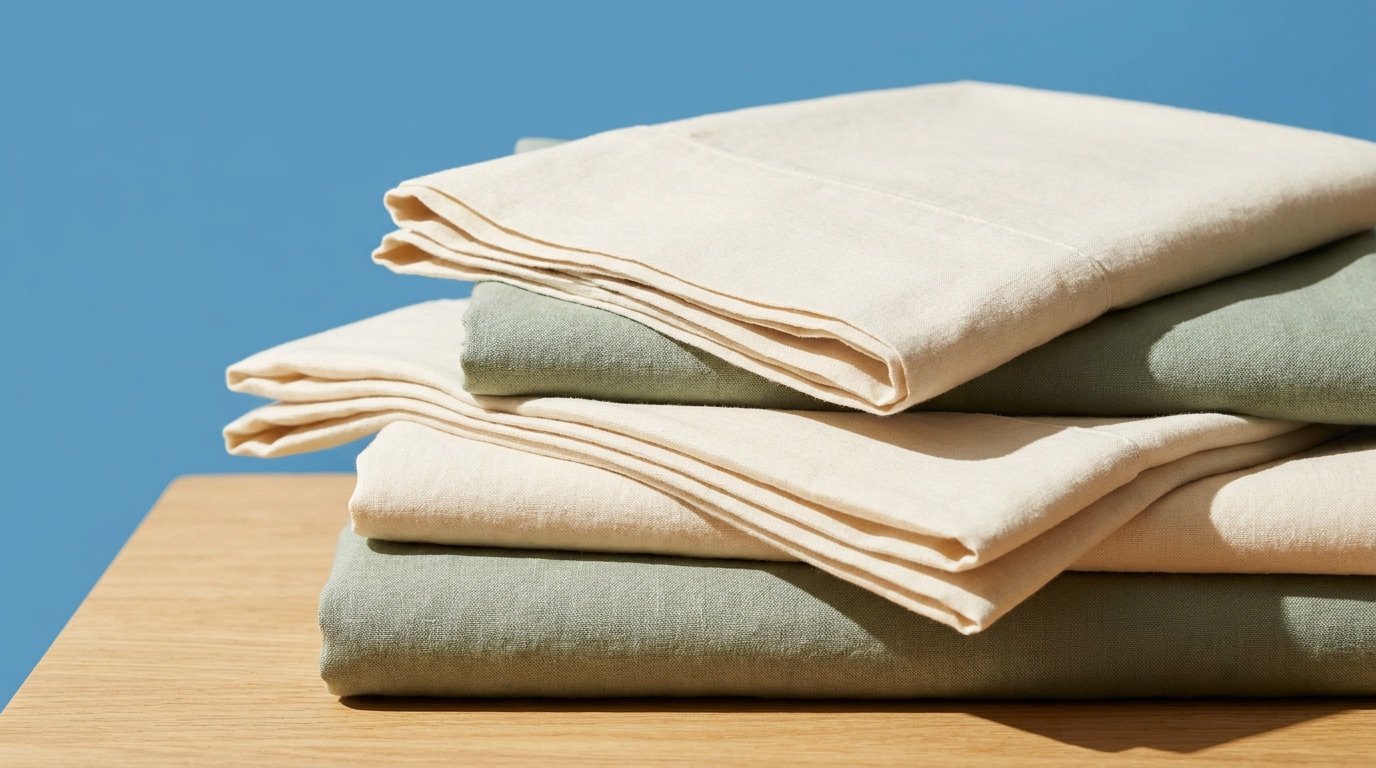
Kotn sources its cotton directly from family farms in Egypt and West Africa, paying above-market rates and reinvesting in those farming communities, and it’s a certified B Corp built around that supply chain. The bedding is soft, well-made Egyptian cotton, and the brand is unusually clear about exactly where the fiber comes from and who grew it. See our Kotn brand profile for the deeper story, and shop its bedding directly.
It’s mid-to-premium rather than budget, and the range is more streamlined than a big bedding brand’s. But for organic-leaning cotton with a properly transparent, farmer-first supply chain, it’s a standout worth knowing.
Under the Canopy: the affordable organic pick
Best for: tight budgets and first-time organic buyers | Price: around $48 | Certifications: GOTS | Ownership: not confirmed; Earthbound Brands runs its licensing
Organic bedding gets expensive fast, and Under the Canopy is the reset. It’s a longtime organic-textile pioneer working in GOTS-certified organic cotton at prices well below the luxury names, and it’s widely available, so you don’t have to hunt for it. The sheets are simple, soft, and certified, without the premium markup.
The designs are more basic than the luxury brands, and the very softest hand comes at the higher end. But for the cheapest way into certified organic cotton bedding, this is the answer.
What we left off, and why
The bedding to walk past is anything labeled “wrinkle-free,” “easy care,” or “no-iron,” since that finish is typically a formaldehyde-based resin you’d rather not breathe all night. Skip the thread-count theater too: a “1,000 thread count” set is often inflated with multi-ply yarns and marketing math, and it tells you nothing about how the cotton was grown or who made it. And plain “cotton” with no organic certification usually means conventional cotton, one of the most pesticide-intensive crops there is. The fiber, the finish, and the certification matter far more than the number on the front of the box.
How to actually choose one
Don’t start with the brand. Start with how you sleep and what you’ll spend.
If you want the most certified cotton and don’t mind paying, Coyuchi. If you sleep hot, Ettitude’s bamboo. If you’re building a whole organic bed, Avocado matches the mattress. If a transparent, farmer-first supply chain matters most, Kotn. And if budget is the deciding factor, Under the Canopy gets you certified-organic for the least.
One rule that saves money: buy fewer, better sets and rotate them. A couple of well-made organic sheet sets that last years beat a pile of cheap ones you replace as they pill and thin.
Frequently asked questions
What makes bedding “organic”?
Truly organic bedding is made from fibers grown without synthetic pesticides or fertilizers, and finished without formaldehyde-based wrinkle-free resins. The certification to trust is GOTS (Global Organic Textile Standard), which verifies both the organic fiber content and the social and environmental conditions it was made under. “Made with organic cotton” without a certification is much weaker than fully GOTS certified.
Why avoid “wrinkle-free” or “easy care” sheets?
Because that crisp, no-iron finish is usually achieved with a formaldehyde-based resin bonded to the fabric. Formaldehyde is a known irritant and carcinogen, and you’d be breathing it against your skin for hours every night. Organic and untreated sheets wrinkle a bit more, which is a small trade for skipping the chemistry.
Is bamboo bedding actually sustainable?
It can be, with a caveat. Bamboo grows quickly with little water and no pesticides, but turning it into soft fabric is a chemical process. The responsible version is bamboo lyocell made in a closed-loop system that captures and reuses the solvents, which is what Ettitude uses. Avoid vaguely labeled “bamboo” that may be conventional rayon made with harsher, uncaptured chemicals.
Does thread count actually matter?
Far less than the marketing suggests. Beyond roughly 300 to 400, higher thread counts are often achieved by counting multi-ply threads, so a “1,000 thread count” sheet can be inflated rather than better. Fiber quality, weave, and how the cotton was grown and finished matter much more than the number, which is why we focus on certification instead.
Related reading
Want the detail behind the picks? We’ve written up each thing we screened for: GOTS vs OEKO-TEX, formaldehyde in bedding, and the thread count myth.
Building a lower-tox bedroom from the mattress up? Start with our guide to the best non-toxic mattresses, and for the pillow layer, see our honest take on whether a silk pillowcase is worth it.