The Best Natural Body Wash and Bar Soap That Actually Cleans
Body wash is the product that touches the most skin. You lather it over your entire body, every single day, then rinse it off. So it’s a little strange how little thought goes into what’s in it. For most conventional washes, the answer is sulfates (the harsh detergents that make the big foamy lather), synthetic fragrance hidden behind one word, and often parabens and dyes on top.
That squeaky-clean, tight feeling after a shower? That’s usually the sulfates having stripped your skin’s natural oils, not a sign of getting clean.
Natural body wash and bar soap do the same job without the strip. Gentler plant-based cleansers like cocamidopropyl betaine instead of harsh sulfates, real oils and butters that leave skin comfortable, and scent from essential oils or disclosed fragrance rather than a mystery blend. Here’s what we looked for.
What had to line up:
- Ingredients: no SLS or SLES sulfates, no synthetic fragrance, no parabens, built on plant-based cleansers.
- Skin and scent: real plant oils or butters that don’t leave skin tight, scented with essential oils or a disclosed formula.
- Ownership and certifications: independent brands, and credible third-party certifications where they exist.
Our picks at a glance
- Best overall: Dr. Bronner’s
- Best for dry skin: Osea
- Best everyday value: Each & Every
- Best social impact: Alaffia
- Best natural scent: Ursa Major
- Best minimalist: Nécessaire
Dr. Bronner’s: the multipurpose castile classic
Best for: a multipurpose, deeply certified classic | Price: around $17 | Certifications: USDA Organic, Fair for Life, Regenerative Organic | Ownership: family-owned since 1948, California benefit corp
The one bottle that does everything, Dr. Bronner’s is the reference point for clean body cleansing. Its castile soap is made from fair-trade organic plant oils, with no synthetic detergents, foaming agents, or fragrance, and it’s certified about as thoroughly as a personal-care product can be. You can use it as body wash, hand soap, and about a dozen other things, and the bar soaps are just as simple. Our Dr. Bronner’s brand profile has the full story, and the castile soap range is on their site.
Pure castile soap is concentrated and can feel drying if you don’t dilute it, so a little goes a long way. Some of that is the chemistry rather than the brand: castile sits around pH 9 while your skin runs closer to 4.7, which is true of every real soap ever made. But for the most certified, most versatile clean cleanser out there, from a company that’s walked the walk for generations, nothing here beats it.
Osea: body wash that treats your skin
Best for: dry and sensitive skin | Price: around $32 | Certifications: The Climate Label (formerly Climate Neutral), Leaping Bunny | Ownership: independent, family-owned since 1996
If your skin ends up tight and itchy after a shower, Osea is the fix. Its seaweed-based body washes are built around nourishing algae and plant oils, free of sulfates, synthetic fragrance, and parabens, and designed to clean without stripping. The brand is vegan, family-run, and carries The Climate Label, and its Undaria body care has a devoted following among people with dry skin. See our Osea brand profile for more, and shop the Undaria Algae body wash directly.
It’s a premium price for a body wash, and the marine scent is distinctive rather than neutral. But for a wash that leaves dry, sensitive skin properly comfortable, Osea is the standout.
Each & Every: clean and affordable, every day
Best for: an everyday clean wash at a fair price | Price: around $32 | Certifications: EWG Verified, Leaping Bunny | Ownership: independent, founder-led
Each & Every makes the everyday clean body wash you can restock without overthinking. The formulas are plant-based, EWG Verified, and free of sulfates, parabens, and synthetic fragrance, scented instead with essential oils, and priced within reach. It’s the reliable, no-drama pick for a clean shower routine. Our Each & Every brand profile has the details, and the body wash range lives on their site.
The scents are lighter than the syrupy fragrances of conventional washes, which is the point but takes adjusting to. For a verified-clean, essential-oil-scented body wash at a normal price, it’s the easy everyday choice.
Alaffia: fair-trade shea with a mission
Best for: fair-trade ingredients and real social impact | Price: around $17 | Ownership: independent, founder-led
Alaffia is the pick where the ingredients and the impact are inseparable. Its body washes and black soaps are built on fair-trade, unrefined shea butter and African botanicals, sourced through cooperatives in Togo that the company funds community projects around. The formulas skip sulfates and synthetic fragrance, and the shea leaves skin soft rather than stripped.
The range is broad and the scents are earthy and traditional rather than perfumey. But for truly fair-trade body care that funds real community work, Alaffia is doing something most brands only market.
Ursa Major: natural scent, clean formula
Best for: a clean wash that actually smells great | Price: around $26 | Ownership: independent
Ursa Major solves the complaint that natural body wash smells boring. This independent Vermont brand keeps it to two things and does them well: a plant-based body wash and a matching bar soap, both in a bright mint scent, free of sulfates, synthetic fragrance, and parabens. It’s a favorite as a properly unisex option that both partners actually want to use.
It sits at a premium price, and the energizing scents are bold rather than subtle. But for a clean formula that smells as good as anything conventional, Ursa Major is the pick.
Necessaire: the minimalist, modern pick
Best for: a pared-back, skin-focused routine | Price: around $42 | Ownership: independent
Nécessaire treats body wash like skincare. Its pared-back formulas are non-toxic and dermatologist-minded, free of sulfates, synthetic fragrance, parabens, and dyes, and often packed with skin actives like niacinamide and plant oils. The aesthetic is quiet and modern, and the fragrance-free version is a gift for reactive skin.
It’s a splurge for a body wash, and the minimalist range is deliberately small. But for a modern, skin-first wash that feels more like a treatment than a soap, Nécessaire is the standout.
What we left off, and why
The big group we skipped is the “moisturizing” and “hydrating” body washes that lead with sulfates and then add a drop of oil to undo the drying they just caused, all while hiding the scent behind undisclosed “fragrance.” The marketing promises soft skin; the detergent base delivers the opposite. We also left off the drugstore “natural” lines that sit under the same conglomerates behind the conventional washes. Ownership alone isn’t our reason for cutting a brand, and where a pick has a parent we name it. What rules these out is the formula underneath the botanical label, which is usually the same detergent base. And there’s a second reason to be wary of that base. The processing step that makes SLES milder than plain SLS also creates 1,4-dioxane, a likely human carcinogen that arrives as a contaminant rather than an ingredient, so it never has to appear on the label at all. If a body wash foams enormously and won’t disclose its fragrance, it’s usually the sulfate-and-synthetic formula in a nicer bottle.
How to actually choose one
Don’t start with the scent. Start with your skin and your budget.
If you want one certified product for everything, Dr. Bronner’s. If your skin runs dry or reactive, Osea or fragrance-free Nécessaire. If you want clean at an everyday price, Each & Every. If fair-trade impact matters most, Alaffia. And if you want a natural wash that smells incredible, Ursa Major.
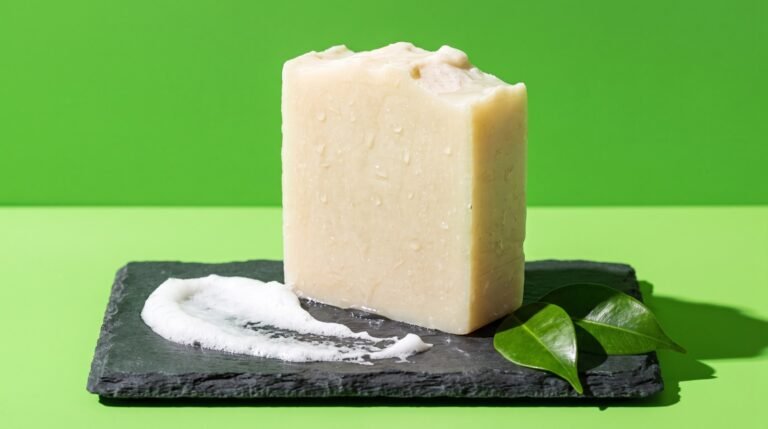
One swap cuts the most plastic: keep a bar soap in the shower for everyday washing and save the bottled wash for when you want it. A good natural bar lasts longer than a bottle, ships lighter, and skips the plastic entirely. One thing to check on the bar, though. Most soap bars are built on palm oil, listed as sodium palmate, and whether that’s a problem depends less on avoiding it than on where it was grown.
Frequently asked questions
What makes a body wash natural or non-toxic?
A natural body wash cleans with plant-based cleansers instead of harsh sulfates (SLS and SLES), and leaves out synthetic fragrance, parabens, and dyes. Check the preservative too, since DMDM hydantoin and the rest of that family work by slowly releasing formaldehyde into the bottle. A good natural wash includes real plant oils or butters so skin doesn’t feel stripped, and scents with essential oils or a fully disclosed formula. A short, readable ingredient list and a certification like EWG Verified are good signs. You’ll rarely see USDA Organic on a body wash, and that isn’t the brand cutting corners: the rules make it close to impossible for anything that foams.
Are sulfates in body wash actually bad for you?
Sulfates aren’t dangerous, but they’re aggressive cleansers that can strip the skin’s natural oils and leave it dry, tight, or irritated, especially for sensitive or eczema-prone skin. That tight feeling after a shower is the sulfates at work. Plant-based cleansers clean effectively with far less stripping, which is why the washes here skip SLS and SLES. We go deeper on this in our piece on whether sulfates are bad for you.
Is bar soap or body wash better for the environment?
Bar soap generally wins. It uses little to no plastic packaging, ships lighter because it isn’t mostly water, and lasts a long time. A well-made natural bar cleans just as well as body wash without the bottle. Body wash is more convenient and can be gentler or more moisturizing for very dry skin, so a mix of both is a reasonable, lower-waste approach.
Does natural body wash lather as well as regular?
Usually a bit less, and that’s normal. The huge, dense foam of conventional body wash comes from sulfates, which are added largely for that lather rather than for cleaning power. Plant-based cleansers produce a gentler, softer foam while still cleaning effectively. If you miss the suds, a bar soap or a washcloth helps work up more lather.
Related reading
Want the ingredient detail behind these picks? We’ve written up whether sulfates are actually bad for you, cocamidopropyl betaine, the gentle cleanser that replaces them, DMDM hydantoin and the formaldehyde-releasing preservatives, and the fragrance loophole that lets one word stand in for dozens of ingredients.
Cleaning up the rest of your routine? See our roundup of the best non-toxic skincare brands and our guide to the skincare ingredients worth avoiding.