Is Palm Oil in Soap Ever Sustainable?
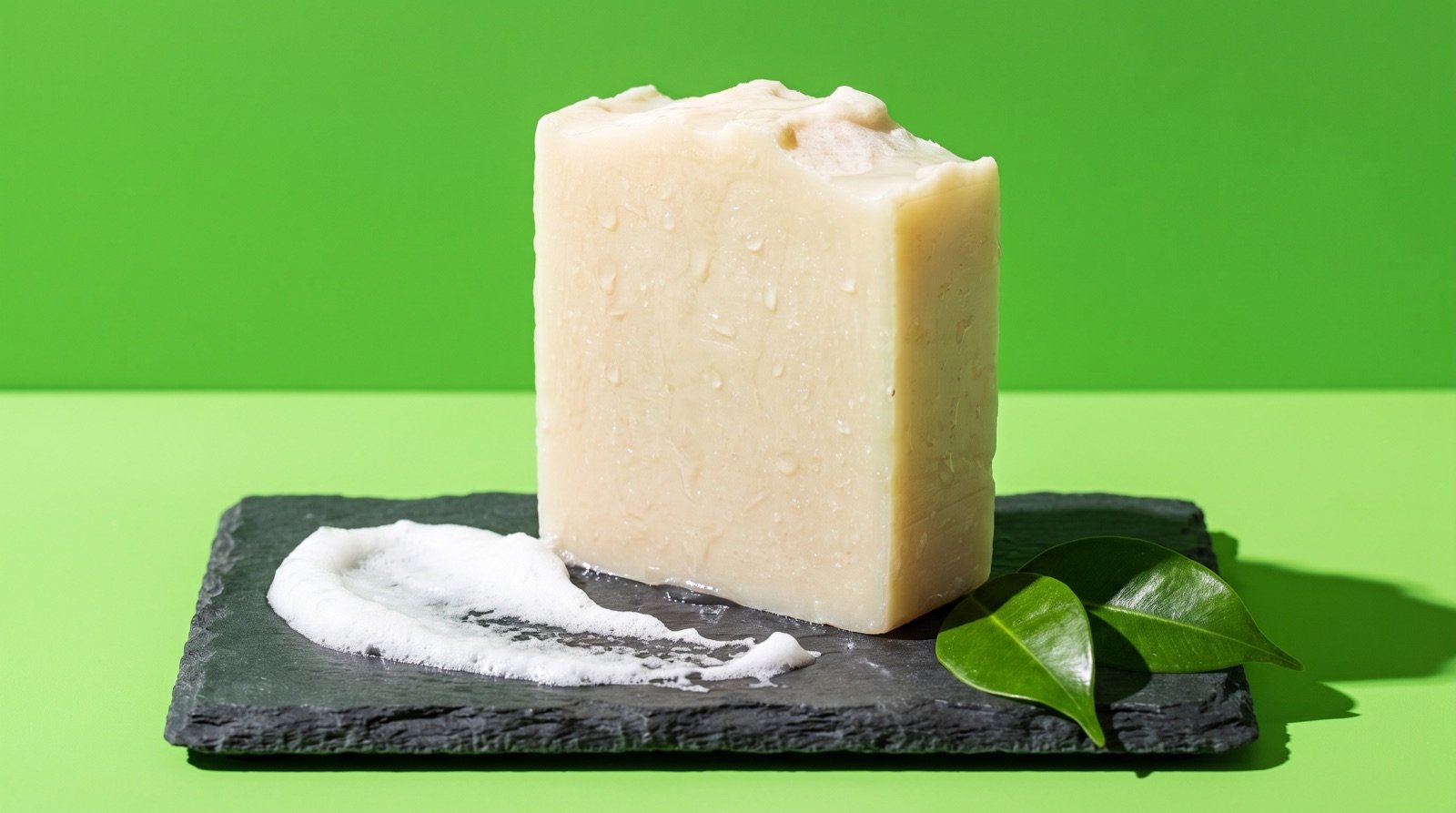
Turn over a bar of soap and look for sodium palmate. If it’s there, the bar is made from palm oil, and most bars are.
Short answer: yes, palm oil in soap can be more sustainable, and the certification you’ll see does considerably less than the logo implies. There are four RSPO supply chain models and only two of them guarantee the oil in your bar came from a certified source. And the palm-free bar you were about to buy instead may well carry a bigger land footprint, which is the part that surprised us most.
Finding it on the label
Palm hides better than almost any other ingredient, because it arrives as derivatives with names that don’t mention it.
In soap, the two to know are sodium palmate, which is saponified palm oil, and sodium palm kernelate, from palm kernel oil. Beyond those, a conservation reference list of palm derivative names includes stearic acid, sodium stearate, glyceryl stearate, cetyl alcohol, sodium lauryl sulfate, palm olein, palm stearine, Elaeis guineensis, and the wonderfully unhelpful “vegetable oil.”
That list runs to hundreds of names. Its compilers say so themselves: it does not seem possible to memorize 600 or more names.
Which tells you something important. Avoiding palm oil by reading labels is not a thing an ordinary person can reliably do.
The four RSPO models, and only two mean what you think
This is the part worth understanding, because the certification mark on a package doesn’t tell you which model sits behind it.
RSPO runs four supply chain models:
Identity Preserved. The oil comes from a single identifiable certified source, kept separate all the way through. The strongest claim available.
Segregated. Certified oil from multiple sources, mixed together but kept apart from uncertified oil. Still physically certified oil in your bar.
Mass Balance. Certified oil mixed with ordinary palm oil throughout the supply chain. A volume of certified oil entered the system somewhere. It may not be in the product you’re holding.
Credits, or Book and Claim. No physical traceability at all. A buyer purchases credits from certified growers, and a premium reaches the producer. The oil in your soap is just palm oil.
Products under mass balance carry a “MIXED” tag and credit-based products carry “CREDITS.” Both are legitimate under the scheme’s rules and both are much weaker than a shopper reading “certified sustainable palm oil” would assume.
What certification actually achieved
Here’s the study that reframed this topic for us, and it’s a good example of a real effect that mostly didn’t matter.
Researchers analyzed roughly 188,000 square kilometers of Indonesian plantations from 2001 to 2015. RSPO certification lowered deforestation by 33 percent, from a counterfactual rate of 9.8 percent a year down to 6.6.
That’s a genuine result. Then comes the sentence that undoes it: most plantations contained little residual forest when they received certification. By 2015, certified areas held less than one percent of the forest still standing inside Indonesian oil palm plantations.
Companies were certifying ground they’d already cleared. Certification worked. It was pointed at land where there was nothing left to save.
The same study found no causal impact on peatland forest loss or on fire detection rates, which are two of the largest climate problems in the sector.
Auditing has its own history. The Environmental Investigation Agency published an investigation in 2015 finding major flaws in the scrutiny underpinning RSPO’s guarantee, with auditors conducting substandard assessments and at times appearing to help companies conceal violations.
The case for buying palm anyway
Now the part that changed our minds, and it comes from conservationists rather than the industry.
The IUCN’s 2018 assessment found that oil palm produces about 35 percent of all vegetable oil on less than 10 percent of the land given to oil crops, yielding up to nine times more oil per unit area than the major alternatives.
Its director general put the conclusion bluntly: half the world’s population uses palm oil in food, and banning or boycotting it would likely see other, more land-hungry oils take its place.
The scale of the harm is not in doubt. The same assessment records that at least half of all deforestation on Borneo between 2005 and 2015 was related to oil palm, that around 10,000 critically endangered Bornean orangutans live in areas allocated to oil palm, and that 193 Red List species are threatened by it.
Both things are true at once. Palm oil is doing enormous damage, and replacing it with coconut or shea at the same volume would need several times the land.
What we’d actually do
Don’t boycott palm. Do push for the strong version of certified.
If a brand names Identity Preserved or Segregated RSPO, that’s a real claim about the oil in the bar. If it just shows a logo, or says mass balance, treat it as a contribution to a system rather than a statement about your soap. Ask which model. The good brands know the answer.
Prefer companies that publish their mill list. Traceability to the mill is the thing that makes any of the rest checkable, and it’s a much better signal than a certificate on its own.
And if you buy a palm-free bar, buy it knowing what you’ve chosen. A coconut-based soap isn’t automatically lighter on land, and “free from” is one of the easiest claims in the business to make without doing the work, which is the pattern our greenwashing guide walks through. Several of the soaps we recommend go each way on this, deliberately.
Frequently asked questions
Is sodium palmate palm oil?
Yes. Sodium palmate is saponified palm oil, and sodium palm kernelate is saponified palm kernel oil. They’re the two most common ways palm appears in a bar of soap, and neither uses the word palm in a way most shoppers would recognize as an ingredient warning.
Does RSPO certified mean the palm oil in my soap is sustainable?
It depends which of four supply chain models sits behind the claim, and the label rarely says. Identity Preserved and Segregated mean physically certified oil is in the product. Mass Balance means certified oil was mixed with ordinary palm somewhere upstream, and Credits means no physical link at all.
Should I avoid palm oil completely?
Conservation scientists mostly say no. Oil palm yields up to nine times more oil per hectare than alternatives, so switching demand to coconut, soy or rapeseed spreads the same demand over much more land. The IUCN’s position is that a boycott would displace biodiversity loss rather than halt it.
Is palm-free soap better for the environment?
Not necessarily, and it depends entirely on what replaced it. A palm-free bar built on coconut oil can carry a larger land footprint than a segregated-certified palm bar. The claim tells you what’s absent, not whether the alternative was better.
Related reading
More on what’s in your soap: why castile soap is so alkaline, the natural body washes and bars worth buying, and how to spot greenwashing.