
Dirty Labs
Quick verdict: Most non-toxic detergents ask you to accept a slightly worse wash. Dirty Labs doesn’t, and that’s the whole reason it’s here. It was built by a chemist around an enzyme complex rather than by swapping harsh cleansing agents for gentler ones, and on real stains it outperforms most of what’s in this directory. It’s also concentrated enough that a small bottle lasts. The certification is stronger than the brand’s quiet marketing suggests: EPA Safer Choice, Green Seal and USDA Biobased. Our rating: 4.2 out of 5.
Who they are
Dr. Pete He, a chemist who previously worked with The Sustainability Consortium, and David Watkins, a product designer, founded Dirty Labs in 2018. The technical premise is unusual for the category: rather than reformulating around a restricted list, they engineered an enzyme system to do the cleaning work that aggressive detergents normally handle.
It’s independent and founder-led. Portland based, still small.
What they get right
It cleans better than the category norm. Enzymes break down protein, starch and fat stains at low temperatures, which is precisely where plant-based detergents usually fail. Abandoned a natural detergent over a stain it wouldn’t lift? This is the one to try.
It’s highly concentrated. A small bottle covers a lot of loads. That cuts shipping weight and per-load cost together.
Cold-water performance is a real environmental gain rather than a marketing angle. Heating water is most of a wash’s energy footprint. An enzyme system that works cold lets you drop the temperature without dropping results.
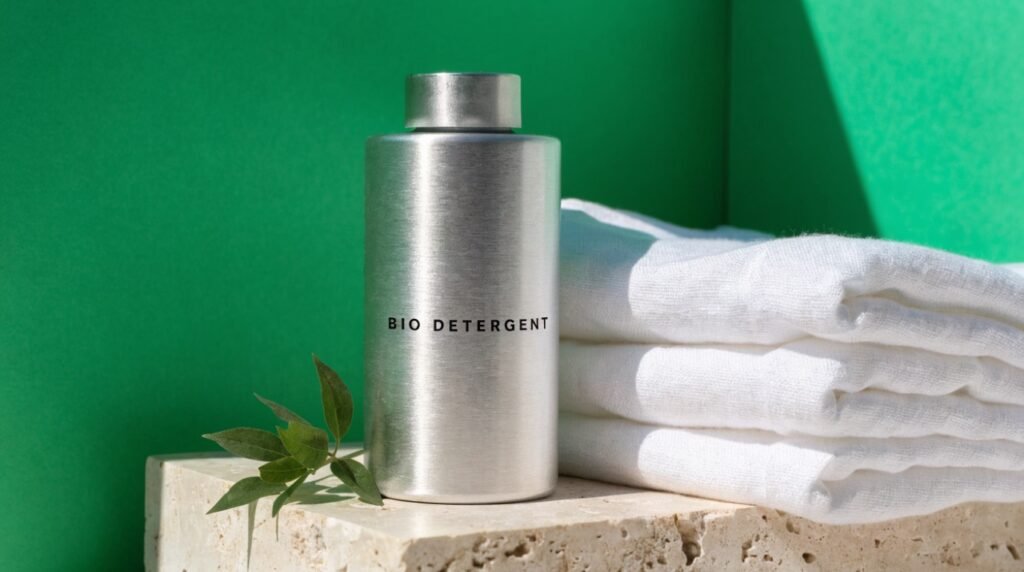
Packaging is aluminum rather than plastic, bottle and cap both, and aluminum recycles indefinitely without losing quality. They moved the caps off plastic too, which is the detail most brands skip.
Full ingredient disclosure, in a category where “fragrance” legally hides dozens of undisclosed inputs.
The certification is real, and better than they advertise. EPA lists Dirty Labs as a Safer Choice partner since 2020 and named it a 2021 Safer Choice Partner of the Year, noting that every ingredient in its certified products appears on CleanGredients, the database of inputs pre-approved against the Safer Choice standard. Add Green Seal, USDA Certified Biobased and a National Eczema Association acceptance, and this is a well-audited brand that happens to be bad at saying so.
One badge we can’t stand behind: the brand’s own certifications page displays an EWG VERIFIED mark, and no Dirty Labs product appears in EWG’s verified directory. We listed it here on the strength of that badge and shouldn’t have. Its products are rated in EWG’s cleaning guide, which is a different thing.
Where they fall short
Nothing certifies the company itself. The product certifications are strong. They all assess formulas, though. There’s no B Corp here the way Blueland and Meliora carry one, so nobody independent has looked at how the business is run, only at what’s in the bottle. That’s the one thing keeping this below the top of the category.
We also couldn’t confirm a cruelty-free certification. Dirty Labs doesn’t display Leaping Bunny or PETA among its badges, and it isn’t in either program’s directory that we could find. So we’re not going to claim it. If animal testing is a dealbreaker, ask them directly.
It’s priced above the cheap end. Per load that’s reasonable, given how concentrated it is. But the sticker is higher than Meliora or Dropps, and a $20 to $30 bottle is a bigger ask than a $10 box even when the math works out.
Enzymes aren’t for everything. Mineral stains and rust are the weak spot. Those need something other than the protein, starch and grease chemistry this is built around.
What they sell and what it costs
Laundry detergent, dishwasher detergent, an oxygen booster and scent boosters. A bottle typically runs $20 to $30 and covers a large number of loads, so per-load cost lands mid-range.
Who it’s actually for
Anyone who tried non-toxic detergent, found the wash disappointing, and went back to conventional. That’s the core case. It’s also the strongest pick if you wash cold and want that to actually work.
If you want a company-level certification rather than formula certifications, Blueland or Meliora carry B Corp. If you want the cheapest, Meliora.
Deals and discounts
No affiliate program on our side, so nothing here earns us anything.
Related reading
- Non-Toxic Laundry Detergent: 8 Vetted Picks
- Non-Toxic Cleaning Products: 5 Ingredients to Avoid
- What “Non-Toxic” Actually Means on a Laundry Detergent
- 1,4-Dioxane in Laundry Detergent: What the Testing Found
Frequently asked questions
Does Dirty Labs actually clean better than other natural detergents?
In our reading of the category, yes, and the mechanism explains why. Enzymes break down the specific molecules that make up protein, starch and grease stains, which is a different approach from using stronger detergents to strip everything indiscriminately. It’s the detergent we’d point at if a natural formula has disappointed you before.
Is Dirty Labs certified?
Yes, and more thoroughly than the brand’s quiet marketing suggests. EPA has listed it as a Safer Choice partner since 2020 and named it a 2021 Safer Choice Partner of the Year. It also carries Green Seal, USDA Certified Biobased and National Eczema Association acceptance. Two caveats. The brand displays an EWG VERIFIED badge that EWG’s own directory doesn’t support, so we don’t count it. And there’s no company-level certification such as B Corp, so the audits cover the formulas rather than the business.
Does it work in cold water?
Yes, and that’s one of its better arguments. Enzymes are active at low temperatures, so you can wash cold without the drop in results that usually pushes people back to warm cycles. Heating water is most of a wash’s energy use, so it’s a real saving.
Is it worth the price?
Per load, it’s competitive, because the formula is concentrated enough that you use very little. The up-front bottle price is higher than the budget options. If cleaning performance is what’s been stopping you switching, it’s the one worth paying for.