
Saalt
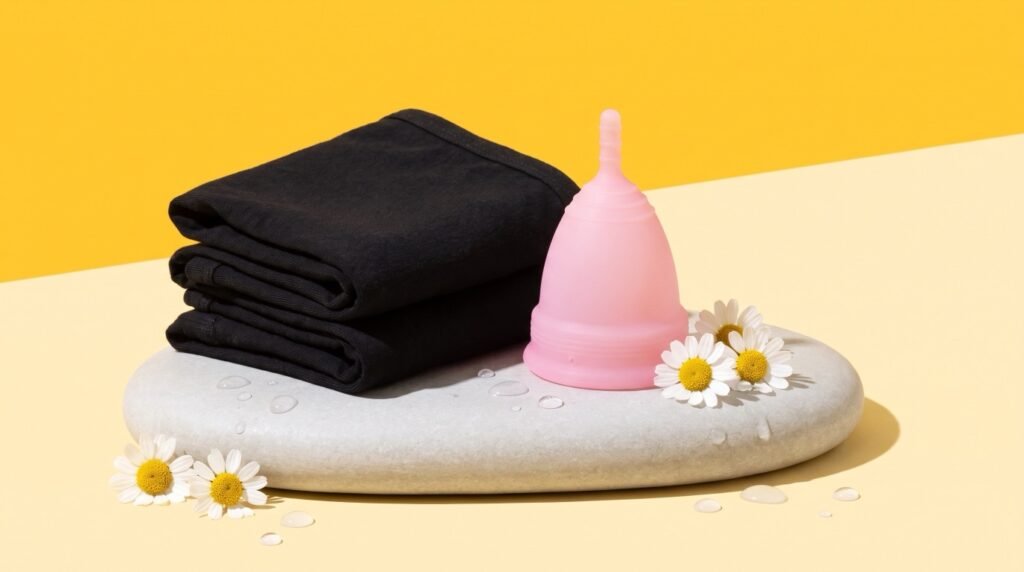
Quick verdict: Almost everything we recommend costs more than the conventional version. Saalt is the exception. A $32 cup replaces years of tampons, the company has been a certified B Corp since 2019, and it had its period underwear tested by an outside lab after the PFAS scandal hit the category. There’s a real learning curve, and we’re not going to pretend otherwise. Our rating: 4.2 out of 5.
Who they are
Cherie and Jonathan Hoeger started Saalt in Boise, Idaho in February 2018. Cherie is CEO. Eight years on the company has still raised no outside funding, which is unusual enough in consumer goods to be worth saying twice.
That’s a straight 1.0 on ownership. Nobody bought them, nobody is steering them toward an exit, and the people who started it still make the decisions.
The products are menstrual cups and discs in medical-grade silicone, period underwear, and the small stuff around them: a steamer, a wash, travel cases. Saalt gives 1% of revenue to period-poverty work and says it has donated more than 150,000 products across 56 countries since launch.
What they get right
The math works in the reader’s favor for once. A Saalt Cup is $32 and lasts years. Tampons and pads run somewhere north of $100 a year, every year, forever. The payback lands inside the first few months and everything after that is money you don’t spend. That’s the only 1.0 on value for money we’ve handed out in this category, and it’s not close.
B Corp since June 2019. We checked B Lab’s directory, not Saalt’s marketing. The overall B Impact Score is 85.8 against 80 to qualify, with Governance at 16.0 the strongest section.
On PFAS, they did the thing you’d want. Period underwear had a bad few years. Lawsuits, headlines, and a lot of brands issuing statements. Saalt says its fabric was never treated with PFAS and had a third-party lab test the material to check. Independent testing by Mamavation in 2023 returned a non-detect for organic fluorine, after an earlier 2021 test on a previous fabric had found 10 ppm. So the newer material tests clean, and the older one didn’t quite.
We’d rather tell you both numbers than the flattering one.
Where they fall short
That B Impact Score of 85.8 clears the bar by 5.8 points. Certified is certified, and there’s no asterisk on it. But it’s the thinnest margin of any B Corp in this directory, and B Lab’s tougher v2.1 standards land in September 2026, so this is one to re-check rather than assume.
Beyond B Corp, there isn’t much. No certification on the silicone beyond medical grade and FDA registration, nothing on the organic cotton in the underwear, no factory audit published. For a company selling something worn internally, we’d want to see more with an auditor’s name attached.
Transparency has the same shape: good on materials, quiet on suppliers. Saalt will tell you what its products are made of and publish its donation totals. It won’t tell you which factories make them.
The cup itself takes work. Nobody gets insertion and removal right on the first try, and most people need two or three cycles before it stops being a project and starts being a Tuesday. Public bathrooms stay awkward. If you have a low cervix, an IUD, or a history of pelvic pain, this is a conversation to have with a doctor rather than a review site.
What they sell, and what it costs
The Saalt Cup and the Teen Cup are $32, the Soft Cup the same, and the Saalt Disc is $35. Period underwear runs $27 to $47 a pair depending on style and absorbency, with bundles bringing the per-pair price down.
Accessories are cheap: a cup bag is $5, cup wash $14, the travel kit $25, the steamer $39.
Against roughly $10 a month on disposables, a single cup pays for itself in about three months. The underwear takes longer, closer to a year, and it’s the part of the range where you’re paying a normal premium rather than saving money.
Who it’s actually for
Anyone who wants to stop buying period products every month and is willing to spend two cycles learning something new. That trade is the whole proposition, and if you’re up for it, this is the cheapest and lowest-waste period care we’ve found.
Start with the cup rather than the underwear. It’s where the savings are, it’s the product Saalt is best at, and $32 is a small bet.
If the learning curve is a hard no, or you want a doctor’s input first, organic cotton disposables get you most of the material improvement with none of the adjustment. Natracare has been doing those since 1989 and remains the reference point.
Deals and discounts
No affiliate program on our side, so nothing here earns us anything. Saalt bundles cups with the wash and travel case at a discount over buying separately, and runs a “Welcome to the Cup/Disc Life” starter set that was 20% off when we checked.
Frequently asked questions
Does Saalt period underwear contain PFAS?
Independent testing by Mamavation in 2023 returned a non-detect for organic fluorine on Saalt’s period underwear, and Saalt says the fabric has never been treated with PFAS and was checked by a third-party lab. Earlier testing in 2021, on the fabric Saalt used then, did detect 10 ppm of fluorine. The current material tests clean.
Is Saalt a certified B Corp?
Yes, since June 2019, with an overall B Impact Score of 85.8 against 80 to qualify. We verified that in B Lab’s own directory. It’s a slim margin, and B Lab’s stricter v2.1 standards take effect in September 2026, so it’s worth re-checking after that.
How long does a Saalt cup last?
Years, with basic care. Medical-grade silicone doesn’t degrade quickly, and the cup gets boiled or steamed between cycles rather than replaced. That’s the whole reason a $32 purchase competes with a $100-a-year habit.
Is a menstrual cup better than organic tampons?
It depends what you’re optimizing for. A cup wins clearly on waste and on cost over time. Organic cotton tampons win on convenience and require no adjustment period. Plenty of people use both, a cup at home and tampons when they’re out.