
Cora
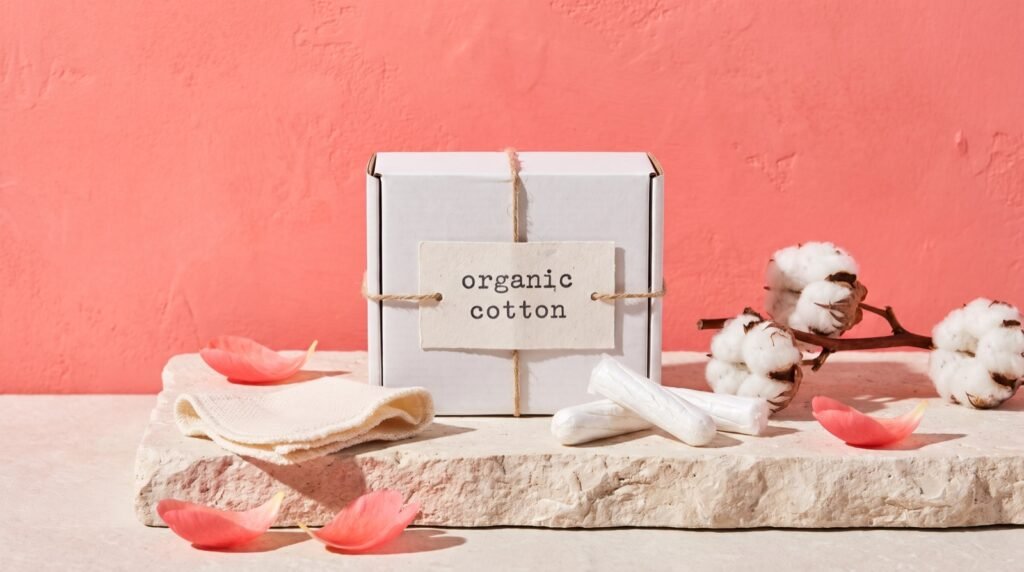
Quick verdict: Want organic cotton tampons without ordering online or paying specialty-shop prices? That’s Cora’s whole pitch, and it delivers. A box of 16 costs $10 on its own site, the brand is stocked at Target and CVS, and it’s been a certified B Corp since 2016. The applicator tampons use plastic, though, and Cora says a lot less about where its cotton comes from than about what isn’t in it. Our rating: 3.6 out of 5.
Who they are
Cora started in 2016, co-founded by Molly Hayward, and the legal company behind it is Lyv Life, Inc., based in San Francisco. Its where-to-buy page now lists Target, CVS, Walmart, Kroger and Safeway, which is the thing most people know it for.
It’s venture-backed. Harbinger Ventures led a $7.5 million round in 2019, bringing the total raised to about $13.5 million. We found no acquisition and no parent company. That’s the normal shape for a brand this size, but investors eventually want an exit, so it’s the field we’d re-check first if anything changes.
What they get right
The B Corp is real, and it’s old. B Lab lists the company as Lyv Life Inc, certified since July 2016, with a current score of 106.2 (80 is the pass mark). Here’s the thing though: search B Lab for “Cora” and you get nothing, because the listing sits under the legal name. We missed it ourselves on an earlier pass. If you’ve read that Cora isn’t certified, that’s probably why.
It’s priced like a normal tampon. The Comfort Fit applicator tampons are $10 for 16, and the applicator-free version is $9 for 18. Pads start at $10 for 16. That’s close to what you’d pay for a conventional box, which makes it one of the easiest switches in this whole category.
The cotton claims are specific. The tampons are listed as 100% organic cotton, made without rayon, fragrance, chlorine or dyes. You’ll notice that’s a list of what’s left out rather than a certificate, which is the weak spot covered below. But it does cover the additives people actually worry about.
There’s a give-back program attached. Cora says it has given 24 million period products to people who’d otherwise go without, with most of its US giving directed to BIPOC communities. That’s the brand’s own count, so treat the number as self-reported.
Where they fall short
The applicators are plastic. The Comfort Fit tampon comes with a compact BPA-free plastic applicator. Fine for comfort, not so fine if the reason you’re switching is single-use plastic. The applicator-free tampon is the better pick if waste matters to you, and the cup and discs skip the problem entirely.
We couldn’t trace the organic cotton to a certificate. Cora’s site doesn’t name a certifier, a cotton source or a manufacturer for its disposables. Organic cotton in period care is usually certified to GOTS or a similar standard somewhere upstream, and we’d expect a B Corp to show that link. It doesn’t. So the organic claim is believable, but it’s the brand’s word, which is why transparency scores low here.
No independent testing we could find. We didn’t find a lab test or a hands-on review from a testing outlet. Shoppers like the products, but we can’t point you to anything more rigorous than that.
What they sell and what it costs
Thirteen core products, give or take. On the disposable side: two tampons, regular and overnight pads, three liners and a bladder liner. On the reusable side: a menstrual cup at $39 with a storage clutch, and two menstrual discs at $30 each. There’s also a heat patch for cramps. Shipping is free over $35.
Call it $. Bigger boxes drop the per-tampon price a little, and buying in store at Target or CVS saves the shipping question altogether.
Who it’s actually for
Cora is the one we’d hand to someone who wants out of conventional tampons but doesn’t want to change how they shop. It’s on the shelf where you already buy them, at roughly the same price.
If plastic-free is the priority, pick the applicator-free tampons, or look at Natracare, which goes further on packaging. If you’d rather stop buying disposables altogether, Cora’s own cup is a sensible start, and Saalt has a bigger reusable range.
Deals and discounts
No affiliate relationship on our side. Free shipping kicks in at $35 on Cora’s own site.
Related reading
- The Best Organic Tampons and Period Products, Vetted
- What’s Really in a Pad or Tampon? Mostly, Nobody Has to Say
- Dioxin in Tampons: The Scare That the Industry Already Fixed
Frequently asked questions
Is Cora a B Corp?
Yes. B Lab lists Cora under its legal name, Lyv Life Inc, certified since July 2016 with a current score of 106.2. Searching B Lab for “Cora” returns nothing, so look for the legal name instead.
Who owns Cora?
Cora is an independent, venture-backed company, Lyv Life, Inc., co-founded by Molly Hayward. Harbinger Ventures led its 2019 funding round. We found no parent company or acquisition.
Are Cora tampons organic?
Cora says its tampons are 100% organic cotton, made without rayon, fragrance, chlorine or dyes. It doesn’t name the certifier for that cotton on its site, so we couldn’t confirm it independently.
Are Cora tampon applicators plastic?
The Comfort Fit applicator tampons use a BPA-free plastic applicator. If you want to avoid the plastic, Cora also sells applicator-free tampons, a menstrual cup and two menstrual discs.
How much do Cora tampons cost?
A box of 16 applicator tampons is $10 on Cora’s site, and 18 applicator-free tampons are $9. That’s close to a conventional drugstore box, and Cora is also stocked at Target and CVS.