What’s Really in a Pad or Tampon? Mostly, Nobody Has to Say
Ask what’s in period products and you run into a gap that surprises most people: in most of the United States, nobody has to tell you.
Menstrual products are regulated by the FDA as medical devices, which sounds reassuring and has an odd consequence. Device rules cover safety and effectiveness rather than ingredient disclosure, so unlike a bottle of shampoo, a box of tampons has historically carried no ingredient list at all.
One state changed that. In October 2019 New York became the first to require menstrual product packaging to carry a plain, conspicuous list of every ingredient. Because manufacturers rarely produce separate packaging per state, that law improved labels well beyond New York, which is the same thing California’s cleaning product law did for detergent.
What’s usually in there
More plastic than most people expect.
A conventional pad is largely plastic by weight: a polyethylene backing sheet, a polypropylene top sheet, adhesive, and a core of wood pulp fluff plus superabsorbent polymer. Estimates commonly put a single pad at the plastic equivalent of several carrier bags. Tampons are cotton, rayon, or a blend, often with a polyethylene or polypropylene applicator and a polyester string.
Then the things that don’t need to be there.
Fragrance appears in scented pads, liners and some tampons, and it’s the same undisclosed catch-all as everywhere else in this site: one word covering a blend nobody has to name. On the most sensitive tissue in the body, applied for days at a time. If a product is scented and you get irritation you can’t explain, this is the first thing to remove.
Dyes are there for the same reason, which is to say no reason: to make a pad look whiter or a wrapper prettier.
PFAS have turned up in testing of some period underwear, which matters because that category is marketed as the sustainable alternative. It’s brand-specific rather than universal, and it’s worth checking a given brand rather than assuming either way.
What the ingredient list can’t tell you
Two things, and it’s worth being straight about both.
The metals detected in 2024 testing don’t appear on any ingredient list, because nobody adds them. They arrive with the cotton, from soil, exactly like a manufacturing contaminant rather than an ingredient. Disclosure laws don’t reach them.
Neither does trace dioxin, which is environmental background rather than an input, and which the bleaching change already addressed decades ago.
So an ingredient list solves the fragrance and plastic questions and leaves the contamination questions open. Useful, not complete, which is the honest framing for most disclosure rules.
What I’d actually buy
Unscented, always. This is the single highest-value change and it costs nothing. There is no benefit to a scented pad that offsets putting an undisclosed fragrance blend against mucous membrane.
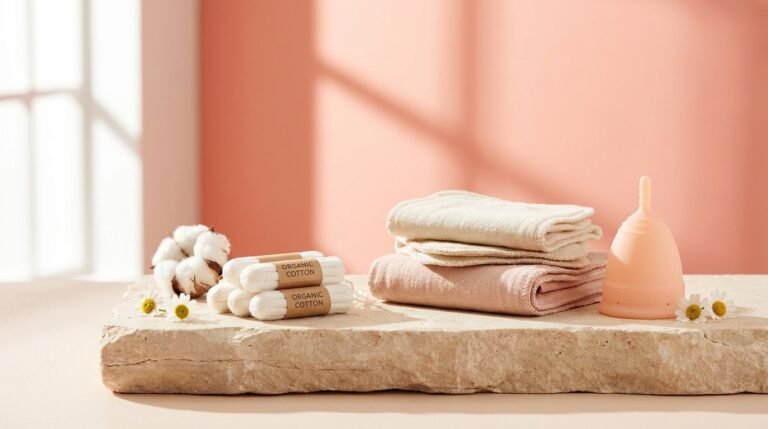
Organic cotton if you’re using disposables, understanding what it does and doesn’t do. It addresses pesticide residue. It does not address metals, and it isn’t a health claim beyond that.
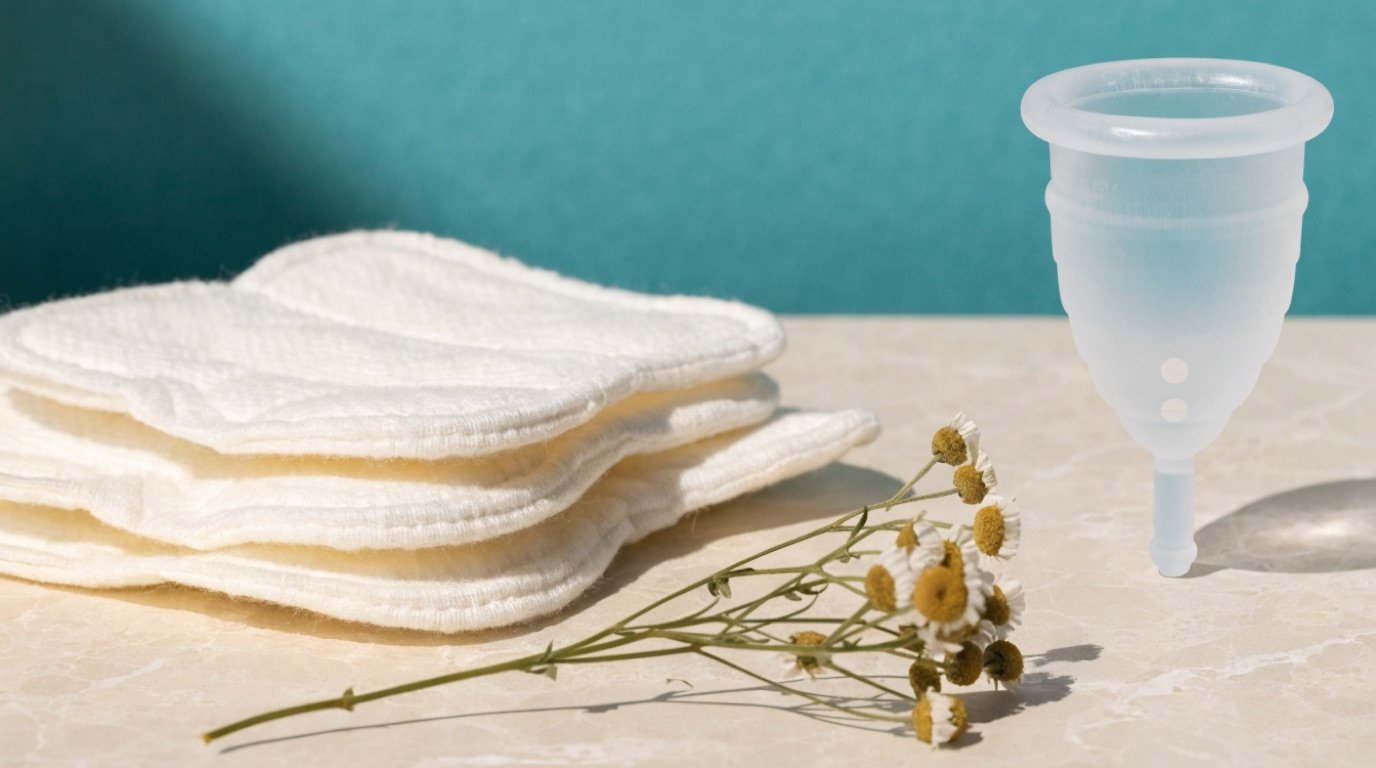
A cup or disc if it suits you, because it’s the option that answers nearly everything at once: medical-grade silicone, no agricultural material, no fragrance, no adhesive, and it replaces thousands of disposable items over a lifetime. The adjustment period is real and it doesn’t suit everyone, which is why we don’t present it as the only right answer.
Reusable cloth pads and period underwear are the middle route, with the PFAS caveat above.
And in every case, favor a brand that publishes a full ingredient list whether or not its state requires one. That’s the signal that a company expects to be checked, and it’s how the picks in the best organic period products are sorted. Every brand there has a scored profile in our brand directory.
Frequently asked questions
Do period products have to list ingredients?
Only in New York, which in 2019 became the first state to require it. Menstrual products are regulated by the FDA as medical devices, and device rules address safety and effectiveness rather than ingredient labeling. Because brands rarely make state-specific packaging, the New York law improved labels more widely.
How much plastic is in a pad?
Most of one, by weight. A conventional pad typically has a polyethylene backing, a polypropylene top sheet, adhesive, and a core of wood pulp and superabsorbent polymer, often estimated at the plastic equivalent of several carrier bags per pad.
Is fragrance in period products a problem?
It’s the change worth making first. Fragrance is an undisclosed blend that can contain dozens of unnamed ingredients, applied to some of the most absorptive tissue in the body for days at a time. It provides no functional benefit, and it’s a common cause of unexplained irritation.
Do period underwear contain PFAS?
Some products have tested positive, though it’s brand-specific rather than universal across the category. Since period underwear is marketed as the sustainable choice, it’s worth checking a specific brand’s testing and statements rather than assuming the whole category is clear.
Related reading
The rest of this series: metals in tampons and the dioxin question. For vetted picks, see the best organic period products. The same undisclosed-fragrance structure runs through cleaning products, covered in the fragrance loophole.
Sources: New York State, Legislation requiring disclosure of ingredients in menstrual products, 2019. US Food and Drug Administration, Menstrual tampons and pads: information for premarket notification submissions. Campaign for Safe Cosmetics, Menstrual care products and toxic chemicals.