The Best Sustainable Swimwear Brands for Guilt-Free Summers
Here’s the uncomfortable truth about that new bikini: almost all swimwear is made from virgin nylon or polyester, which is plastic spun from petroleum. Sustainable swimwear is the attempt to do better on that, and it’s a category where the claims need reading carefully. It doesn’t break down. And because you wash swimwear often, it sheds microplastics into the water with every cycle, tiny fragments that end up in rivers, oceans, and eventually us.
Swimwear is one of the most plastic-heavy things in your closet. Which is exactly why the material choice matters so much.
The better brands change the input. Instead of virgin plastic, they use recycled fibers like ECONYL, a regenerated nylon made from ghost fishing nets and other waste pulled from the ocean, or recycled polyester from plastic bottles. Add fair labor and suits built to survive more than one summer, and you’ve got swimwear that isn’t fighting the ocean it’s made for. We used the same standards on workout gear in our roundup of the best sustainable activewear brands; this is the swim edition.
So here’s how we picked. Three things had to line up:
- Materials: recycled fibers instead of virgin plastic.
- Labor: fair practices you can verify.
- Durability: a suit that survives sun, salt, and chlorine.
These made the cut.
Our picks at a glance
- Best for surf and sport: Patagonia
- Best transparency: Outerknown
- Best luxury feel: Vitamin A
- Best prints: Seea
- Best value: Summersalt
Patagonia: the surf-tested workhorse
Best for: surfers, swimmers, and anyone who’s rough on their gear | Price: around $79 | Certifications: B Corp, Fair Trade Certified | Ownership: owned by the Patagonia Purpose Trust
If you actually swim, surf, or get thrown around by waves, Patagonia is the one built for it. Its swimwear uses recycled nylon and polyester, much of it Fair Trade Certified sewn, and it’s made to take a beating and be repaired rather than replaced. The company’s environmental record is the deepest in the business, and its Worn Wear program will fix your suit instead of selling you a new one. See our Patagonia brand profile for the full picture, and shop the range on their site.
The look is function-first, so it’s more active than lounge-by-the-pool glamour. But for durable, fair-made swimwear you can really swim hard in, nothing here matches it.
Outerknown: ECONYL and fully transparent
Best for: recycled ECONYL swim with sourcing you can actually check | Price: $74–$168 | Certifications: none held by the brand itself; its Thai factory is Fair Trade Certified | Ownership: founder-led, inside a Kelly Slater holding company since May 2024
Co-founded by surfer Kelly Slater, Outerknown makes its swim trunks and suits from ECONYL regenerated nylon and publishes real detail about its factories and materials. Worth being precise about the labor claim, because most write-ups aren’t: the Fair Trade Certified factory here is VT Garment Company in Thailand, the supplier Outerknown names, and that certificate isn’t the brand’s own. The standard applies where the sewing happens, which is the part that matters. It just isn’t the same claim as the label holding the mark itself. It’s proof that ocean-minded swimwear can look seriously good, with a laid-back, well-designed aesthetic that isn’t shouting “eco.”
It sits at a premium price, and the range is more focused than a big swim label’s. It’s also not listed as a B Corp in B Lab’s directory today, despite being described as one almost everywhere, so we’re not crediting that either. For recycled swim with a supply chain you can check supplier by supplier, it’s still a top pick. The full picture is in our Outerknown brand profile, and the range sits on their own swim page.
Vitamin A: recycled luxury, made in California
Best for: a luxury feel and elevated resort silhouettes | Price: $95–$240 | Ownership: owned by Swim USA, a family-owned group
Vitamin A is the one that makes sustainable feel like a luxury purchase. Much of its line uses EcoLux, a recycled nylon fabric, and a good portion is cut and sewn in California rather than shipped across the world. The silhouettes are elevated and flattering, the kind of suit that reads high-end resort rather than eco-compromise.
It’s a splurge, and the fashion-forward cuts are more sunbathing than serious swimming. But for recycled swimwear with a genuine luxury feel and shorter domestic supply chain, it stands alone here.
Seea: surf suits built for actual surfing
Best for: prints you’ll want to be seen in, on a suit that stays put | Price: $150–$240 | Ownership: founder-owned since 2011
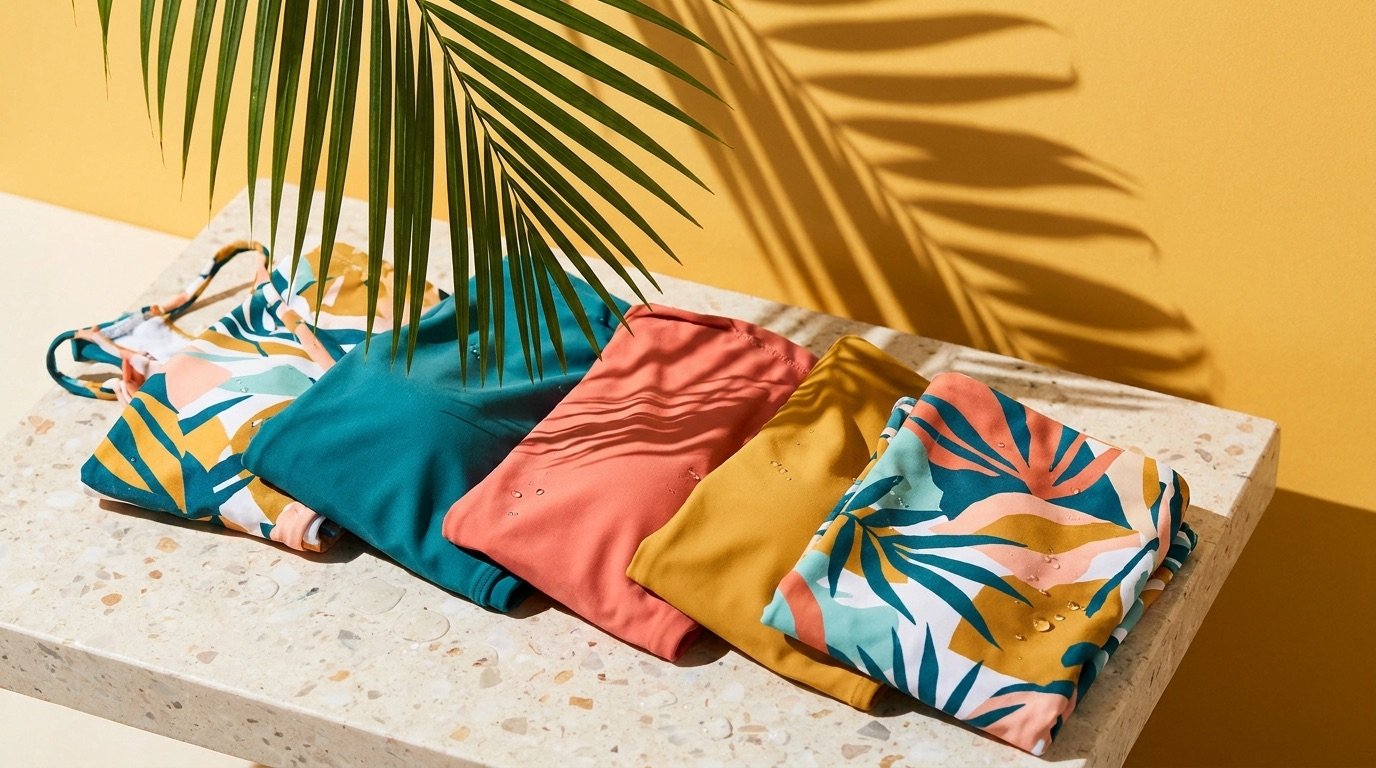
Most swimwear is designed to be looked at. Seea’s is designed to be surfed in, and that changes how the whole thing is cut. Amanda Chinchelli started sewing suits in her garage in 2011 because nothing on the market let her paddle out without fixing a strap every third wave. The brand still makes long-sleeved surf suits, playsuits and one-pieces in recycled nylon, including ECONYL regenerated from ghost fishing nets, and the prints are the other half of the appeal: painterly, retro-leaning, and a long way from the neon everyone else is running.
Now the honest gap. Seea holds no third-party certification, so the recycled-material claim rests on the fabric it buys rather than on an audit of the company. We’d rather say that plainly than let an ECONYL logo do the work. What it does have is a founder who still owns the business, fifteen years of making one thing well, and suits that survive being used hard in salt water. The surf-suit range lists from $150 to $240, with most of it sitting near $170.
Summersalt: flattering fits at a fair price
Best for: flattering fits and a friendlier price | Price: $45–$135 | Ownership: independent, founder-led and venture-backed
Summersalt is the accessible one, built on recycled fabric with a huge range of sizes and thoughtfully engineered fits from thousands of body measurements. The prices land well below the luxury names, the suits are known for being reliably flattering, and the brand keeps the sustainability quiet rather than charging a premium for it.
It’s a direct-to-consumer brand, so it’s mostly online and the recycled-content share varies by style. Suits list from $45 to $135, and Summersalt discounts often enough that the sale price is what most people see. One thing to weigh before ordering: its Better Business Bureau file carries a run of 2026 complaints about orders taking ten weeks or more to ship during a warehouse move, with refunds slow to follow. Most are marked resolved. For well-fitting recycled swimwear that doesn’t cost a fortune, it’s still the value winner.
What we left off, and why
The biggest group we skipped is the fast-fashion swim labels releasing a single “recycled” suit while churning out hundreds of virgin-plastic ones behind it, using that one style as a green halo for the whole brand. One recycled bikini in a throwaway lineup isn’t a sustainability program, and our greenwashing guide breaks down exactly how that trick works. Two brands that used to sit on this list have come off it, and it’s worth saying why rather than quietly deleting them. Girlfriend Collective‘s swim collection is empty as of this update, though its recycled activewear is as good as ever and still sits in our roundup of the best sustainable activewear brands. Wolven‘s swim range has emptied out the same way. Neither brand did anything wrong, they just stopped selling swimwear, and a pick you can’t buy is no use to you.
The other honest caveat applies to every brand here: even recycled swimwear sheds some microplastics, so how you wash it matters as much as what it’s made of.
How to actually choose one
Don’t start with the brand. Start with how you’ll actually use the suit.
If you swim or surf hard, Patagonia or Outerknown. If you want a luxury feel, Vitamin A. If you want prints with some actual design behind them, Seea. And if you want a flattering fit at a fair price, Summersalt.
One habit does more than any single purchase: wash swimwear less, by hand, in cold water, and skip the dryer. It cuts the microplastic shedding, and it makes a good recycled suit last for years instead of one season, which is the whole point.
Frequently asked questions
What makes swimwear sustainable?
Mostly the material and how long it lasts. Sustainable swimwear is made from recycled fibers (like ECONYL regenerated nylon or recycled polyester from bottles) instead of virgin petroleum plastic, and it’s produced under fair-labor conditions. The best of it is also durable enough to survive many seasons of sun, salt, and chlorine, since a suit that lasts is a suit you don’t replace.
What is ECONYL?
ECONYL is a regenerated nylon made from nylon waste, including discarded fishing nets (“ghost nets”) and other scrap recovered from oceans and landfills. It performs like virgin nylon but keeps waste out of the environment and requires no new petroleum to produce. Several brands here, including Outerknown, use it, and it can be recycled again at the end of a garment’s life.
Does recycled swimwear still shed microplastics?
Yes, to a degree. Recycled nylon and polyester are still plastic, so they release some microfibers when washed, just like virgin versions. Recycled fabric solves the raw-material problem, not the shedding one. You can cut shedding significantly by washing swimwear less often, by hand in cold water, using a microfiber-catching wash bag, and air-drying instead of tumble-drying.
How should I care for swimwear so it lasts?
Rinse it in cool water right after swimming to get rid of salt and chlorine, which break fabric down over time. Wash it by hand or on a gentle cold cycle, skip harsh detergents and fabric softener, and always air-dry out of direct sun rather than using a dryer. Done every time, this keeps a suit’s shape and color for years and reduces microplastic release along the way.
Related reading
Want the detail behind the picks? We’ve written up each thing we screened for: Econyl and recycled nylon, microplastic shedding from swimwear, and PFAS in swimwear.
Building a more conscious wardrobe? Start with our guide to sustainable fashion, see our picks for workout gear in the roundup of the best sustainable activewear brands, and read our honest take on whether Lululemon is actually sustainable.