
Who Gives A Crap
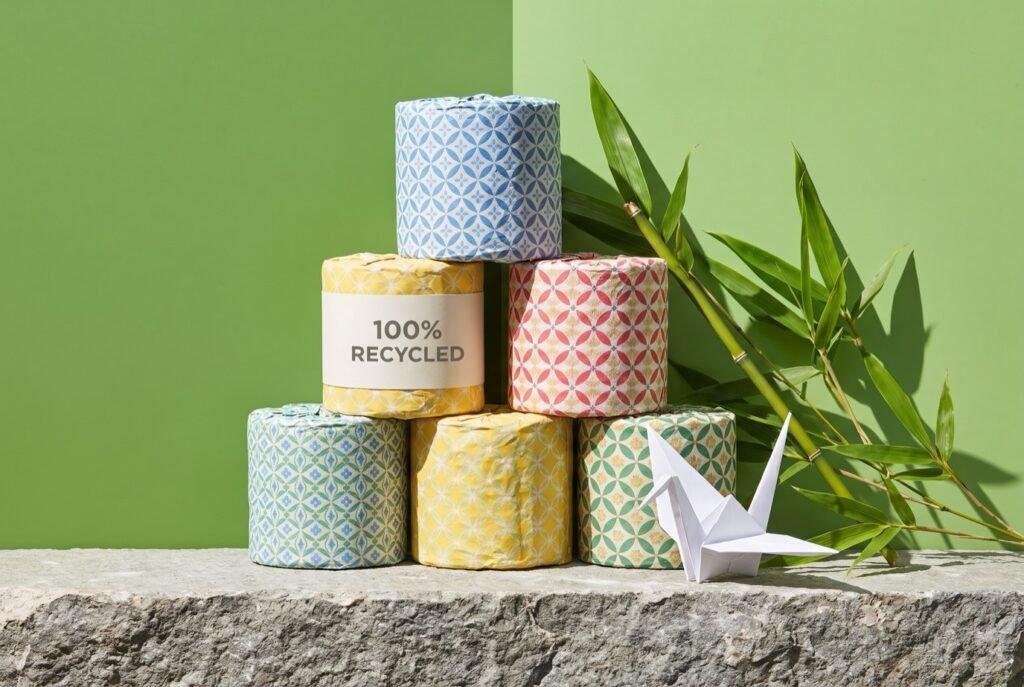
Quick verdict: Who Gives A Crap makes paper from recycled fiber or FSC bamboo, never from virgin trees, and hands half its profits to sanitation projects. It’s a B Corp scoring 125.5, which is high. The product is good and the packaging really is plastic-free. The catch is the box: you buy 24 or 48 rolls at a time, and you have to put them somewhere. Our rating: 3.9 out of 5.
Who they are
Simon Griffiths, Danny Alexander and Jehan Ratnatunga started the company in Melbourne in 2012 after working out that billions of people had no access to a toilet. The launch is the part everyone remembers: Griffiths sat on a toilet in a cold warehouse, live-streamed, and refused to move until the crowdfunder hit $50,000. It took 50 hours.
First product shipped in March 2013. Since then the company has given away half its profits, which now runs past $14 million to partners including WaterAid, Water For People and Fresh Life. Griffiths is still CEO, and the business trades as Good Goods Holdings Pty Ltd.
One thing the brand’s own story doesn’t lead with: it took roughly $50 million of outside investment from 2021, including from Mike Cannon-Brookes. That doesn’t change what the company does today. It does mean the ownership question has a different answer than it did in 2012, and an exit would put the 50% pledge in somebody else’s hands.
What they get right
- B Corp certification at 125.5, held since February 2016. That’s a high score, and it’s held by the trading entity rather than a sister company.
- FSC certification on the bamboo, and the recycled line uses post-consumer waste rather than trees at all.
- 50% of profits, not 50% of a marketing budget. The donation total is published and updated, and the partners are named.
- The packaging is actually plastic-free. Every roll comes wrapped in paper, the box is cardboard, and there’s no shrink film hiding at the bottom. That’s rarer than it should be.
- The rolls are double length, which is what makes the per-sheet price competitive rather than merely tolerable.
Where they fall short
You buy paper in bulk or you don’t buy it here. The smallest recycled box is 24 rolls at $42, and 48 rolls costs $68. Got a spare closet? Then it’s an advantage. In a small apartment it’s a real problem, and it’s the most common reason people try this brand once and go back.
The certification list is also shorter than the reputation suggests. B Corp and FSC are both real. That’s the whole list. There’s no third-party mark on the manufacturing itself, and the company doesn’t publish a mill-level supplier list, so the sourcing story rests on its own reporting.
Recycled paper is a little rougher than bamboo. Not unpleasant. But if you’ve been buying the softest thing on the supermarket shelf, you’ll notice on day one.
What they sell and what it costs
Toilet paper, tissues, paper towels, trash bags and dog waste bags. In the US, recycled toilet paper is $42 for 24 rolls or $68 for 48. Bamboo runs $28, $49 and $75 depending on box size. Paper towels are $22 or $39, tissues $22, trash bags $13 or $18.
Per roll that lands around $1.40, which reads expensive against supermarket paper until you account for the rolls being double length. Per sheet it’s much closer to ordinary. Shipping is free over $25 and carbon neutral.
Who it’s actually for
Anyone with somewhere to put a box, who’d rather solve the paper question once a season than every week. Most people run it on subscription. That’s the version that makes the price work.
If you’re short on storage, this is the wrong brand and no amount of good intentions fixes that. Reel Paper and similar smaller-box options exist for exactly that reason.
Deals and discounts
No affiliate program on our side, so nothing on this page earns us anything.
Related reading
- 8 Zero-Waste Home Swaps Worth the Money
- Zero-Waste Bathroom Swaps That Actually Stick
- The Greenwashing Guide
Frequently asked questions
Is Who Gives A Crap actually a B Corp?
Yes. It’s listed in B Lab’s directory under Good Goods Holdings Pty Ltd with a score of 125.5, certified since February 2016. We checked the directory rather than the badge on their site, because a badge keeps rendering long after a certification lapses.
Does Who Gives A Crap really donate 50% of profits?
That’s the stated model and the running total is published, now past $14 million to partners including WaterAid and Water For People. Worth understanding that it’s 50% of profits rather than revenue, so the figure moves with how the business performs in a given year.
Should I choose recycled or bamboo toilet paper?
Recycled uses paper that already exists, which is the lower-impact option, and it’s slightly rougher. Bamboo is softer and grows back fast, but it’s still a crop being grown and shipped. If you want the smaller footprint, take recycled. If someone in the house will complain, take bamboo.
Why does Who Gives A Crap only sell in bulk?
Because shipping one roll at a time would undo most of the environmental case, and the bulk box is what keeps the per-sheet price near ordinary paper. It’s a real constraint rather than an upsell, and it’s the main reason the brand doesn’t suit small apartments.
Is Who Gives A Crap independent?
It trades as Good Goods Holdings Pty Ltd and co-founder Simon Griffiths is still CEO. The company took around $50 million from outside investors starting in 2021, so it’s independent but venture-backed, and that’s the part its own storytelling tends to skip.