Chrome-Tanned vs Vegetable-Tanned Leather
You may have read that vegetable-tanned leather is the clean, traditional, environmentally sound choice, and chrome tanning is the industrial villain.
It’s more complicated than that, and the numbers say so.
Short answer: roughly 80 to 90 percent of the world’s leather is chrome tanned, and the horror stories are real, but they’re failures of effluent treatment and enforcement rather than proof the chemistry can’t be controlled. Vegetable tanning solves the heavy metal problem and produces wastewater with several times the organic load per tonne of hide. Neither is automatically the better answer.
The numbers, from the EU’s own reference document
The European Commission’s technical reference on tanning states it directly: of the world’s tanneries, 80 to 90 percent use chromium salts, and chrome-tanned leather accounts for approximately 90 percent of all leather produced globally.
The same document gives the number that explains the pollution. In a conventional process, between 60 and 80 percent of the chrome oxide gets fixed onto the leather. The remainder stays in the water.
That’s the whole problem in one sentence. A fifth to two fifths of the chromium you put in doesn’t end up in the hide, and where it goes next depends entirely on whether anyone built a treatment plant.
Chromium III versus chromium VI
Worth getting straight. These get treated as one thing and they aren’t.
Chromium III is the trivalent form used to tan. It’s the working chemistry and it’s not the hazard.
Chromium VI, hexavalent chromium, is the carcinogen and skin sensitizer. It isn’t added; it forms by oxidation of chromium III under certain conditions: high temperatures, ultraviolet light, low humidity, strongly alkaline conditions. The natural acidity of properly made chrome-tanned leather is what normally suppresses it.
Europe regulates the result rather than the process. Under REACH, leather articles coming into contact with skin can’t be placed on the market containing chromium VI at 3 milligrams per kilogram or above, which is 0.0003 percent by weight. That’s been in force since May 2015, and it’s why a well-made European chrome-tanned shoe is a non-issue for the wearer.
Where the real damage happens
Two places have been investigated in detail. Neither is about the chemistry being uncontrollable.
Human Rights Watch’s investigation into Hazaribagh in Bangladesh covered around 150 tanneries employing eight to twelve thousand workers, discharging roughly 21,600 cubic meters of hazardous liquid waste every day. The report recorded skin disease, acid burns, respiratory illness, amputations, and gastrointestinal disease in 58 percent of workers studied, with children aged seven to eleven doing hazardous work.
The line that matters: no Hazaribagh tannery had an effluent treatment plant.
In Kanpur, India, around 350 tanneries sit in the city’s eastern districts. A groundwater study found hexavalent chromium at 6.2 milligrams per liter against an Indian limit of 0.05, which is 124 times over, affecting roughly 30,000 residents of one neighborhood.
Those are catastrophic outcomes, and they’re outcomes of unregulated discharge. Well-run tanneries recover 20 to 35 percent of their chrome input and treat what’s left.
Vegetable tanning, with the numbers included
Now the part that complicates the tidy story, and all of it comes from the same EU reference document.
Time first. Pit tannage takes weeks to a year. Drum tannage takes one to three days. That slowness is part of the appeal and part of the cost.
Then effluent, measured per tonne of raw hide. Vegetable tanning: 3 to 5 cubic meters of water, chemical oxygen demand of 70 to 220 kilograms, total solids 65 to 300 kilograms. Chrome tanning including pickling: around 0.5 to 0.7 cubic meters of water, chemical oxygen demand around 14 kilograms, plus 5 to 10 kilograms of chromium salts in the spent liquors.
That’s roughly five to fifteen times the organic load and five to ten times the water. The document adds its own warning that some of that organic load has low biodegradability, alongside color and phenolics.
One fairness note that cuts the other way: those figures are per tonne of raw hide, and vegetable tanning yields considerably more finished leather per hide, so the comparison flatters chrome somewhat. The data is also from 2003, and modern high-exhaustion chrome and closed-loop veg tanneries both do better than these numbers.
But the headline holds. Cleaner metal, dirtier water. Vegetable tanning removes the heavy metal. It does not produce a cleaner wastewater stream.
Reading an LWG certificate properly
You’ll see LWG Gold on the better brands, and it’s worth knowing its boundaries.
LWG audits tanneries and leather traders on chemical management, water, energy, waste and traceability back to the slaughterhouse. That’s real and it’s the thing most needing an audit.
What it doesn’t cover: animal welfare, which LWG states outright exists prior to the leather-making process and is therefore not included in its audit standards. Social compliance isn’t directly audited either; it relies on third-party reports. And farm-level deforestation sits outside the audit boundary.
So an LWG Gold rating says something substantial about the tannery’s effluent and chemicals, and nothing at all about the cow, the farm or the forest.
So which should you buy
Ask where it was tanned before you ask how. A chrome-tanned hide from an audited European or LWG-rated tannery is a better environmental outcome than a vegetable-tanned hide from an unregulated one, and it isn’t close.
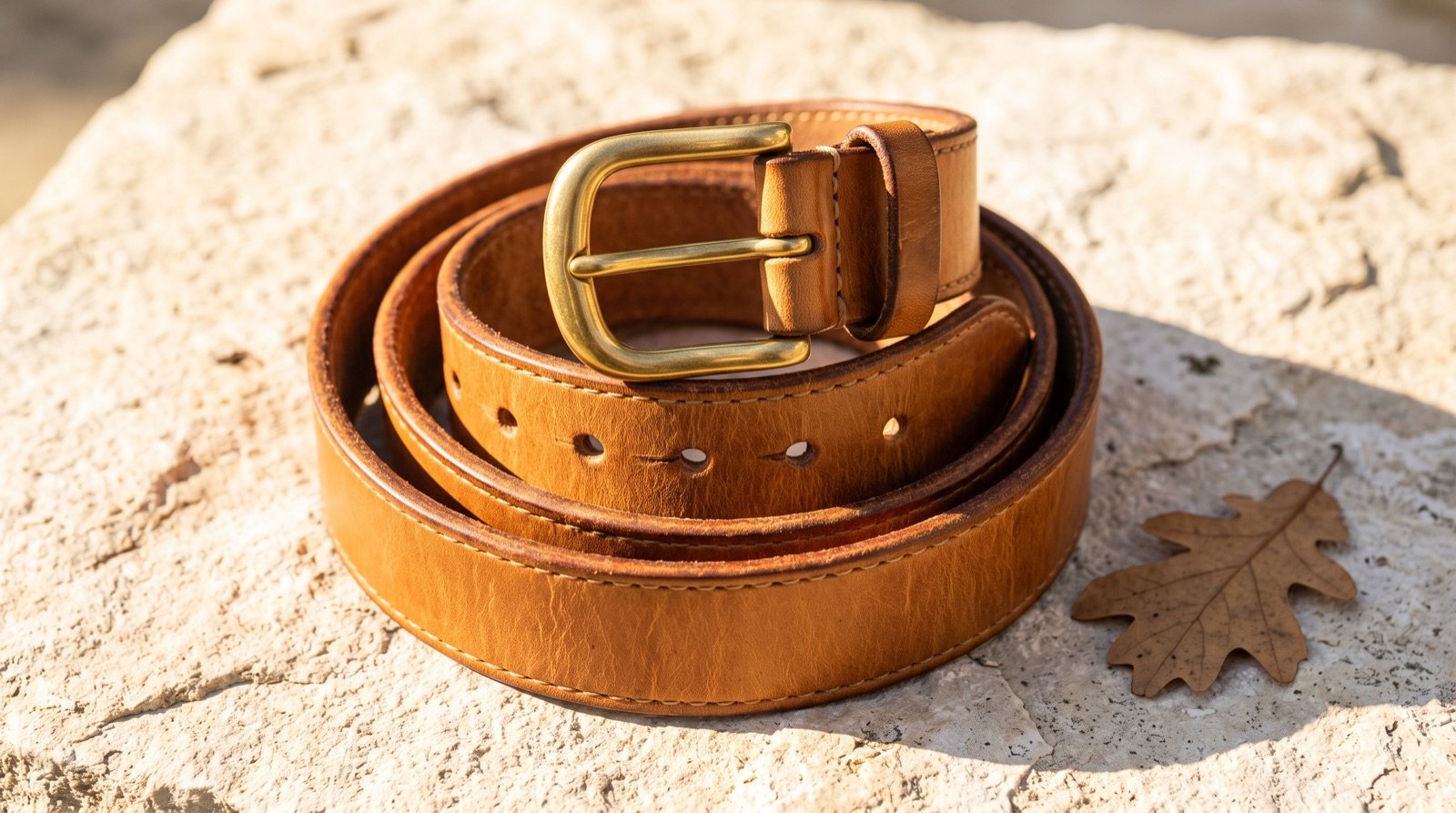
Buy vegetable-tanned for the qualities it actually has: it patinas, it repairs well, it lasts decades, and it avoids the heavy metal entirely. Those are good reasons. “It’s the clean one” is a shakier one than it sounds.
For a shoe you’ll wear hard, chrome-tanned from a Gold-rated tannery is a defensible choice, and it’s what a lot of the sneaker brands we rate use.
And notice that a certificate answers one question. LWG covers the tannery. It says nothing about the farm, which is the same lesson our greenwashing guide keeps teaching: read what was actually checked.
Frequently asked questions
Is chrome-tanned leather toxic to wear?
No. The tanning agent is chromium III, and the hazardous form is chromium VI, which forms by oxidation under specific conditions. EU rules cap chromium VI in skin-contact leather at 3 milligrams per kilogram, and properly made chrome-tanned leather stays acidic enough to suppress its formation. The risk sits with tannery workers and downstream communities, not the wearer.
Is vegetable-tanned leather better for the environment?
It removes the heavy metal, which is a real gain, and its wastewater carries several times the organic load and needs five to ten times the water per tonne of hide. It’s slower and more expensive. Where the tanning happens and whether the effluent is treated matters more than which method was used.
What does Leather Working Group certification cover?
Tanneries and leather traders, audited on chemical management, water, energy, waste and traceability to the slaughterhouse. It explicitly excludes animal welfare, doesn’t directly audit social compliance, and doesn’t reach farm-level deforestation.
How can I tell if leather is vegetable-tanned?
Usually by look and feel: veg-tan starts pale tan or natural, stiffens less over time, darkens with use and smells earthy rather than chemical. Chrome-tanned leather is more uniform, softer from the start and often has a bluish cut edge. Brands that veg-tan tend to say so, because it costs more.
Related reading
More on footwear: is vegan leather just plastic, and the best sustainable sneakers and shoes. For the wider view, our sustainable fashion guide.