How Much Water Does a Pair of Jeans Actually Take?
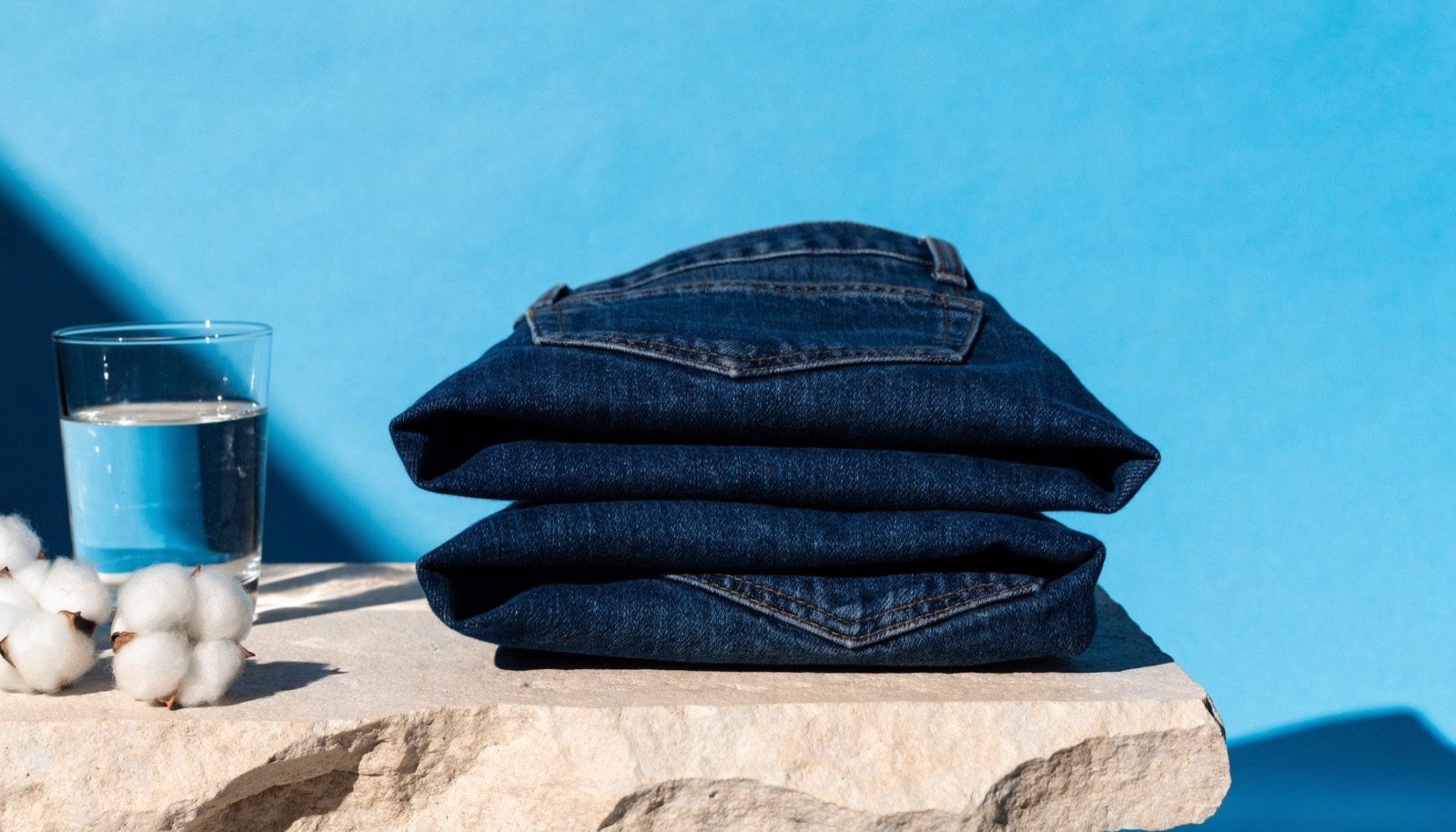
Two thousand gallons. That’s the number attached to a single pair of jeans in almost every article about denim, and it’s the number we used ourselves.
Here’s the thing though. Levi’s, which has studied this more carefully than anyone, puts the figure at 3,781 liters for a pair of 501s across their entire life. That’s about 999 gallons. Half.
Neither number is a lie. They’re measuring different things, and understanding the gap is more useful than memorizing either one, because it tells you which stages actually matter and which one is yours.
Why two honest numbers disagree
The Levi’s lifecycle assessment, first run in 2007 and updated since, follows one specific pair from cotton field to landfill. It uses the cotton Levi’s actually buys, grown where Levi’s actually buys it.
The larger figures you see quoted usually come from broader estimates that assume thirstier cotton. And that assumption does most of the work, because where cotton grows changes everything. Cotton irrigated in a dry region can drink several times what rain-fed cotton needs for the same yield.
So the honest answer to “how much water is in my jeans” is a range, and the range is set mostly by a farm you’ll never see.
Where the water goes
This is the part worth memorizing, because it’s stable across every study regardless of the headline number.
In Levi’s assessment, cotton cultivation accounts for 68% of the water. Growing the plant, not weaving it, not dyeing it. Consumer use, meaning you washing them at home, accounts for another 23%.
Add those together and you get 91%. The factory, the part everyone pictures when they imagine industrial pollution, is a sliver of the total water by comparison.
That reframes the whole problem. Two stages dominate, one happens before the jeans exist, and the other happens in your laundry room for the next decade.
The stage you control
You cannot pick the rainfall in a cotton region. You can pick how often you wash.
Levi’s ran the numbers on this and reached a conclusion most apparel companies would rather not publish: washing your jeans less is one of the biggest levers available, and the company has spent years telling customers to do exactly that. Denim is built for it. The fabric was designed for work, it does not hold odor the way synthetics do, and the fade most people pay extra for develops properly only if you leave them alone.
Cold water when you do wash, air drying instead of the dryer, and spot-cleaning between washes covers most of it.
Which is the quietly annoying conclusion of nearly every honest sustainability question. The purchase matters, and then what you do for the next ten years matters more. Our roundup of the best sustainable denim brands covers the buying half, including the brands recycling their process water and the ones repairing jeans instead of replacing them.
Frequently asked questions
Do organic-cotton jeans use less water?
Not automatically, and this surprises people. Organic cotton skips synthetic pesticides and fertilizer, which is a real benefit for soil and for the people farming it, but the plant still needs water. What matters more for the water number is whether the cotton was rain-fed or irrigated, and where. Organic and rain-fed together is the combination that moves the figure.
Does recycled cotton cut the water footprint?
Yes, and this is where recycled fiber does its clearest work. Reusing existing cotton skips cultivation entirely, which is the 68% stage. Recycled cotton has shorter fibers so it’s usually blended with new cotton for strength, meaning you avoid some rather than all of the growing, but the saving is direct.
Is the 2,000-gallon number wrong, then?
It isn’t wrong so much as it’s the high end of a wide range. Treat it as an order of magnitude rather than a measurement: a pair of jeans costs something like a thousand to two thousand gallons depending on where the cotton grew and how long you keep them. The precision matters less than the shape, which is that farming and laundry dominate.
What about the water used for dyeing?
Dyeing and finishing use less water than cotton growing, but the water they use comes back dirtier, which is a different problem from using a lot of it. That’s covered in our explainer on what indigo dye does to water.
Related reading
More on how denim is made: what indigo dye actually does to water, why stretch jeans can’t be recycled, and the deadly way distressed denim used to be made. For the buying side, see the best sustainable denim brands and our broader guide to sustainable fashion.