The Faded Jeans That Killed People
In 2009, Turkey banned a manufacturing process outright. Not restricted it. Banned it.
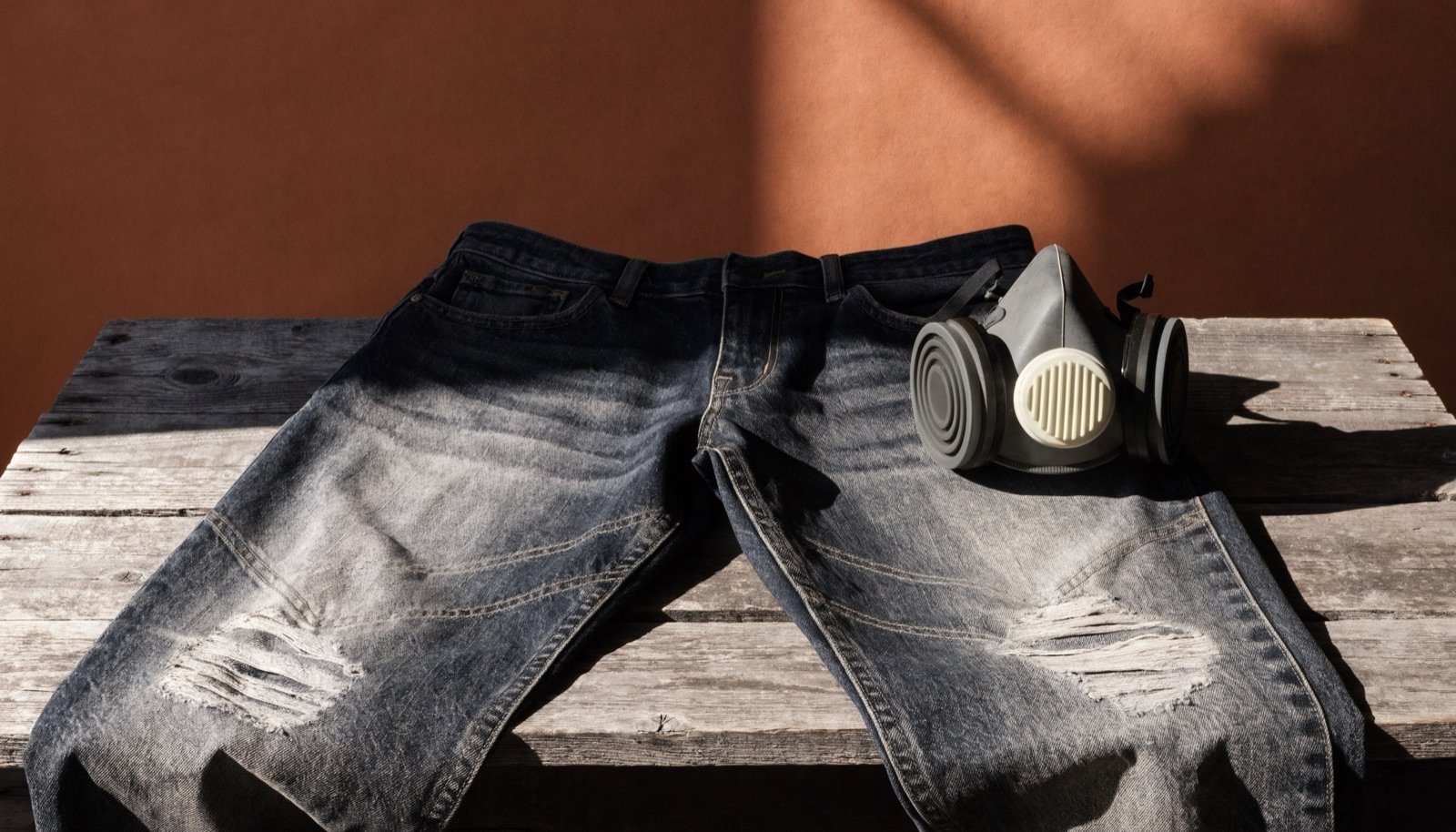
The process was sandblasting, and its only purpose was cosmetic: firing sand at a pair of jeans under high pressure to strip the indigo off the high points, so a brand-new pair looked like it had been worn for five years.
By the time the ban arrived, around 600 Turkish workers had been diagnosed with silicosis, and dozens had died. The mean age at diagnosis was 31.
What the sand did
Silicosis is caused by breathing in fine crystalline silica dust. The particles lodge in lung tissue, scar it permanently, and the scarring keeps progressing after exposure stops. There is no cure and no way to reverse it.
The sand used in Turkish denim workshops ran as high as 80% silica, according to the workers’ own solidarity committee. The work was often done in unventilated rooms, by young men, frequently without respirators, in small subcontracted shops several steps removed from the brand whose label went in the waistband.
The exposure timeline is the detail that stays with you. Researchers who tracked the outbreak found a median of five and a half years between a worker starting the job and being diagnosed, with some cases much shorter. These were people in their twenties and thirties, and among the fatal cases the mean age of death was 35.
For a wash effect. That’s the part worth sitting with.
The ban that half worked
Turkey’s Ministry of Health banned sandblasting in March 2009. The Clean Clothes Campaign and Labour Behind the Label then ran a “Killer Jeans” campaign pushing for a global ban, and a long list of major brands publicly committed to dropping the technique.
That’s a genuine win, and campaigning achieved it. But a national ban and a set of voluntary brand pledges are not the same as the practice ending.
Production moved. Sandblasting and silicosis cases turned up next in Bangladesh, China, Egypt and elsewhere, in workshops with less scrutiny than Turkey’s had. A brand policy is only as good as the audit reaching the fourth-tier subcontractor actually holding the hose, and denim finishing is exactly the kind of work that gets subcontracted.
Which is why “we banned sandblasting in 2010” on a corporate responsibility page tells you about the policy, not necessarily about the laundry.
How distressing is done now
The faded look didn’t go away, so something replaced it, and the replacements vary a lot in how much better they are.
Laser etching is the meaningful improvement. A laser burns the fade pattern into the fabric with no dust, no chemicals and no one standing in a cloud of silica. It’s fast, repeatable and now widespread among larger denim mills.
Ozone and enzyme washes strip color using far less water and gentler chemistry than the older stone-and-chemical approach.
Manual scraping and chemical spraying still exist, and this is where the picture gets murkier. Hand-sanding with abrasive paper produces less airborne silica than blasting but is still dusty repetitive work. Potassium permanganate spray, used to lighten specific areas, is a chemical hazard for the sprayer if the ventilation and protective equipment are not there.
The cleanest signal for a shopper is simple, if slightly unsatisfying: raw and rigid denim skips the entire question. Nothing was distressed because the fading is meant to happen on you. Several brands in our roundup of the best sustainable denim brands are built on exactly that idea, and it’s also the reason those jeans take a few weeks to break in.
Frequently asked questions
Is sandblasting still used on jeans sold today?
Officially it’s banned in Turkey and disavowed by most major brands, but researchers and labor groups have since found it in other producing countries. Nobody can promise you a given pair is untouched by it. The reliable way to avoid the question is to buy raw or rigid denim, or to buy from brands that name their finishing methods, such as laser or ozone.
Does distressed denim harm the person wearing it?
No. Silicosis is an occupational disease of the people doing the blasting, not a risk to the wearer. The finished garment carries no meaningful hazard. This is a labor and manufacturing issue, which is precisely why it stayed invisible to shoppers for so long.
What is laser etching, and is it actually better?
A laser scorches the fade pattern onto the fabric surface under computer control. It eliminates the silica dust, uses no water for the fading step, and needs no one in the blast room. For worker safety it’s a large improvement, and it’s now standard at most well-equipped denim mills.
How can I tell how my jeans were faded?
Usually you can’t from the garment. Brands that invested in laser and ozone finishing tend to say so on the product page or in a sustainability report, because it cost them money. If a brand sells heavily distressed denim at a very low price and says nothing about how the finish is achieved, that silence is information.
Related reading
The rest of the denim story: where a pair’s water actually goes, what indigo dye does to water, and why stretch jeans can’t be recycled. For brands that finish denim without the harm, see the best sustainable denim brands and our guide to sustainable fashion.