
Triarchy
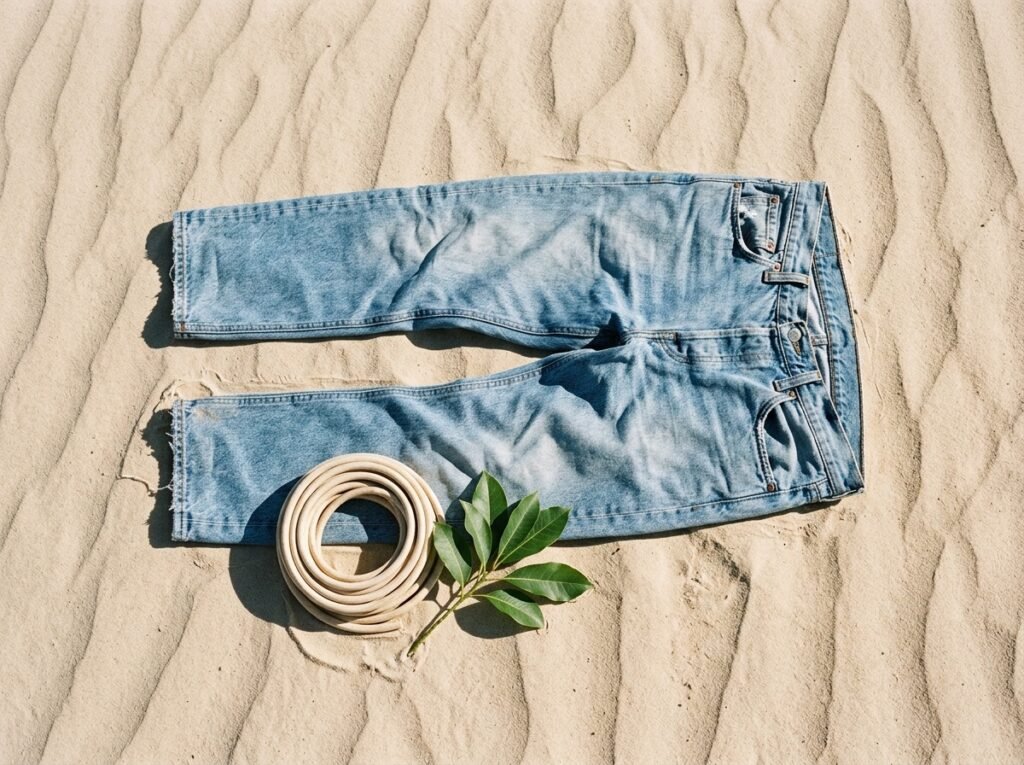
Quick verdict: Almost every comfortable pair of jeans you own is unrecyclable, and the reason is the elastane woven through it. Triarchy is the one brand in our roundup that went after that specific problem, swapping the plastic for natural rubber. It’s a small, expensive, design-led operation, and on this one technical question it’s ahead of everyone. Our rating: 3.9 out of 5.
Who they are
Siblings Mark, Adam and Ania Taubenfligel started Triarchy in 2011, then did something unusual: they stopped. In 2016 they paused production entirely to rethink how the brand made things, and restarted around lower-impact materials. It’s still the three of them, family-owned, working out of Los Angeles.
What they get right
They solved the elastane problem instead of ignoring it. Stretch denim is nearly impossible to recycle because the elastane blended into the cotton can’t be separated out, which quietly turns a comfortable pair of jeans into landfill. Since 2019 Triarchy has used COREVA, a stretch fiber made from natural rubber rather than synthetics, so the denim can biodegrade instead of shedding plastic forever. Nobody else on our list addresses this at the fiber level.
The cotton is certified both ways. GOTS for the organic cotton, Global Recycled Standard for the recycled content, so the two main fiber claims are each audited by an outside body rather than asserted.
Water-saving production, which matters more in denim than almost any other garment, given how much a single pair drinks.
Nobody bought them. Three siblings, fifteen years, no parent company. In a category where the sustainable label is increasingly a subsidiary of something else, that’s worth noting.
Where they fall short
No company-level certification. GOTS and GRS certify fibers. There’s no B Corp or Fair Wear equivalent auditing how Triarchy runs as a business or how it buys from its factories, which is the gap Nudie Jeans fills with a 91/100 Fair Wear score.
It’s boutique money. $120 to $326 depending on the style. The COREVA denim sits at the upper end, so the most interesting thing the brand does is also the most expensive thing it sells.
Small range, small sizes. A design-led label with a focused catalog, not a denim house with a fit for everyone.
The biodegradability claim needs the right ending. COREVA breaks down in industrial composting conditions. Buried in a landfill, wrapped in whatever else is down there, it isn’t a magic disappearing act. It’s still a real improvement over a fiber that never breaks down at all, and it’s worth understanding what the claim rests on.
What they sell and what it costs
Jeans mainly, $120 to $326, alongside jackets, skirts and shorts. The COREVA stretch styles are the ones worth paying attention to.
Who it’s actually for
Buy Triarchy if you want stretch and you’ve realized that stretch is the thing making your jeans unrecyclable. That’s a narrow reason to pick a brand and it happens to be a good one.
If you want rigid denim built to last a decade with free repairs, Nudie is the better answer. If you want the durability story at a lower price, Patagonia starts at $119.
Deals and discounts
No affiliate relationship on our side. End-of-season markdowns are where the COREVA styles become reasonable.
Related reading
- The Best Sustainable Denim and Jeans Brands Worth Buying
- Why Stretch Jeans Can’t Be Recycled
- What Indigo Dye Does to Rivers
Frequently asked questions
What is COREVA and how is it different from elastane?
COREVA is a stretch yarn built on natural rubber instead of synthetic elastane. Conventional stretch denim blends plastic fiber through the cotton, and because the two can’t be separated the whole garment falls out of the recycling stream. Swapping in rubber means the fabric can biodegrade under the right conditions rather than persisting as microplastic.
Is Triarchy denim certified organic?
The organic cotton is GOTS certified and the recycled cotton carries Global Recycled Standard certification. Both are third-party audited fiber standards. What Triarchy doesn’t have is a company-level certification like B Corp, so the fibers are verified while the business itself isn’t.
Who owns Triarchy?
Siblings Mark, Adam and Ania Taubenfligel, who founded it in 2011 and still run it from Los Angeles. It’s family-owned with no parent company or investment group involved.
Why did Triarchy stop production in 2016?
They pulled back to reconsider how the brand was making denim, then restarted around organic and recycled cotton and, from 2019, plastic-free stretch. Pausing a running business to redo the materials is a costly move, and it’s a reasonable part of why the current range is priced where it is.