How Much Sodium Is Actually in Your Electrolyte Mix?
Two electrolyte packets can sit next to each other on a shelf and carry an 18-fold difference in sodium.
That’s not a typo. It’s the single most useful number on the box, and it’s usually on the back in small print.
Short answer: Popular mixes range from about 55 mg of sodium per serving to 1,000 mg. One high-sodium stick is roughly 43% of the 2,300 mg daily limit, which is the point for a salty endurance athlete and the problem for someone at a desk. The WHO’s oral rehydration solution works out to about 1,725 mg of sodium per liter, and most drugstore products sit well below that.
What the labels actually say
We pulled these from each brand’s own nutrition panel. Serving sizes and mixing volumes differ, so the per-serving figure is what you get from one stick, tablet or scoop.
| Product | Sodium per serving | Potassium | Sugar | Sweetener |
|---|---|---|---|---|
| LMNT Recharge | 1,000 mg | 200 mg | 0 g | Stevia (flavored); none in Raw |
| Redmond Re-Lyte Hydration, unflavored | 1,000 mg | 500 mg | 0 g | None |
| Re-Lyte Hydration, flavored | 810 mg | 400 mg | 0 g | Stevia |
| Liquid I.V., Lemon Lime | 500 mg | 370 mg | 11 g | Sugar |
| Pedialyte powder, 17 g | 490 mg | 370 mg | 12 g | Sugar |
| DripDrop, Original | 330 mg | 180 mg | 7 g | Sugar |
| Nuun Sport, per tablet | 300 mg | 150 mg | 1 g | Stevia |
| Gatorade Thirst Quencher, 20 oz | About 270 mg | Not on the page | Not on the page | Sugar |
| Ultima Replenisher | 55 mg | 250 mg | 0 g | Stevia |
Look at the top and bottom of that table. LMNT and unflavored Re-Lyte deliver a gram of sodium per stick. Ultima delivers 55 mg, which makes it really a potassium and magnesium drink that happens to share the shelf.
The yardsticks that matter
Three numbers make the table readable.
The daily limit is the first. The Dietary Guidelines set it under 2,300 mg for teens and adults, and Americans already average more than 3,300 mg. One LMNT stick is about 43% of the limit on its own.
Sweat is the second. Whole-body sweat sodium runs about 230 to 1,610 mg per liter, depending on the person, and sweat rates typically run half a liter to two liters an hour. A heavy, salty sweater on a long hot run can lose more sodium in an hour than a 1,000 mg stick replaces. A light sweater on a 40-minute walk loses a fraction of what even Nuun provides.
The medical benchmark is the third. The WHO’s low-osmolarity oral rehydration solution contains 75 millimoles of sodium per liter, about 1,725 mg. Mixed as directed, DripDrop works out to roughly 1,390 mg per liter, Pedialyte’s liquid to about 1,035 mg per liter, and Gatorade to roughly 457 mg per liter. That’s why sports drinks aren’t a substitute for an oral rehydration product when someone is actually sick.
| Quick facts | Sodium in electrolyte mixes |
|---|---|
| Lowest in our table | 55 mg per serving (Ultima) |
| Highest | 1,000 mg per serving (LMNT, unflavored Re-Lyte) |
| Daily limit | Under 2,300 mg; average intake over 3,300 mg |
| WHO rehydration formula | About 1,725 mg per liter |
| Sweat | About 230 to 1,610 mg per liter, varying by person |
Who should check with a doctor first
Anyone with high blood pressure, for a start. The American Heart Association’s optimal goal for most adults is 1,500 mg a day, and a daily gram-of-sodium habit makes that close to impossible.
Kidney disease is the other. The NIH’s kidney institute says many people with chronic kidney disease need to limit sodium even further than 2,300 mg, with the limit set by their own provider. The potassium in these mixes matters for the same group.
The potassium story is smaller than the label suggests
Potassium gets top billing on a lot of packets. The numbers are modest.
The adequate intake is 3,400 mg a day for men and 2,600 mg for women, and most adults fall short. A drink mix delivers somewhere between 150 and 500 mg. A baked potato has 610 mg and a banana 422 mg. If potassium is the reason you’re buying a packet, the produce aisle is cheaper and comes with fiber.
Shopping with the label in hand
Match the sodium to the job. For a long, hot session or a known salty sweat, a high-sodium mix like LMNT or Re-Lyte is doing what it says. For a moderate workout, something in the 300 to 500 mg range is plenty. For daily desk hydration, the honest answer is water.
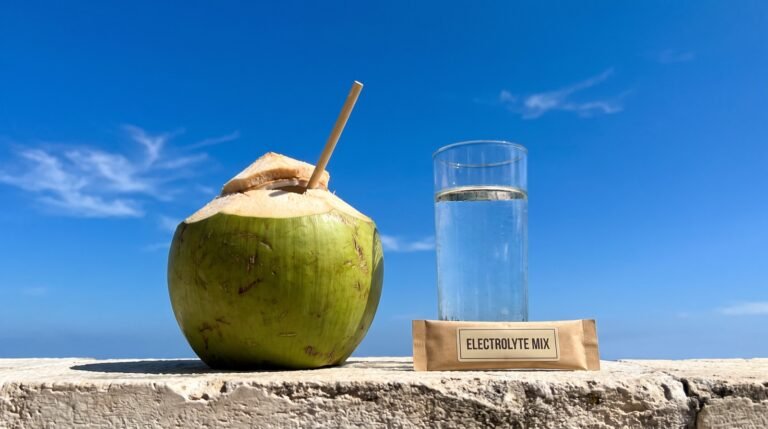
Then read the second column. Sugar is in some of these for a real reason and in others for taste, which we untangle in sucralose, stevia and sugar in electrolyte powders. And if you’re weighing a carton of coconut water instead, it carries far less sodium than its reputation suggests.
Our vetted electrolyte powders list the sodium for every pick, right in the spec line.
Frequently asked questions
How much sodium is in an electrolyte packet?
It ranges widely. In our comparison, Ultima Replenisher carries 55 mg per serving, Nuun Sport 300 mg per tablet, Liquid I.V. 500 mg, and LMNT and unflavored Redmond Re-Lyte 1,000 mg per stick. Always check the nutrition panel, because the front of the box rarely says.
Is 1,000 mg of sodium in an electrolyte drink too much?
For a salty sweater on a long, hot workout, it’s a reasonable dose. For someone drinking it at a desk, it’s about 43% of the 2,300 mg daily limit on top of an average diet that already exceeds the limit. People with high blood pressure or kidney disease should check with a doctor first.
How much sodium do you lose in sweat?
Between about 230 and 1,610 mg per liter of sweat, depending on the person, according to a 2017 review. Sweat rates usually run half a liter to two liters an hour, so losses during an hour of hard exercise can range from almost nothing to more than a high-sodium packet replaces.
Is Gatorade or Pedialyte better for dehydration?
For dehydration from illness, Pedialyte is closer to the WHO’s oral rehydration formula, at roughly 1,035 mg of sodium per liter against about 457 mg for Gatorade. The WHO formula itself works out to about 1,725 mg per liter.
Related reading
The rest of this series: do you actually need electrolytes, sucralose, stevia and sugar in electrolyte powders, and coconut water vs electrolyte powder. For vetted picks, see the best clean electrolyte powders.
Sources: Brand nutrition panels linked in the table, read October 2026. CDC, About sodium. Baker, Sports Medicine, 2017. WHO and UNICEF, oral rehydration salts, 2006. NIDDK, Healthy eating for adults with CKD. NIH Office of Dietary Supplements, Potassium fact sheet.