What Is Sustainable Fashion? A Conscious Shopper’s Guide
Did you know the average American buys around 53 new clothing items every year, and throws away about 81 pounds of textiles in the same stretch? That’s not a typo. Fashion has quietly become one of the most polluting industries on the planet, and most of us had no idea until pretty recently.
So what is sustainable fashion, and is it actually any different from regular fashion with a green sticker on it? Let’s get into it.
What is sustainable fashion, actually?
Sustainable fashion is clothing designed, made, and sold in a way that respects the people, animals, and ecosystems behind every stitch. That covers the raw materials (organic cotton, hemp, linen, Tencel, recycled polyester), the manufacturing (low water use, fair wages, safe factories), and what happens to the garment after you’re done with it (repaired, resold, recycled, composted).
Green Strategy, the Swedish consultancy that wrote one of the most cited definitions in the industry, frames it as clothing produced, used, and disposed of in ways that benefit society and minimize environmental impact. Easy to say. Hard to do.
Two words, slow fashion. That’s the closest cousin to sustainable fashion and the easiest mental model. Buy less. Buy better. Wear it longer. Repair it before you replace it.
Fast fashion: the impact most shoppers never hear about
You may have assumed clothing is a relatively clean industry. It isn’t. The UN Environment Programme reports that fashion is responsible for around 10% of global carbon emissions, more than international flights and maritime shipping put together. The reason most people haven’t heard about it is that the supply chain is hidden by design. Cotton grown in one country, spun in another, dyed in a third, sewn in a fourth, sold in a fifth. Try tracing that on a hangtag.
A water footprint you can see from space
The Aral Sea, once the world’s fourth-largest lake, has shrunk to roughly a tenth of its original volume. A big reason: cotton farming for the global apparel trade diverted the rivers that fed it. NASA’s satellite imagery is brutal to look at. One cotton t-shirt takes around 2,700 liters of water to produce, aka enough drinking water for one person for two and a half years. Multiply that by the 100 billion garments the industry now turns out annually, and the math gets ugly fast.
The microplastics in your washing machine (and your bloodstream)
What’s alarming is that synthetic clothing doesn’t even need to be thrown away to pollute. Polyester, nylon, and acrylic shed plastic fibers every single wash. A 2019 study from the University of Plymouth found that a single laundry load can release over 700,000 microfiber particles into wastewater, where they slip through treatment plants and end up in rivers, oceans, and seafood. Researchers at Vrije Universiteit Amsterdam later detected microplastics in human blood samples for the first time, in 2022. If you’ve ever wondered why natural-fiber labels matter, that’s why.
Rana Plaza, 2013, and the moment the industry got caught
The Rana Plaza factory collapse in Dhaka killed 1,134 garment workers in a single morning. Many were sewing for brands the average American shopper would recognize on sight. The disaster forced the Accord on Fire and Building Safety in Bangladesh, became the founding moment of the Fashion Revolution movement, and put labor transparency on the radar of regulators in the EU and the US for the first time. It also produced the question that’s still doing work twelve years later: who made my clothes?
92 million tons of textile waste, every year
That number comes from the Ellen MacArthur Foundation. The Foundation’s researchers calculated that a truckload of clothes is burned or landfilled every second. This one is a little tricky, because most of those clothes aren’t worn out. They’re just out of style. Fast fashion shortened the average garment lifespan by roughly half over the last two decades, according to WRAP UK, and the secondhand market in places like Accra, Ghana is now overwhelmed with used western clothing nobody asked for.
Ethical fashion vs sustainable fashion: are they the same thing?
Pretty close, but not identical, and the distinction is worth knowing if you’re trying to read a brand carefully. Sustainable fashion focuses on environmental impact: fibers, water, emissions, waste. Ethical fashion focuses on human impact: wages, hours, factory safety, child labor, the right to organize. The best brands do both. The worst do neither, then slap a “conscious collection” label on a polyester dress and call it a day.
How to be a more conscious shopper (without throwing your wardrobe out)
You don’t need to scrap everything you own and start over. The most sustainable garment in the world is the one already hanging in your closet. Here’s where to actually start, in rough order of impact.
- Wear what you already own. Doubling the active lifespan of a garment cuts its carbon, water, and waste footprint by around 44%, per WRAP UK. Repairing a hem is more sustainable than buying organic.
- Shop secondhand first. ThredUp, Vestiaire Collective, Depop, The RealReal, your local thrift store. The 2024 ThredUp Resale Report projects secondhand apparel will outpace fast fashion in market size by 2030.
- Read the fiber label. Look for organic cotton, linen, hemp, Tencel or Lyocell, recycled wool, or recycled polyester. Skip virgin polyester, acrylic, and conventional viscose where you can. The fiber tag is the most honest part of any garment.
- Check certifications, not slogans. GOTS (Global Organic Textile Standard), Fair Trade Certified, Bluesign, OEKO-TEX Standard 100, B Corp. These mean something specific, though not the same thing: GOTS and OEKO-TEX get confused constantly and only one of them says anything about how the fiber was farmed. “Eco-friendly” printed on a hangtag means nothing legally.
- Buy fewer, better pieces. A $120 shirt worn 100 times runs you $1.20 per wear. A $20 shirt that pills after five washes is actually $4 per wear and ends up in landfill within a year. Cost per wear is the real number.
- Care for clothes properly. Wash less often, wash cold, line dry where you can, and use a microfiber-catching wash bag like Guppyfriend for synthetics. Half the lifecycle emissions of a t-shirt happen after you bring it home.
- Ask the awkward question. Brands respond to demand. Email, DM, comment under their posts: where is this made, and who made it? If a brand can’t or won’t answer, that’s your answer.
What “sustainable” actually means on a label (and what it doesn’t)
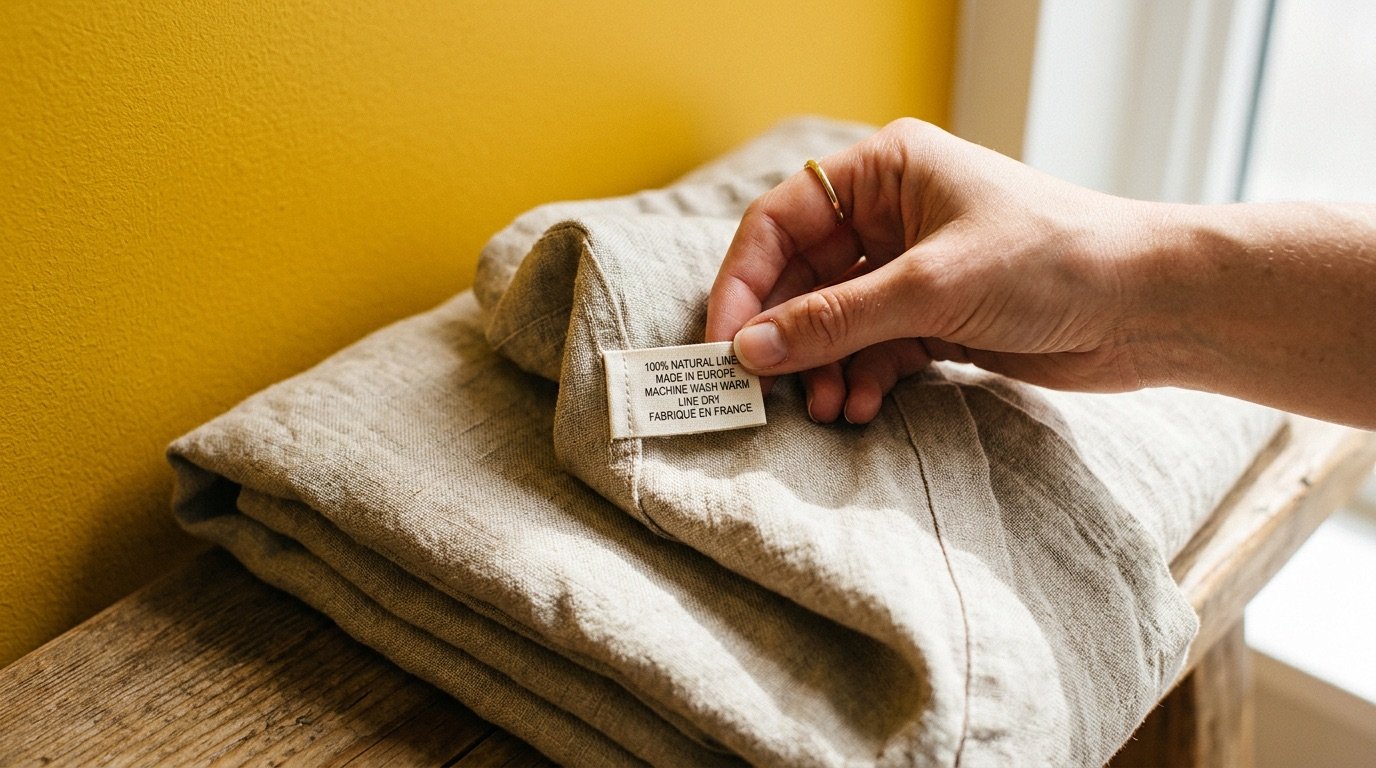
The word sustainable has no legal definition in fashion in the United States, which is exactly why fast fashion brands feel free to put it everywhere. The certifications that do mean something are third-party audited and not cheap to maintain, which is why you almost never see them on a $7 dress.
Worth recognizing on a tag:
- GOTS (Global Organic Textile Standard): the gold standard for organic textiles, audits the whole supply chain from farm to factory.
- Fair Trade Certified: workers were paid fair wages, and a community development premium goes back to the factory.
- Bluesign: every chemical used in dyeing and finishing has been screened against strict environmental and worker safety thresholds.
- OEKO-TEX Standard 100: the finished garment was tested for over 100 harmful substances.
- B Corp: the brand has met independently verified standards for social and environmental performance across the whole business, not just one product line.
What you won’t see on a fast fashion garment, in most cases, is any of those. What you will see is vague language: “conscious,” “essential,” “eco,” “join life.” Pretty convenient that the words with no legal meaning are the ones the worst offenders pick.
We break down exactly which vague words to watch for in our greenwashing guide.
Is sustainable fashion really more expensive?
Up front, it often is. Per wear, it almost never is. The math on a well-made $80 sweater you wear for five winters beats a $25 sweater that pills after three washes by a wide margin, every single time you do the calculation.
There’s a real conversation to have about access too. Sustainable fashion brands can feel financially out of reach for a lot of people, and shaming anyone for shopping at H&M or Shein misses the point. Secondhand shops, swap groups, repair, and “buy nothing” community pages are the most affordable sustainable fashion in the world. If budget is the barrier, start there.
Where conscious fashion is headed next
The EU’s Strategy for Sustainable and Circular Textiles, set to fully take effect by 2030, will require Digital Product Passports on every garment sold in the bloc. That tag will list fiber origin, repairability, and recyclability. The US hasn’t matched it yet, and that gap will probably push American brands to clean up faster than Washington can legislate, especially the ones that also sell into Europe. Watch New York’s proposed Fashion Sustainability and Social Accountability Act, which would force major retailers doing business in the state to map and disclose their supply chains.
So, where does that leave you?
Sustainable fashion isn’t about being perfect, and it isn’t about a green hangtag, and it definitely isn’t about replacing every piece you own with something organic by Saturday. It’s about staying awake to where your clothes come from, who made them, and what happens after you stop wearing them.
Buy less. Wear it longer. Repair the small stuff. Ask the brands you love better questions. That’s the whole job.
Once the wardrobe is handled, accessories are the part nobody talks about. We’ve rounded up the sustainable jewelry brands actually worth buying, and dug into why recycled gold does less than the label implies.
Frequently asked questions
What is sustainable fashion in simple terms?
Clothing made in a way that doesn’t wreck the land or the people who made it, and that’s built to be worn for years rather than a season. It covers the fiber, the factory, and what happens to the garment after you’re finished with it. The shorthand most people find useful is slow fashion: buy less, buy better, wear it longer.
What’s the difference between ethical and sustainable fashion?
Sustainable fashion is about environmental impact, so fibers, water, emissions and waste. Ethical fashion is about people: wages, working hours, factory safety, the right to organize. They overlap heavily and plenty of brands are strong on one and quiet on the other, which is why it’s worth checking both rather than trusting a single word on a hangtag.
Which fabrics are the most sustainable?
Organic cotton, linen, hemp, Tencel and Lyocell, recycled wool, and recycled polyester where a synthetic is unavoidable. The ones to skip where you can are virgin polyester, acrylic, and conventional viscose. The fiber tag is a legal requirement, which makes it the most honest part of any garment.
Is sustainable fashion always more expensive?
Up front, usually. Per wear, rarely. An $80 sweater worn through five winters costs less per outing than a $25 one that pills after three washes. And the cheapest sustainable option isn’t a brand at all: secondhand, swap groups, repair, and buy-nothing pages beat every new purchase on both price and footprint.
How can you tell if a brand is greenwashing?
Check whether the claim is specific enough to be checked. “Eco-friendly” and “conscious collection” carry no legal definition and nobody audits them. GOTS, Fair Trade Certified, Bluesign, OEKO-TEX Standard 100 and B Corp all have published standards and an auditor behind them. Our greenwashing guide goes through the specific phrasings to watch for.