Swimwear Microplastics: Every Synthetic Suit Sheds
Swimwear microplastics are unavoidable in a way most sustainability problems aren’t, and it’s better to start there than to pretend a purchase solves it.
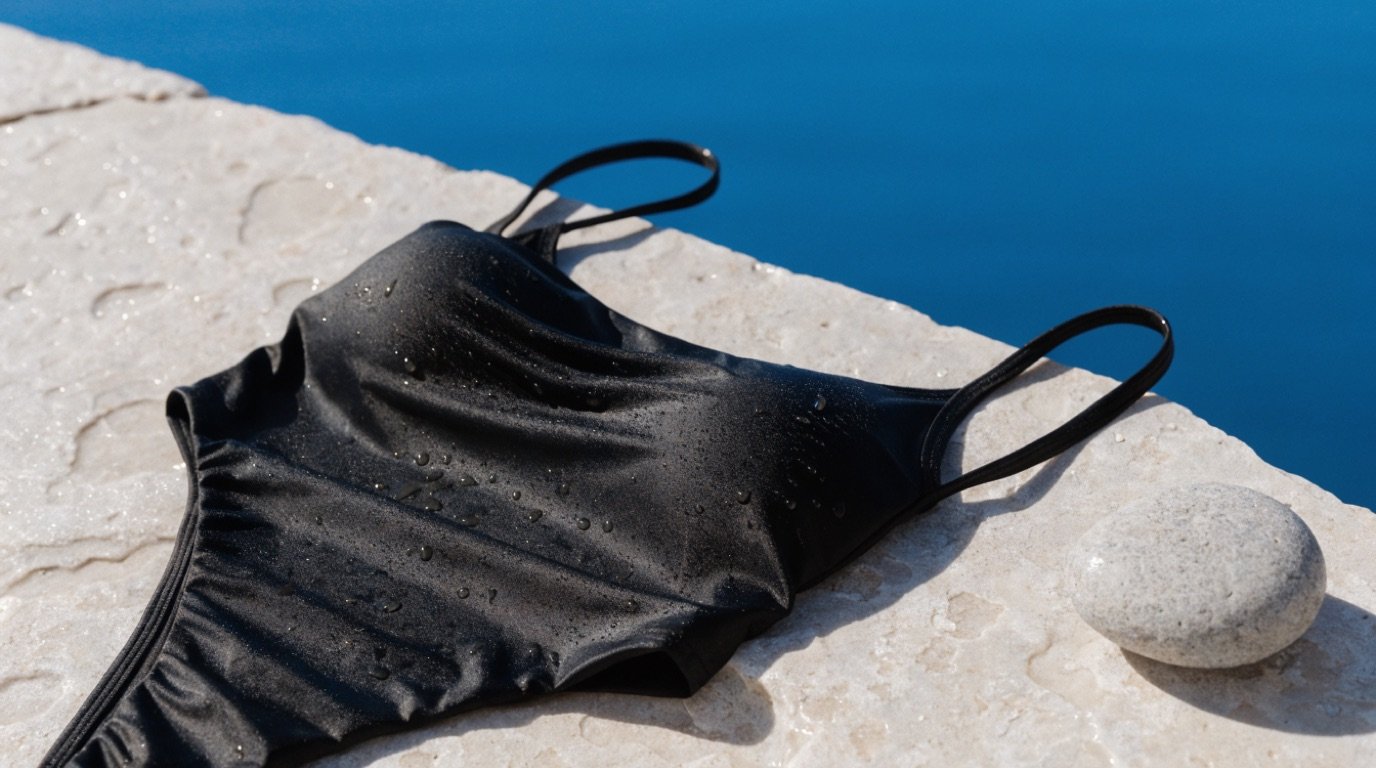
Swimsuits are nylon or polyester with elastane for stretch. All three are plastic. Fabric made from plastic sheds fragments of itself through abrasion, and that happens in the washing machine, in the pool, and in the sea.
There is no synthetic swimsuit that doesn’t do this. Recycled ones included, which is the part the marketing leaves out.
What actually drives shedding
Not the origin of the fiber. Four other things.
Fabric construction. Tightly knitted fabric with long, continuous filaments sheds less than loose fabric made from short staple fibers. This is why a well-made suit outperforms a cheap one on shedding as well as on everything else.
Age and wear. A new garment sheds most in its first several washes, then settles. Chlorine, sun and stretching degrade fibers over time and shedding rises again as the fabric breaks down. A suit that has gone baggy and thin is shedding more than it did.
Washing. Machine agitation is the single biggest release event in most garments’ lives. Hot water, long cycles and heavy loads all increase it.
Recycled versus virgin, which is honestly uncertain. Some research suggests recycled synthetics shed more, and finer, fibers because processing can shorten filaments. It isn’t settled, and it varies by fabric. Worth knowing mainly so you don’t assume recycled nylon fixes this. It doesn’t claim to.
What helps, in order of how much
Keep the suit longer. This is the whole game and it’s unglamorous. Shedding is roughly a function of total garment-lifetimes, so a suit worn for six seasons displaces five replacements. Buying a better-constructed suit and looking after it beats every material choice available.
Rinse rather than machine wash. Swimwear rarely needs a machine. Cold tap water immediately after swimming removes chlorine and salt, which is also what makes elastane last. Hand wash occasionally with a gentle detergent.
If you do machine wash, use a filter bag or a laundry ball, cold water and a short cycle. The bags are imperfect and cheap and they catch a real share.
Dry flat in shade. Heat and UV degrade elastane, and degraded fabric sheds more. A tumble dryer is the worst thing you can do to a swimsuit on every axis.
Skip fabric softener, which coats fibers and can accelerate breakdown, and skip anything with optical brighteners while you’re at it.
The honest framing
I’d rather not pretend the consumer end of this is where it gets solved. Textile microfibers are a systemic problem that needs filtration at the machine and the treatment plant, and some countries are starting to legislate exactly that.
What’s in your control is a suit that lasts, washed gently, replaced rarely. That’s a modest lever, honestly described, and it’s more than a recycled label delivers on this particular issue.
Natural-fiber swimwear exists and mostly doesn’t work, which is worth saying plainly rather than dangling it as an option. Cotton sags when wet, holds water and degrades fast in chlorine. There’s no natural alternative that performs, so the realistic choice is a good synthetic kept for a long time.
The picks in the best sustainable swimwear brands are weighted toward construction and durability for that reason, alongside PFAS-free finishes. Every brand there has a scored profile in our brand directory.
Frequently asked questions
Does all swimwear shed microplastics?
Every synthetic one does, and swimwear is essentially all synthetic: nylon or polyester with elastane. Shedding happens through abrasion in washing, in pools and in the sea. Recycled fiber doesn’t change this, because the polymer behaves the same way regardless of origin.
Does recycled swimwear shed less?
There’s no evidence it does, and some research suggests recycled synthetics may shed more and finer fibers, possibly because processing shortens filaments. The findings aren’t settled. Treat recycled content as a claim about the fiber’s source rather than about shedding.
How do I reduce microplastic shedding from swimwear?
Keep the suit longer, since total shedding tracks how many garments you get through. Rinse in cold water after swimming rather than machine washing, use a filter bag and a cold short cycle when you do wash, dry flat in shade, and avoid fabric softener and tumble drying.
Is there a natural-fiber swimsuit?
Not one that performs. Cotton and other natural fibers sag when wet, hold water and break down quickly in chlorine, which is why swimwear is synthetic almost universally. The practical choice is a well-constructed synthetic suit kept for many seasons.
Related reading
The rest of this series: Econyl and recycled nylon and PFAS in swimwear. For vetted picks, see the best sustainable swimwear brands. For the laundry side of fiber shedding, see optical brighteners.
Sources: Ellen MacArthur Foundation, A new textiles economy. International Union for Conservation of Nature, Primary microplastics in the oceans. Textile Exchange, Materials market report.