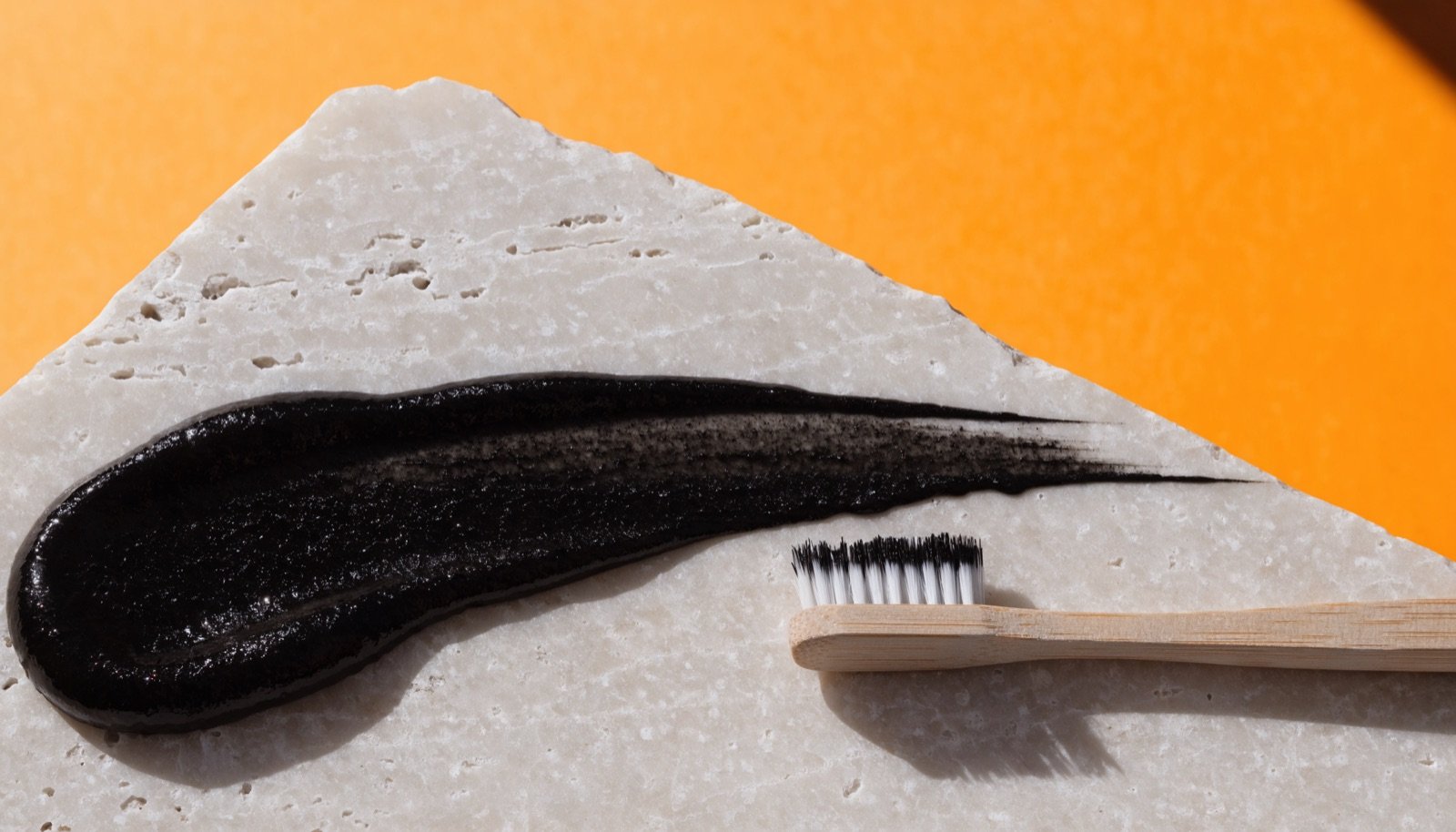
Charcoal Toothpaste: The Problem Isn’t What You Think
Charcoal toothpaste gets one criticism above all others: it’s a scouring pad for your teeth, grinding enamel away in exchange for a temporary whiteness.
We’ve made a version of that argument ourselves. Having gone through the abrasivity data, we’d put it differently now, because the numbers don’t fully support the popular version of the complaint.
The case against charcoal is still solid. It just isn’t the case most people make.
What the abrasivity numbers say
Toothpaste abrasivity is measured as Relative Dentin Abrasivity, or RDA. The American Dental Association’s ceiling for its Seal of Acceptance is an RDA of 250, and that number is a safety limit rather than a target.
A 2023 analysis of commercial charcoal toothpastes found their RDA values ranged from about 26 to 166.
Every one of those sits under the ADA’s limit. Some are gentler than ordinary whitening toothpastes you’d buy without a second thought. So “charcoal will sand your enamel off” is, for a lot of products on the shelf, simply not what the measurement shows.
Two caveats keep this from being a defense of the category. That range is enormous, and a 166 is very different from a 26 in daily use. And manufacturers almost never print RDA on the box, so standing in a store you cannot tell which one you’re holding.
There’s also a real signal in the in vitro work: studies of enamel surface roughness have found texture changes after charcoal brushing, and roughened enamel picks up stain more readily over time. That’s a subtler mechanism than “abrasion”, and it argues for caution rather than alarm.
The actual problem
Here’s the objection that doesn’t depend on any of that.
Most charcoal toothpastes contain no remineralizing active. No fluoride, no hydroxyapatite, nothing that repairs enamel or resists decay. They clean, they stain-lift, and that is the extent of what they do.
Toothpaste has one job that actually matters over a lifetime, and it’s protecting teeth from decay. A tube that skips the active isn’t a natural alternative to toothpaste. It’s a cosmetic product occupying the slot where your toothpaste should be, twice a day, for years.
Add to that the evidence position. A 2019 review in the British Dental Journal found insufficient evidence to support the safety and efficacy claims charcoal brands make, flagging both the enamel question and the missing fluoride. And the ADA has never granted its Seal of Acceptance to a charcoal toothpaste, because that seal requires evidence nobody has produced.
None of which is exotic or contested. The product simply hasn’t shown it does the thing toothpaste exists to do.
What about the whitening
It does lift surface stains, and people aren’t imagining the effect.
What it can’t do is change the underlying color of your teeth, because that lives inside the dentin and no abrasive reaches it. Charcoal removes what coffee, tea and wine deposited on the outside. Useful, real, and cosmetic.
If whitening is what you’re after, the honest options are a peroxide product or a dentist, both of which work on the actual color. Using an active-free toothpaste twice daily to chase a surface effect means paying for it with the protection you gave up.
If you like charcoal and want to keep using it, the sensible compromise is to treat it as an occasional stain-lifter alongside a proper toothpaste with fluoride or hydroxyapatite, rather than as your everyday tube. Our roundup of the best natural toothpaste covers ones that carry a real active, and the active comparison explains the choice between them.
Frequently asked questions
Is charcoal toothpaste bad for your enamel?
Less clear-cut than commonly claimed. Measured RDA values for charcoal toothpastes fall under the ADA’s safety ceiling, sometimes well under. In vitro work has found surface roughening, and abrasivity varies hugely between products with no way to check at the shelf. The stronger reason to skip it is the missing remineralizing active, not the abrasion.
Does charcoal toothpaste remove fluoride from your teeth?
There’s a related concern worth knowing: activated charcoal is adsorbent by design, and some researchers have raised the possibility that it binds fluoride and reduces its availability. This is a plausible mechanism rather than a settled finding. It’s another reason not to use charcoal as a substitute for a fluoride toothpaste.
Why doesn’t the ADA approve any charcoal toothpaste?
The Seal of Acceptance requires evidence of both safety and efficacy for the claims made. No charcoal toothpaste has submitted evidence meeting that bar. The absence of a seal isn’t proof a product is harmful, but in a category where every competitor can get one, it’s telling.
Is charcoal fine if the toothpaste also has fluoride?
That’s a much more reasonable product, and a few exist. You get the stain-lifting with the protection intact. Check the abrasivity claims if the brand publishes them, and stop using it if your teeth become sensitive.
Related reading
The rest of what’s in the tube: hydroxyapatite versus fluoride, why SLS is in toothpaste at all, and what happened to triclosan. For tubes we’d actually buy, see the best natural toothpaste.