Mica in Makeup: The Labor Problem Behind the Shimmer
Mica in makeup is the one ingredient on this site where the problem has nothing to do with your skin.
Everything else we cover is a question of what a substance does once it’s on you. Mica is different. It’s chemically unremarkable, it sits harmlessly on the surface, and the reason to think about it is entirely about who dug it out of the ground.
You may have never thought about that part. Most people haven’t, and the industry has not gone out of its way to raise it.
What it’s doing in the pan
Mica is the shimmer. That’s the whole job.
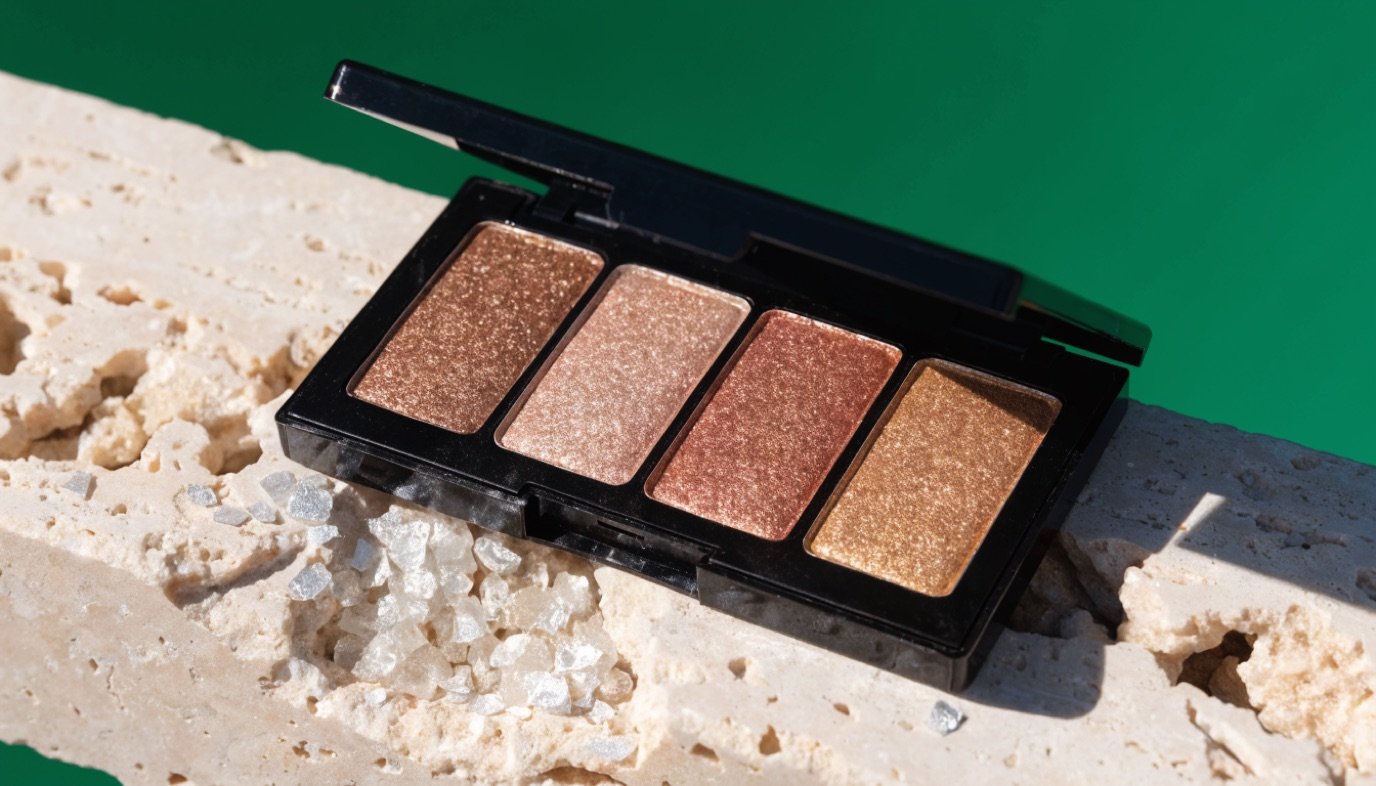
It’s a naturally occurring mineral that splits into thin, flat, reflective flakes, which is exactly what you want if you’re making an eyeshadow catch the light or giving a highlighter its glow. It also softens the look of a foundation and adds pearlescence to lip gloss. Ground fine enough, it turns up in products that don’t look shimmery at all.
It’s in paint and electronics too, so cosmetics aren’t the only buyer. But beauty is a visible one, and demand went up rather than down after the EU restricted microplastics and took plastic glitter off the table.
Where a lot of it comes from
India, and specifically the states of Jharkhand and Bihar, which are the poorest and second poorest states in the country.
Terre des Hommes, the children’s rights organization that put this on the map with its 2016 investigation, estimated around 22,000 children working in mica mines across those two states. Some of them as young as four. Nobody can give you a precise figure, because the work happens in mines that legally shouldn’t be operating at all.
That’s the knot at the center of this. India’s legal mica mining leases largely dried up decades ago under forest conservation law, but the mica is still in the ground and the demand never stopped. So it gets scavenged out of abandoned and unlicensed pits by families who have very few other options in a region where poverty runs above 40%.
When a pit collapses, and they do, the deaths often go unrecorded. Reporting a death means admitting to illegal mining.
What the industry has actually done
The Responsible Mica Initiative launched in January 2017 with 20 founding members: a coalition of cosmetics companies, pigment suppliers and NGOs pooling effort on a supply chain none of them could fix alone.
It set out to eliminate child labor from the Indian mica supply chain by 2022. That deadline came and went.
I don’t say that as a gotcha, because the work is real. RMI had grown to 110 members by the end of 2025, it runs school and income programs in mining villages rather than just auditing suppliers, and it has put a traceability platform in place to follow mica back through the chain. Those are the right moves.
It’s just that the underlying problem is a legal and economic one. As long as mining is illegal, it can’t be regulated, workers have no protection, and buyers can’t fully trace anything. India reclassified mica as a major mineral in February 2025, which moves oversight to the central government and could open the door to licensed mines. New leases haven’t followed yet.
Pulling out isn’t the clean answer either. Boycotting Indian mica removes the income without removing the poverty, and the families most affected are the ones with the least room to absorb it. RMI’s position has been to stay and formalize rather than leave, and I think that’s right, even though it means the problem persists while the fix is slow.
Synthetic mica, and what it does and doesn’t solve
There is a lab-made version. On an ingredient list it’s synthetic fluorphlogopite.
It’s grown rather than mined, from raw materials cooked at high temperature into the same flat reflective flakes. No pit, no mine, no child. It also tends to be purer and more consistent than the mined stuff, with lower trace metal content, and a lot of brands prefer the brighter, glassier finish it gives.
So it’s a real fix for the labor question, and brands have been shifting toward it.
Two caveats keep it from being the end of the story. Its own supply chain isn’t always transparent, and “synthetic” on a label tells you the material was made in a factory rather than telling you anything about that factory. And plenty of products use both, listing natural mica and synthetic fluorphlogopite in the same formula, which means seeing the synthetic one doesn’t mean the mined one is absent.
Cooking a mineral into existence also takes power, so grown-not-mined settles the labor question without settling the climate one. It’s the same split that makes lab-grown diamonds harder to call than the marketing suggests: no pit, but the emissions depend entirely on whose grid the factory is plugged into.
How to actually check
Read the ingredient list first. Mica appears as “mica” or as CI 77019. Synthetic fluorphlogopite is listed by that name. If both appear, both are in there.
Then look at what the brand says about sourcing, and hold it to a real standard. “Ethically sourced mica” written on a website is a sentence, not a supply chain. What counts is naming the country of origin, naming RMI membership or an equivalent program, or stating that the mica comes from somewhere with functioning mine regulation. Some brands source from the United States or Brazil for exactly this reason and will say so plainly.
The brands that have done the work talk about it in specifics. The ones that haven’t use the word “ethical” and stop.
The picks in the best natural makeup brands each have a scored profile in our brand directory, where sourcing and ownership are part of the score.
Frequently asked questions
What is mica used for in makeup?
Mica is a mineral that splits into thin reflective flakes, which makes it the standard ingredient for shimmer and glow. It gives eyeshadows and highlighters their light-catching finish, adds pearlescence to lip products, and softens the look of foundations and powders. It also serves as a talc replacement in many talc-free formulas.
Is mica in makeup safe?
For skin, yes. Mica sits on the surface and isn’t absorbed, and it has no meaningful toxicity in cosmetic use. Loose powder is worth not inhaling, as with any fine powder. The reason mica is controversial isn’t the ingredient’s effect on you, it’s the child labor in parts of its supply chain.
Is mica ethically sourced now?
Partly, and unevenly. The Responsible Mica Initiative launched in 2017 and had 110 members by the end of 2025, running traceability and community programs in Indian mining regions, but it missed its 2022 target for eliminating child labor. Much Indian mica still comes from unlicensed mines, which is what makes the chain so hard to trace.
Does synthetic mica solve the problem?
For the labor question, clearly. Synthetic fluorphlogopite is made in a factory rather than mined, so no mining community is involved, and it’s usually purer with lower trace metals. It doesn’t come with automatic transparency about its own production, though, and many products contain both synthetic and mined mica at once.
Related reading
The rest of this series: talc, asbestos and where the testing stands and what FDA’s lead testing actually found. For vetted picks, see the best natural makeup brands. For spotting the difference between a sourcing claim and a sourcing program, see our greenwashing guide.
Sources: Terre des Hommes, Beauty and a Beast: Child labour in India for sparkling cars and cosmetics. Responsible Mica Initiative, History and membership. Ethical Consumer, The problem with mica.