What Is Castile Soap, and Why Is Its pH So High?
Here’s a thing almost nobody tells you about soap: it cannot be pH balanced.
Not by a better brand, not by a cleverer formula. Drop the pH of true soap far enough and it stops being soap, because the chemistry that makes it clean is the same chemistry that makes it alkaline.
Short answer: castile soap runs around pH 9 to 10. Your skin’s surface sits at about 4.7. For most people with intact skin that’s fine, because the acid mantle rebuilds itself within hours. If you have eczema, very dry skin or a damaged barrier, it’s the wrong cleanser, and no amount of “gentle” on the label changes the number.
The number, from three directions
Skin first. A study of 330 people measured forearm pH at 5.12, then left the skin alone for 24 hours with no washing or product and watched it fall to 4.93. The authors put the true natural value at around 4.7. The same paper notes that acid pH keeps beneficial resident bacteria attached to skin, and alkaline pH encourages them to disperse.
Soap second. A 2024 study measured 250 cleansers and found all 37 soaps in the set were highly alkaline, with the overall range topping out at 10.83. A separate study of 64 bathing soaps found 53 of them between pH 9.01 and 10, with only two anywhere near skin pH.
Third, the brand. Dr. Bronner’s publishes its own figure: pH 8.7 to 9.9. Its science page puts it more generally at 9 to 10, “like all true soaps.”
Nobody is hiding this. It just isn’t on the front of the bottle.
Why it can’t be lowered
Soap is made by saponification: fat plus a strong alkali, producing the fatty acid salts that do the cleaning. Those salts are what soap is.
As the chemistry puts it, solutions of alkali metal soaps are slightly alkaline due to hydrolysis, and if the pH is lowered by acidic contaminants, insoluble fatty acids precipitate and form a scum.
That’s the whole answer. Add acid to bring the number down and you don’t get gentler soap, you get free fatty acids falling out of solution. The alkalinity isn’t a side effect somebody could engineer away. It’s load-bearing.
Which is why a pH-balanced body wash is never soap. It’s a synthetic detergent, chemically a different class of thing, and that’s not an insult to either one.
The vinegar mistake
This is the most common practical error, and the brand itself warns about it.
Dr. Bronner’s says not to mix vinegar directly with castile soap or store the two in the same bottle, because the acid breaks apart the soap molecule. Use soap first, rinse, then apply vinegar separately. Their own family blog describes the result of mixing as a whitish, curdled, oily-feeling mess, which is exactly what the chemistry predicts.
Same reason lemon juice is out. Same reason castile soap in a dishwasher is a bad idea, though there the problem is bubbles rather than pH.
Hard water is the other thing eating your lather
If your castile soap seems to disappear without foaming, this is usually why.
Hard water carries dissolved calcium and magnesium. Those bind to soap molecules and form an insoluble whitish residue, which is soap scum. The soap gets consumed by the minerals before it gets around to cleaning anything.
Dr. Bronner’s answer to its own customers is telling: for hard water, switch to their synthetic detergent product, because it doesn’t react with calcium and magnesium. When the manufacturer’s fix is “use the non-soap one,” that’s a real limitation rather than a technique problem.
For hair, the company’s own guidance is that castile soap can leave hair matted and that an acidic conditioning rinse is essential for most people. Which is the same lather-and-scum story playing out somewhere more visible.
About the name
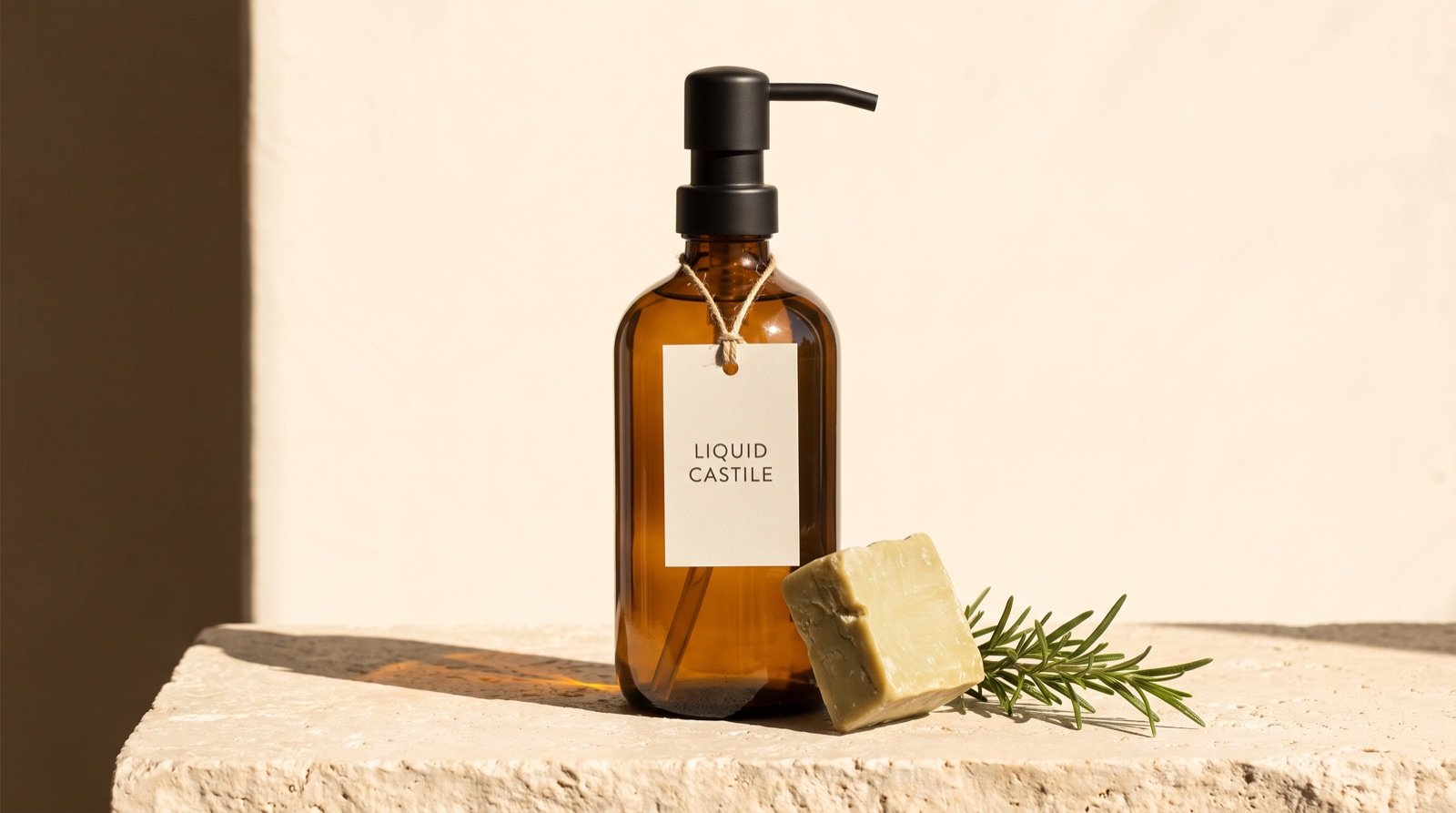
Castile soap originally meant olive-oil soap made in the Crown of Castile, in Spain, and exported across Europe from at least the sixteenth century.
There’s no legal definition of the term now. A bottle labeled castile can contain coconut, palm, hemp and jojoba oils, and the best-known brand’s does. Not a scandal, just a word that carries history rather than a specification, in the same family as the “natural” problem in mattresses.
So should you use it
For most people, on most of the body, yes. It’s a short ingredient list, it works, and the acid mantle regenerates within hours. The evidence for lasting harm from occasional use on intact skin is thin, and we’d rather say so than talk you out of a product that’s fine.
Skip it if you have eczema or atopic dermatitis. That skin already sits more alkaline than it should, which is part of why the barrier struggles, and an alkaline cleanser pushes it further the wrong way. Dermatology consistently prefers acidic cleansers there.
We’d also keep it off your face if your skin is dry or reactive, and off any surface that can’t take alkalinity. And if it never lathers no matter what you do, your water is hard and the answer is a detergent-based wash rather than more soap.
The body washes we recommend include both kinds, which is deliberate. There’s no single right answer here, only a right answer for your skin and your water.
Frequently asked questions
Is castile soap bad for your skin?
Not for most people. It’s alkaline at around pH 9 to 10 against skin’s 4.7, and healthy skin restores its own pH within a few hours. Where it’s a genuine problem is on eczema-prone, atopic or already-damaged skin, which sits more alkaline to begin with and does better with an acidic cleanser.
Can I mix castile soap with vinegar?
No. Acid breaks the soap molecule apart, and you get curdled fatty acids instead of a cleaner. The manufacturer says so directly. If you want both in a cleaning routine, use the soap first, rinse thoroughly, then apply diluted vinegar as a separate step.
Why doesn’t my castile soap lather?
Almost always hard water. Calcium and magnesium bind to the soap and form insoluble scum instead of foam, consuming the soap before it can clean. A synthetic detergent-based wash doesn’t have this problem, which is why brands recommend one for hard-water households.
Is castile soap really made from olive oil?
Traditionally yes, and there’s no legal definition now, so a modern castile soap may be built on coconut, palm or other oils. Check the ingredient list if the olive oil specifically matters to you. The label is a nod to history rather than a formula.
Related reading
More on what you wash with: the body washes and bar soaps we’d buy, why sulfates got their reputation, and what happens with alkaline products on the underarm.