Can Old Sneakers Actually Be Recycled?
A typical pair of running shoes contains 65 separate parts and takes more than 360 processing steps to assemble.
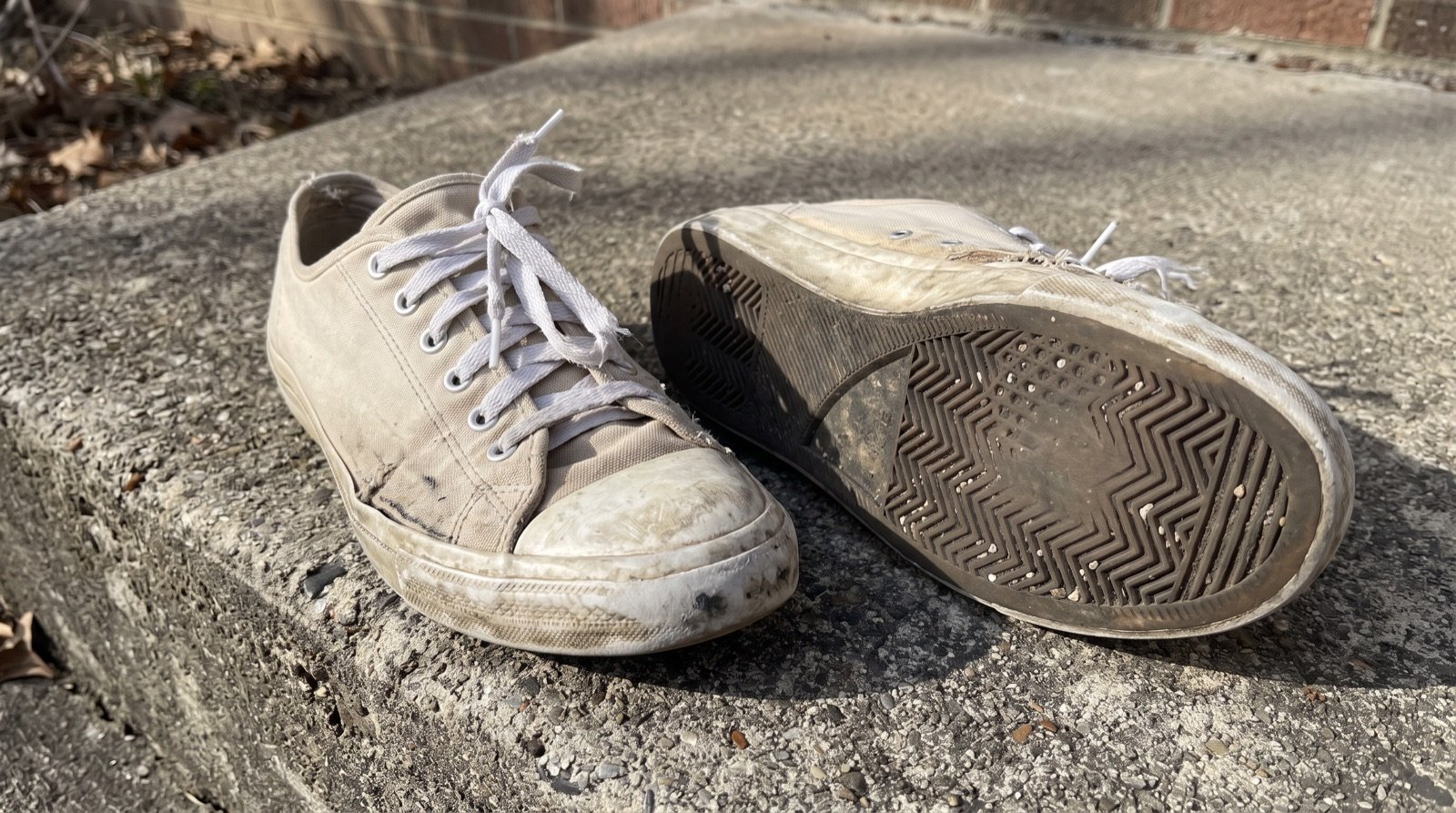
That number, from MIT research, is the answer to the whole question. Sixty-five parts, glued rather than stitched, made of materials that can’t be separated economically. There is no machine that undoes that.
Short answer: almost none of it gets recycled, and what does is downcycled into flooring and running tracks rather than back into shoes. The EPA doesn’t even record footwear recycling as a category. The most useful thing you can do with wearable shoes is get them worn again, which is roughly what happened in the scandal everyone remembers, though not in the way the donors were told.
The government doesn’t count it
Here’s a small fact that says a lot.
The EPA tracks rubber and leather as a waste category: 9.2 million tons generated in its most recent data, 5 million tons landfilled, an overall 18.2 percent recycling rate for the category.
Then it adds the line that matters: the only recycling identified for the category of rubber and leather is rubber from tires.
Footwear is listed as a source. Its recycling is recorded as nothing. Zero. That’s the official US position, and it’s more honest than most of the marketing.
Against that, the world made 24.6 billion pairs of shoes in 2025, with Asia producing 88.7 percent of them.
Nike Grind, and what it really is
The best-known program is Nike’s, and it does real things, just not the thing most people picture.
Nike says it has produced over 148 million pounds of Nike Grind since 1992, made from recycled scrap and footwear, becoming dumbbells, bumper plates, work gloves, basketball courts and tennis courts.
Two qualifications. Both matter. Most of that volume is manufacturing scrap rather than shoes customers sent back, which is a good thing to do and a different thing from closing a loop. And the output is downcycling: your shoes become a running track, and the running track becomes nothing.
You’ll also see a figure of 30 million pairs since 1990 quoted widely. We couldn’t find it on any current Nike page, so we’re leaving it out.
Somebody hid trackers in the donation bin
In 2022, reporters hid GPS trackers in shoes donated to a recycling program in Singapore, one that promised the shoes would be ground into granules for playgrounds and jogging tracks.
The trackers showed the shoes crossing to Batam, then moving on to Jakarta and elsewhere in Indonesia. Reporters found and bought pairs back in second-hand markets.
The response was unusually direct. Sport Singapore acknowledged vulnerabilities in the process chain, and an investigation found shoes had been diverted at a subcontractor’s premises where bin aggregation sat alongside sorting, resulting in some being extracted for resale instead of recycling. The subcontractor relationship was ended, the partners apologized publicly, and Singapore’s culture minister announced surprise inspections the following month.
Now the uncomfortable part, and we think it’s the most interesting thing in this whole topic.
The shoes weren’t destroyed. They were resold and worn by people who wanted them. As an environmental outcome, a wearable shoe getting worn beats a wearable shoe being ground into rubber crumb. The scandal is that donors were told something different, and that the exports breached Indonesia’s used-clothing import ban.
That’s a broken promise. It’s also an illegal export. It isn’t obviously a worse outcome for the planet, and any article telling you otherwise has skipped a step.
It isn’t just shoes
A 2023 investigation put AirTags in 21 good-condition second-hand garments and handed them to ten major brands’ take-back schemes across four countries.
Three quarters of them were destroyed, left sitting in warehouses, or exported to Africa. Fewer than a quarter were resold or repurposed. One skirt traveled 24,800 kilometers before being dumped in Mali.
That study tracked clothing rather than footwear, so we’d rather present it as context than as evidence about shoes. The pattern is the same. Take-back is a marketing surface as often as it’s a process.
Honest programs say what they can’t do
Thousand Fell runs take-back through a recycling partner, with free shipping and store credit. Its own FAQ is honest about the limits: it breaks items into component parts to make recycled raw materials, and any materials it can’t use will be donated to partners for downcycling. Wearable pairs get donated rather than recycled.
That’s the shape of a real program. A brand claiming a closed loop for a glued multi-material shoe is claiming something nobody has achieved.
What we’d actually do
Wear them out. Then wear them out some more. Seriously. The single biggest factor in a shoe’s footprint is manufacturing, and MIT’s work found more than two thirds of a running shoe’s carbon impact can come from the processes of making it rather than the materials. A pair that lasts twice as long halves that.
Resole and repair what can be repaired, which mostly means shoes built to be repaired, which mostly means not sneakers.
If they’re still wearable, donate or sell them locally, where you can see where they go. That’s a better outcome than grinding, and it’s what actually happened to those tracked pairs anyway.
If they’re finished, use a brand take-back scheme with a named recycling partner, and understand you’re choosing downcycling over landfill rather than closing a loop.
And buy fewer, better, from brands that publish what happens next. That’s most of what our sneaker roundup is actually weighing, and it’s the through-line in our sustainable fashion guide too.
Frequently asked questions
Can sneakers be recycled into new sneakers?
Not at any meaningful scale. A running shoe has around 65 parts bonded with adhesives, and separating them economically hasn’t been solved. Existing programs downcycle the material into track surfaces, gym flooring and playground rubber rather than new footwear.
Where do shoes from a store take-back program end up?
It varies, and the honest answer is that many brands don’t publish it. Wearable pairs are typically donated or resold, and worn-out ones are ground for downcycling if the brand has a real recycling partner. Investigations that tracked donated items have found a substantial share exported, warehoused or destroyed.
Is Nike Grind real?
Yes. Nike reports more than 148 million pounds of Nike Grind since 1992, turned into gym flooring, courts and equipment. Most of the input is manufacturing scrap rather than returned consumer shoes, and the output is downcycling rather than new footwear.
What’s the most sustainable thing to do with old sneakers?
Keep wearing them, because manufacturing dominates a shoe’s footprint. After that, pass wearable pairs to someone who’ll use them. Grinding a still-wearable shoe into rubber crumb is a worse outcome than a second owner, whatever the collection bin says.
Related reading
More on footwear: is vegan leather just plastic and chrome-tanned versus vegetable-tanned leather. For picks, the best sustainable sneakers and shoes.