What Happened to Allbirds?
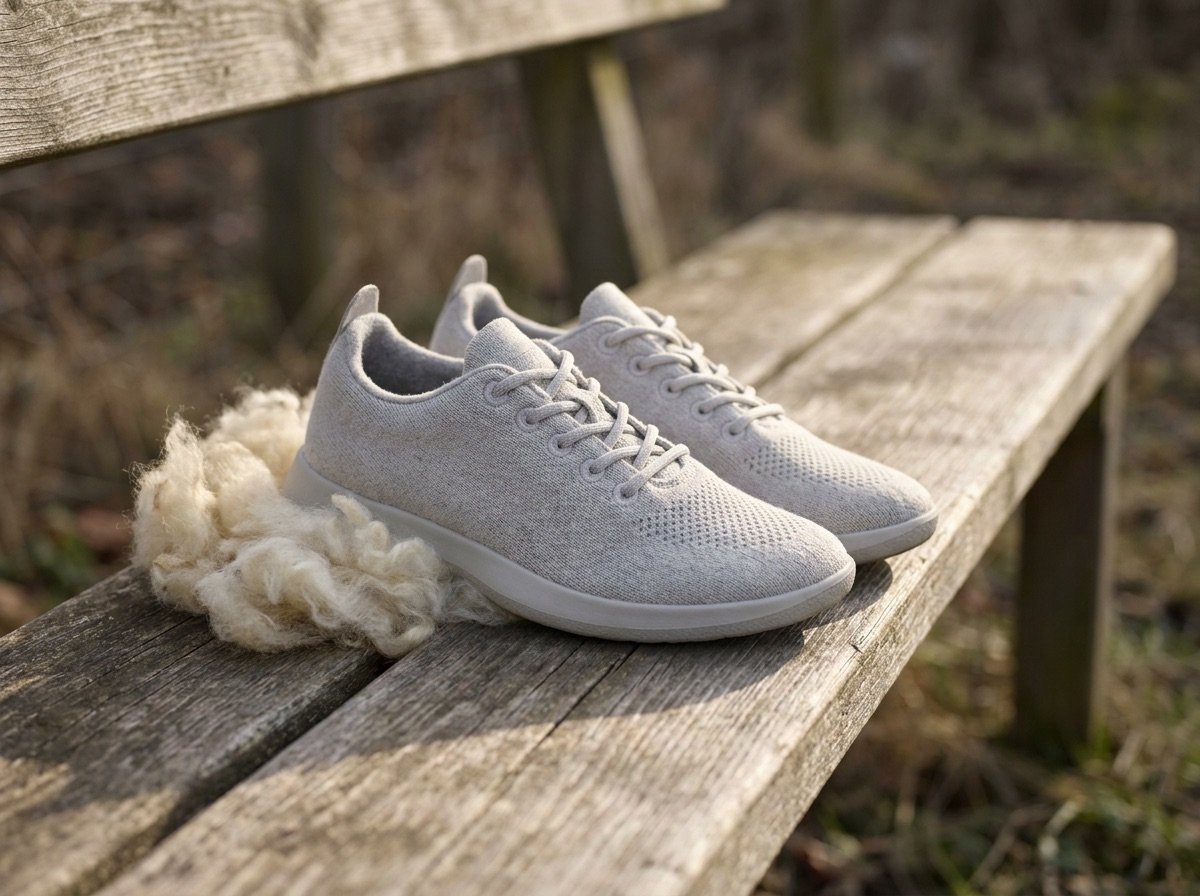
Allbirds was the proof. A wool sneaker, a carbon footprint printed on the box, a B Corp certification, and a business that got big enough to list on Nasdaq in November 2021. If you wanted evidence that sustainability could scale, this was the company you pointed at.
Four years later the story is more complicated, and it’s worth telling honestly because the lesson isn’t the one people assume.
Short answer, up front
The shoes are still made the way they were. The company that makes them has had a hard time as a public business: the share price collapsed, Nasdaq warned it about listing compliance in April 2024, and it executed a 1-for-20 reverse stock split in September 2024 to stay listed. It’s closing stores and narrowing its product range.
Allbirds hasn’t abandoned the sustainability work. It has less room to fund it.
What actually happened
The IPO priced Allbirds as a growth company. What followed was slower sales, weaker guidance, margin pressure as it changed sales channels, and product experiments outside its core that didn’t land. Losses continued.
By April 2024 the stock had fallen below Nasdaq’s $1 minimum and the exchange sent a non-compliance notice. In September 2024 the company did a 1-for-20 reverse split, which is the standard mechanism for getting back over the threshold. It worked, in the narrow sense that the listing survived.
The operational response has been to shut 10 to 15 underperforming US stores, push harder into wholesale and international distribution, especially Europe, and pull back from the apparel experiments to focus on the core shoe lines.
The part that matters for shoppers
Allbirds continues to invest in plant-based materials research and carbon reduction, because that differentiation is most of what the brand has. The carbon labeling is still there. The wool and the sugarcane-based foam are still there. One credential no longer survives checking, though: the B Corp certification. The company doesn’t appear in B Lab’s directory anymore, and nothing public explains why. The founders still hold voting control through dual-class shares, which is why our rubric scores its ownership above an ordinary public company.
So the product hasn’t been hollowed out. That’s the thing people assume happens after a bad IPO, and here it hasn’t, at least not yet.
What we take from it
The interesting lesson isn’t “public company bad.” It’s that going public puts a sustainability brand on a clock it didn’t previously have. Quarterly results reward whatever produces revenue this quarter, and material research doesn’t. A private company can absorb a slow decade. A listed one has to explain it every ninety days.
That’s why our ownership criterion treats a public listing as its own category rather than lumping it in with having a corporate parent. There’s no parent whose conduct to examine. There’s a different kind of pressure instead.
Allbirds isn’t in our directory, and the reason is timing rather than judgment: our own candidate notes flag it as one to wait on while the business changes shape. When it settles, we’ll look again.
What we’d buy instead right now
Our sustainable sneaker roundup leads with Veja, which is founder-owned since 2004, publishes its supply chain in unusual detail, and holds B Corp, GOTS and Fair for Life certification. It’s the brand we’d point at first for anyone who came to Allbirds for the values rather than the fit.
If it’s the wool comfort you’re after specifically, Allbirds still does that better than most, and buying a pair doesn’t require you to have a view about its share price.
The honest verdict
Buy the shoes if you like the shoes. They’re still made to the same spec and the certification is still real.
Just don’t treat Allbirds as the proof that sustainability scales, because the last four years are a more careful story than that. Our greenwashing guide covers the wider pattern of what happens to values-led brands once outside capital arrives.
Frequently asked questions
Is Allbirds going out of business?
There’s no indication of that. It faced a Nasdaq listing-compliance notice in April 2024 and resolved it with a 1-for-20 reverse stock split in September 2024, and it’s closing some stores while pushing into wholesale. That’s a company restructuring under pressure, not one winding down.
Are Allbirds still sustainable?
The materials and the carbon labeling haven’t changed, and the company still funds plant-based materials research. Two things have: it’s no longer listed in B Lab’s B Corp directory, with no public explanation, and it has far less financial room. Public markets reward quarterly results rather than long research programs.
Who owns Allbirds now?
It’s publicly traded on Nasdaq, so ownership is spread across shareholders, with the founders retaining voting control through dual-class shares. There’s no parent company. Our rubric treats that as its own ownership category rather than as a corporate parent.
Why isn’t Allbirds in your brand directory?
Because our own candidate notes flag it as one to wait on while the business restructures. That’s a timing call rather than a verdict on the product, and we’ll reassess when the shape of the company settles.