The Best Zero-Waste Kitchen Swaps for a Plastic-Free Cook
Which room in your house burns through the most single-use plastic? For most of us it’s the kitchen, and it isn’t close. Cling film over the leftovers. Produce bags you use for the walk from the shelf to the cart. Sponges going gray by Thursday. A drawer of takeout cutlery nobody will ever touch.
Good news: the kitchen is also where the swaps are easiest, because almost every plastic thing in there has a reusable version that lasts for years.
We covered the whole-home version of this already. The kitchen earns its own list, though, because it’s where food, waste, and plastic all pile up in the same few square feet. None of this asks you to overhaul your cooking. Swap one habit, live with it, add the next when it sticks.
Here’s where we’d start.
Beeswax wraps instead of cling film
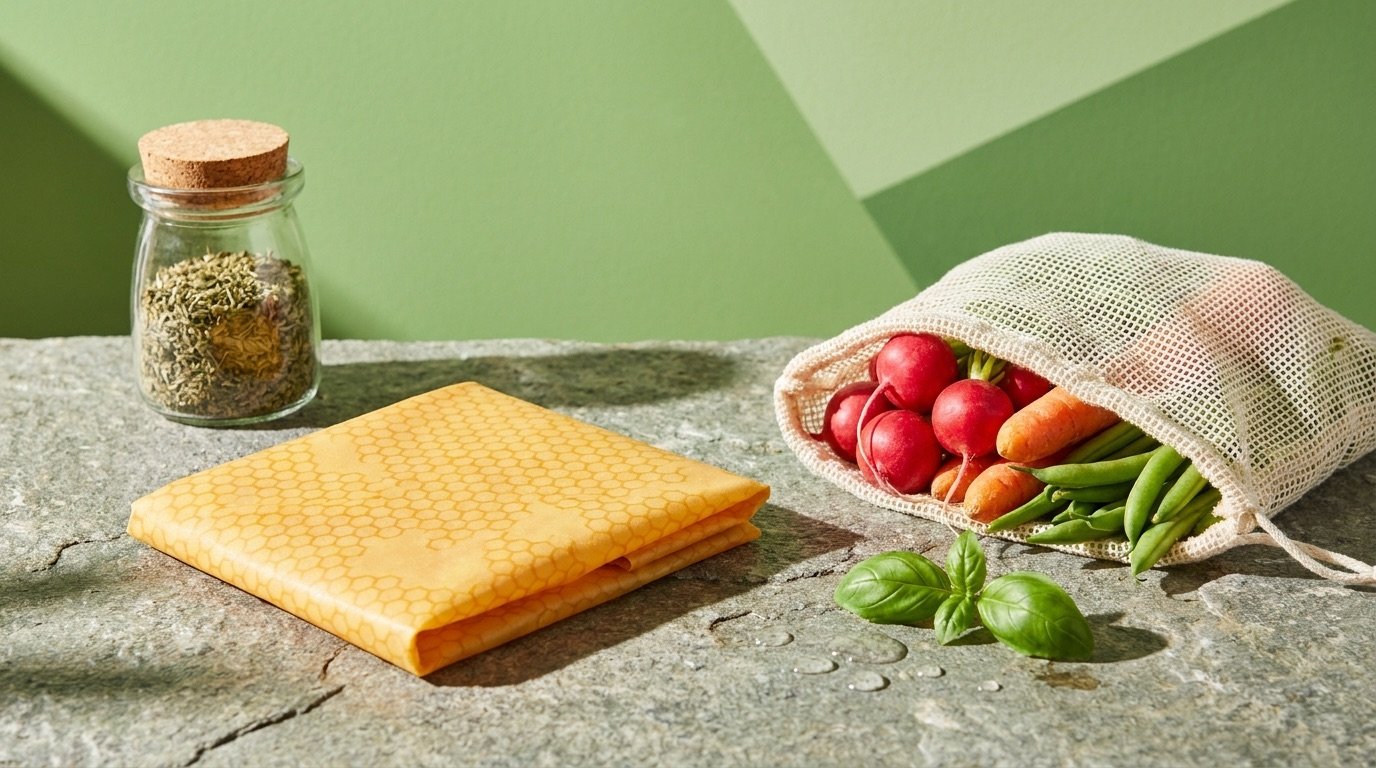
Cling film can’t be recycled anywhere that matters, so every sheet you’ve ever torn off is still out there. Bee’s Wrap fixes the leftovers problem without it: cotton coated in beeswax, jojoba oil, and tree resin that softens with the warmth of your hands to mold over a bowl or wrap half an onion. It holds its shape when it cools and composts when it’s done. Expect the better part of a year before the tack starts to fade.
It won’t work for raw meat, and you wash it in cool water only. Small rules, easy to live with once they’re habit. Sizes and multipacks are on Bee’s Wrap’s own shop. Start with a mixed pack.
Silicone bags for the whole Ziploc habit
You might assume a reusable freezer bag is a leaky compromise. It isn’t. Stasher makes bags from platinum silicone that go in the freezer, the microwave, the dishwasher, even a pot of simmering water for sous vide, and one bag quietly retires a few hundred plastic ones. The pinch-lock seal actually holds, so soup stays in the bag.
The sting is the upfront price, north of $12 a bag. But you buy it once. Over a year of packed lunches and frozen leftovers, it isn’t close. If silicone itself is the part you’re unsure about, we went through what food-grade silicone actually releases when you heat it.
Start here if: the plastic-baggie box is a permanent fixture on your grocery list.
Reusable produce bags for the grocery run
Here’s the swap that stops the plastic before it ever gets home. Those flimsy produce bags at the store get used for about 20 minutes and then live forever. A set of lightweight mesh or organic-cotton bags does the same job on repeat, and they’re washable when something leaks.
Jungle Culture makes a nice set of cotton produce and mesh bags that fold down small enough to keep stuffed in your tote, so you actually have them when you need them. Keep a few by the door. The whole habit lives or dies on remembering to bring them.
Swedish dishcloths instead of paper towels
The kitchen paper-towel habit is a quiet money pit, a roll a week, sometimes more, straight to the trash. Swedish dishcloths are the fix nobody talks about enough. Made from cellulose and cotton, one flat cloth absorbs like a sponge, wipes like a paper towel, goes in the wash or the dishwasher, and replaces something like 15 rolls over its life before it composts. Brands like Ten and Co and Skoy do them in cheerful prints.
They dry stiff and soften the second they’re wet, which throws people off for a day. Then it’s just how you clean up.
Bamboo cutlery and steel straws for life on the go
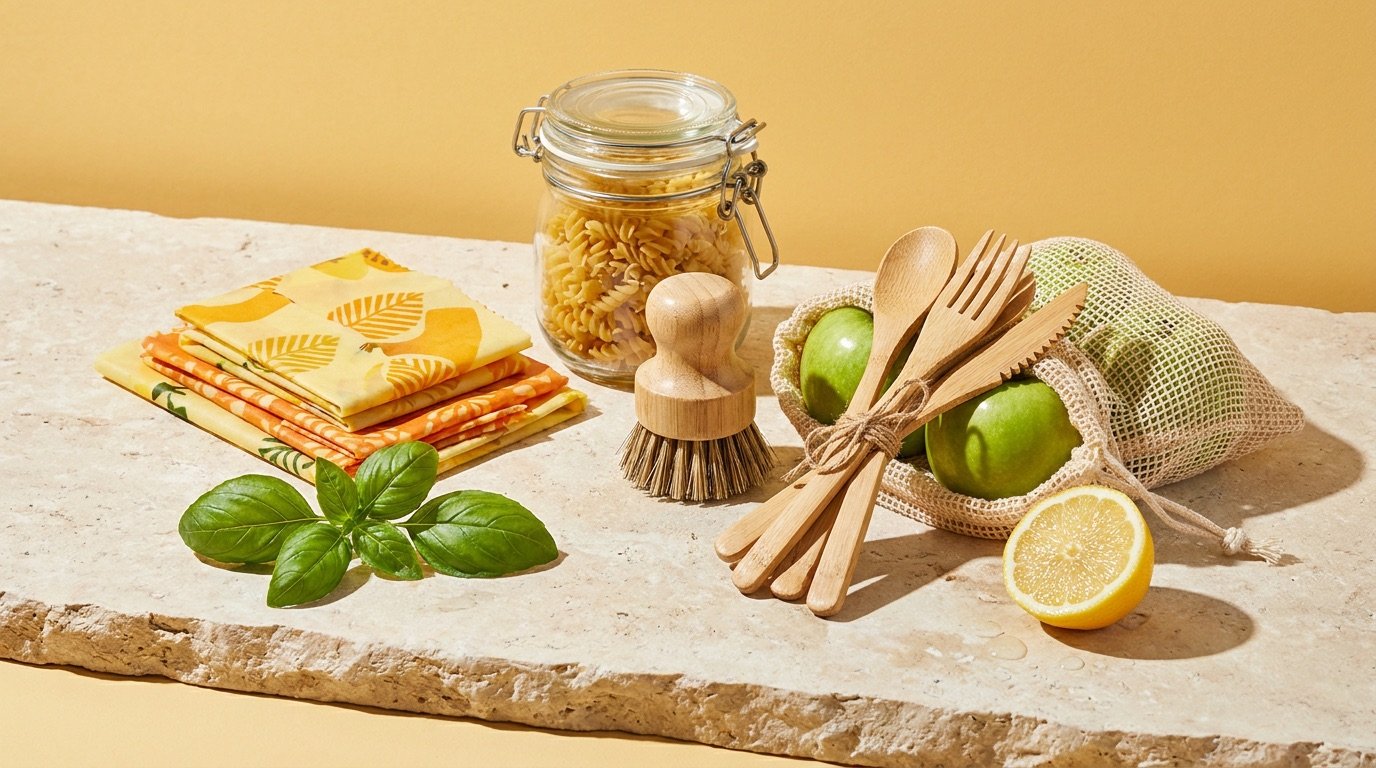
Takeout is where disposable kitchenware sneaks back in: the plastic fork, the wrapped straw, the whole pile of it. A small reusable kit ends that. Jungle Culture’s bamboo cutlery sets and reusable straws roll up in a little pouch you toss in a bag or glovebox, so you’ve got a fork and a straw when lunch shows up in a plastic clamshell.
The only catch is washing them when you’re out, which a quick rinse handles. A tiny bit of friction for a lot less plastic.
A wooden dish brush over the plastic sponge
Plastic sponges are the sneakiest offender in the whole kitchen. They shed microplastics into your sink with every scrub, they hoard bacteria, and they hit the landfill every few weeks. Your plastic cutting board does the same thing, and researchers have put real numbers on how much it sheds. A wooden dish brush with a replaceable head lasts for years, and you swap just the bristle head when it wears out. Pair it with a compostable loofah or coconut-fiber scrubber for the baked-on stuff.
Jungle Culture and Full Circle both make good ones. It’s a small change your sink will thank you for.
Start here if: you replace a grimy sponge more often than you’d like to admit.
Glass and stainless containers for leftovers
The plastic takeout-container tower in your cabinet stains, warps, and leaches into hot food. Glass and stainless steel don’t. A set of glass storage containers (Weck jars, or anything with a bamboo or glass lid) goes from fridge to oven to table and lasts more or less forever, and stainless tins like U Konserve are the unbreakable pick for lunches and freezers.
The same logic covers the bottle you carry. Klean Kanteen is the one that made stainless the default, and most of its line is now certified 90% post-consumer recycled steel, which is a rare case of a brand closing the loop on its own material rather than talking about it. Worth knowing that the family ownership everyone still cites ended in 2024, when it was acquired.
They’re heavier and cost more upfront, sure. But they don’t stain, don’t hold odors, and you’ll still be using them in a decade.
A countertop compost bin that closes the loop
The last swap isn’t about plastic at all, it’s about what your food scraps do next. Sending them to landfill in a plastic bag makes methane. A small countertop bin with a charcoal filter (Full Circle and Bamboozle both make tidy ones) collects peels and coffee grounds without the smell, ready for your green bin, a community drop-off, or a backyard pile.
If you’ve never composted, this is the easiest possible start. It should only take a few minutes a week, and it quietly cuts a big chunk of household waste that no other swap touches. One label worth a second look while you’re at it: “compostable” and “biodegradable” aren’t the same claim, and even the certified kind still has to reach the right facility.
You don’t have to do it all at once
Nobody re-outfits a whole kitchen in a weekend, and forcing it is how these things fizzle by February. Pick the swap that bugs you most or costs you most, change that one, and let it stick before you reach for the next.
If you want the cheapest, easiest wins, start with the produce bags and the dish brush. The bigger buys, the glass containers and silicone bags, pay for themselves over a year of not rebuying the disposable version. One swap is one less plastic thing cycling through your kitchen, week after week, for years. It adds up faster than it feels like it should.
Frequently asked questions
What’s the easiest zero-waste kitchen swap to start with?
Reusable produce bags and a wooden dish brush. Both are cheap, both replace something you buy on repeat, and neither asks you to change how you cook. The produce bags stop plastic before it enters the house, and the dish brush retires the plastic sponge that sheds microplastics into your sink.
Do beeswax wraps actually keep food fresh?
Yes, for most jobs. Beeswax wraps seal over bowls, cheese, cut fruit, and bread about as well as cling film, and the wax has natural preservative qualities. Where they fall short is raw meat and anything very wet, so keep a glass container for those. Wash them in cool water and you’ll get six to twelve months out of one before the stickiness gives up.
Are glass and stainless containers worth the extra cost?
Over time, easily. They cost more on day one, but they don’t stain, warp, or leach into hot food the way plastic does, and a good set lasts a decade or more. The cost-per-use ends up lower than the plastic containers you’d keep replacing as they crack and discolor.
How do I start composting if I’ve never done it?
Get a small countertop bin with a charcoal filter to control odor, and collect fruit and vegetable scraps, coffee grounds, and eggshells. Then empty it into a municipal green bin, a community compost drop-off, or a backyard pile. Skip meat and dairy unless you have a system built for them. It takes about the same effort as taking out the trash.
Related reading
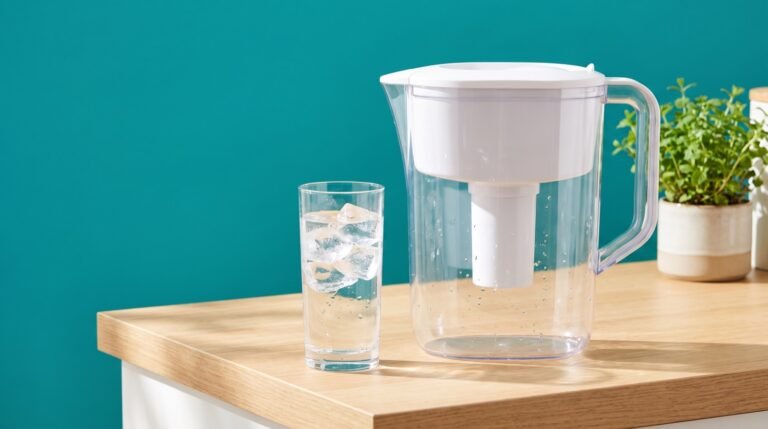
Filtering at home also ends the bottled-water habit, and it starts with knowing what’s actually in your tap water before you buy anything. Our picks are in the best water filters.
Working through the rest of the house? Our zero-waste home swaps guide covers the bathroom and cleaning cupboard, we went deep on laundry in the best non-toxic laundry detergents, and if you want the full story on Jungle Culture, read our Jungle Culture brand profile. The rest of the brands we vet live in our brand directory.