Is Aluminum Cookware Safe? The Alzheimer’s Scare and the Real Issue
You may have heard that aluminum pans cause Alzheimer’s disease. It’s one of the stickiest kitchen worries there is, it has been circulating since the 1970s, and the Alzheimer’s Association’s position is that no convincing evidence supports it.
Studies looked. They didn’t find the link. Researchers have largely moved on to other lines of inquiry, and the aluminum theory sits in the same drawer as the sulfate cancer email.
So that’s the scare. The reason to think about aluminum anyway is duller and more practical, and it has to do with tomatoes.
Bare aluminum reacts with acid
Aluminum is soft and chemically reactive. Cook something acidic in an unlined aluminum pan, a tomato sauce, a wine reduction, anything with lemon or vinegar, and a small amount of the metal leaches into the food.
Two things follow. The food picks up a faint metallic taste and can take on a grayish cast, which is the tell most cooks notice first. And your aluminum intake goes up slightly.
On that second point, keep the scale in mind. Most of the aluminum people consume comes from food itself and from things like antacids, not from pans, and healthy kidneys clear it. This is a reason to prefer one pan over another rather than a reason to be alarmed about the one you own.
The practical version: don’t simmer tomato sauce for three hours in a bare aluminum pot. That’s the whole rule.
Anodizing changes the answer
Here’s the part that resolves most of it, and it’s why “aluminum pan” isn’t one category.
Anodizing runs the metal through an electrochemical bath that grows a hard oxide layer on the surface. The result is sealed, far harder than raw aluminum, and no longer reactive with acidic food. Hard-anodized cookware is a completely different proposition from a bare aluminum pot, even though both are aluminum underneath.
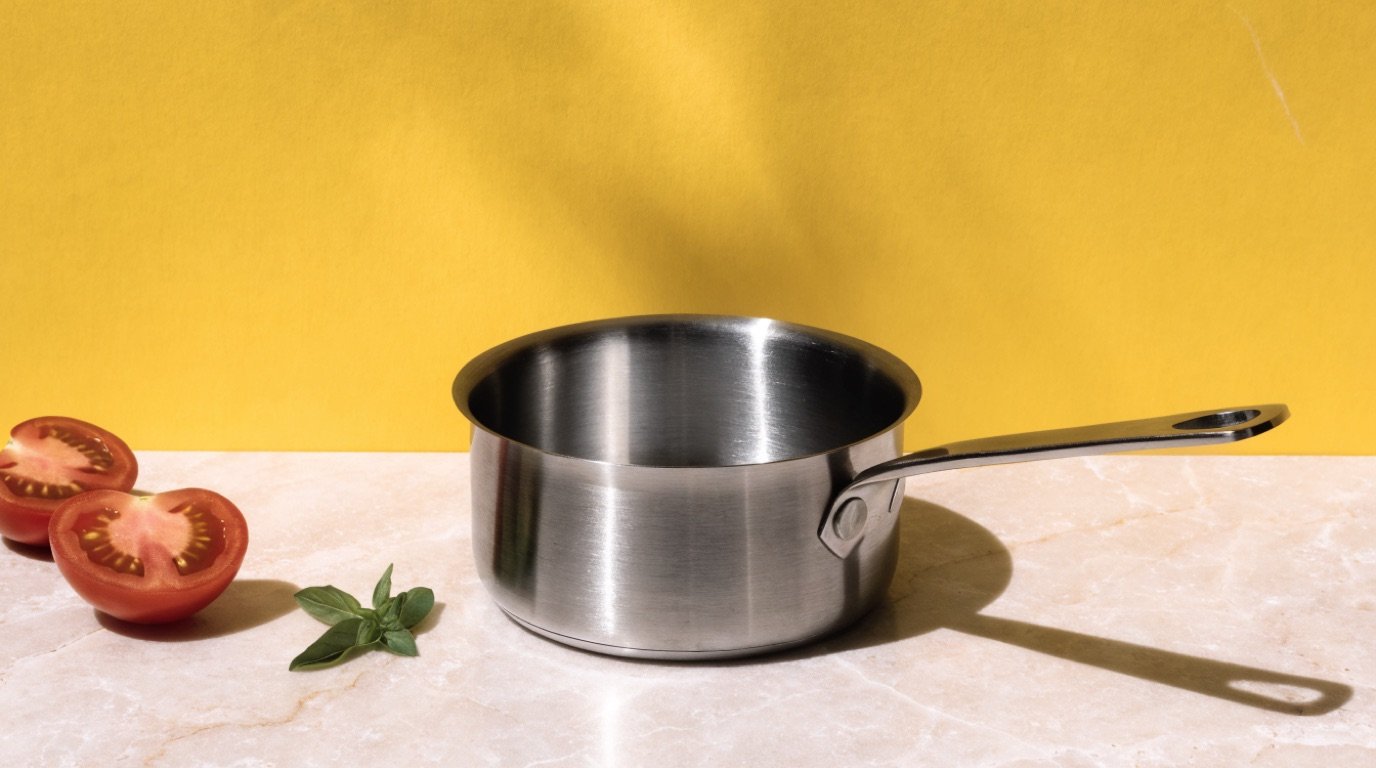
The same goes for the aluminum core in a clad stainless pan. Aluminum conducts heat beautifully and steel doesn’t, so good stainless cookware sandwiches an aluminum layer between steel for exactly that reason. The aluminum never touches your food. That’s not a compromise, it’s the design.
And most ceramic nonstick? Aluminum body, coating on top. Which means the aluminum question and the ceramic coating question are the same conversation from different angles: what matters is the surface, and whether it’s intact.
Where I would actually be careful
Three situations, and none of them is the pan you use every day.
Old, pitted, bare aluminum pots, the kind that come with a rental or turn up at a yard sale. Pitting means the surface is compromised and reacting. Those are worth retiring.
Aluminum foil and disposable trays with acidic or salty food, especially at high heat. Roasting a lemon-and-tomato tray on foil for an hour is more contact than a pan gives you in a week.
Untreated aluminum for long acidic cooking. Chili, sauce, stock with wine in it. Use stainless or enameled cast iron and stop thinking about it.
If you have kidney disease, this is a question for your doctor rather than for a website, because reduced clearance is the one condition that changes the calculation.
What to buy instead
Nothing exotic, and mostly cheap.
Stainless steel is the default for anything acidic, and a clad pan gives you aluminum’s heat conduction without aluminum touching the food. Made In is the one professional kitchens use, and there’s no coating to fail.
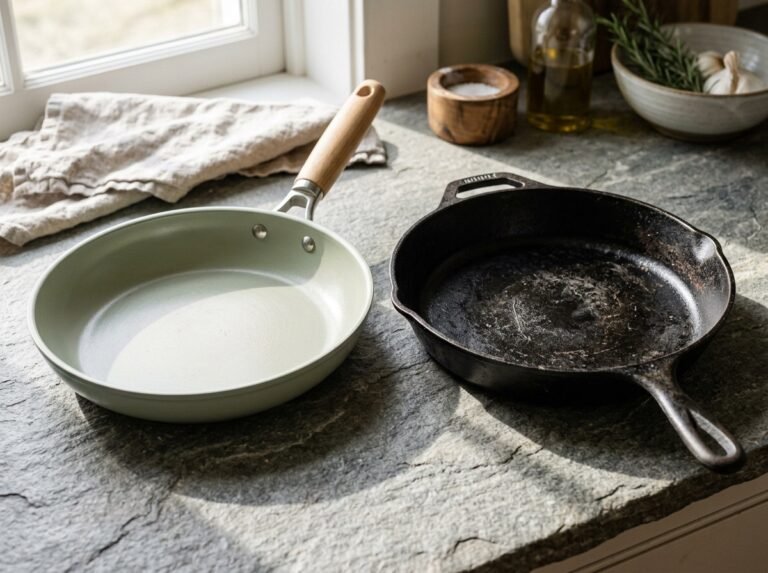
Cast iron handles heat and lasts forever. Lodge has made it in Tennessee since 1896 and costs less than most nonstick pans, while Field Company makes a lighter, smoother version if a traditional skillet feels like a dumbbell. Worth noting bare cast iron is also reactive with long-simmered acidic food, which enameled versions solve.
For total avoidance of both metal and coatings, Xtrema is solid ceramic throughout.
We’ve sorted every one of these by what it’s actually made of in the best non-toxic cookware, which is the useful way to shop this category.
Frequently asked questions
Does aluminum cookware cause Alzheimer’s?
The Alzheimer’s Association says no convincing evidence links aluminum exposure to Alzheimer’s disease. The idea dates to the 1970s, was investigated, and wasn’t borne out. Researchers have largely moved on, and cookware is a small contributor to aluminum intake compared with food and medications like antacids.
Is anodized aluminum safe?
Yes, and it addresses the main practical objection. Anodizing creates a hardened oxide layer that seals the surface so it doesn’t react with acidic food the way bare aluminum does. Hard-anodized pans behave like a different material from an untreated aluminum pot.
Can you cook tomato sauce in aluminum?
Not in bare aluminum, at least not for long. Acid pulls metal into the food, which can give a metallic taste and a grayish tint. Anodized aluminum, stainless steel and enameled cast iron are all fine for it.
Is the aluminum in stainless pans a problem?
No. Clad stainless cookware puts an aluminum layer between sheets of steel purely for heat conduction, and it never contacts your food. Aluminum spreads heat well and steel doesn’t, so the sandwich is the point of the design.
Related reading
The rest of this series: PFAS in nonstick cookware and is ceramic cookware safe. For picks sorted by material, see the best non-toxic cookware. Our zero-waste kitchen swaps guide covers the rest of the kitchen, and every brand named has a scored profile in the brand directory.
Sources: Alzheimer’s Association, Alzheimer’s myths. Agency for Toxic Substances and Disease Registry, Toxicological profile for aluminum. US Food and Drug Administration, Environmental contaminants in food.