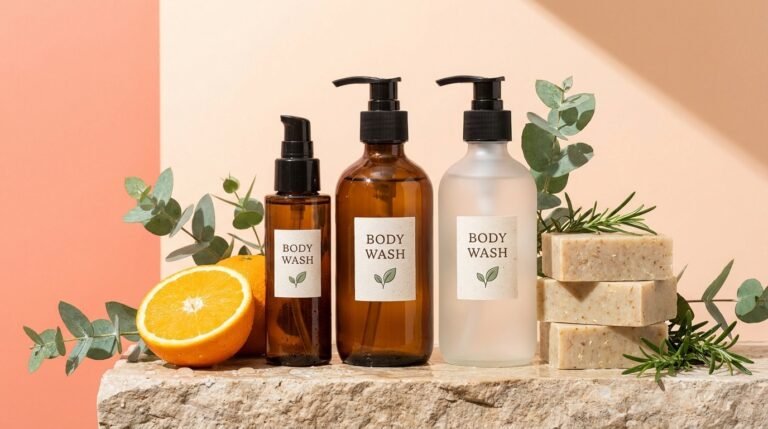
Can Body Wash Be USDA Organic Certified?
You may have assumed there’s a rulebook behind the word “organic” on a shampoo bottle. There is, and it’s borrowed.
The FDA, which regulates cosmetics, says outright that it has no definition for the term. It isn’t in the Food, Drug and Cosmetic Act, it isn’t in the labeling act, it isn’t in FDA’s regulations. The only US definition of organic comes from the USDA, and it was written for agriculture.
Short answer: a body wash can be USDA certified organic, and very few are. Water can’t count toward the threshold and the ingredient that makes the product foam usually can’t be certified at all. There’s also a tier of properly certified products that is forbidden from displaying the USDA seal, which makes the seal a worse shopping signal than you’d think.
The USDA does cover body care, with one condition
The USDA’s position is clearer than most people realize: if a cosmetic or personal care product contains or is made up of agricultural ingredients and can meet the organic production, handling, processing and labeling standards, it may be eligible to be certified.
The condition is the whole chain. Ingredient producers, handlers and the final manufacturer must all be certified by a USDA-accredited certifying agent. Not just the shea butter. Everybody who touches it.
Three tiers, and one can’t show the seal
Under 7 CFR 205.301 there are three levels.
100 percent organic requires every ingredient to be organically produced, excluding water and salt.
Organic requires not less than 95 percent organically produced agricultural ingredients.
Made with organic ingredients requires at least 70 percent.
Now the detail that reverses what the seal tells you. The first two tiers may display the USDA organic seal. The third may not. A “made with organic ingredients” product can name up to three organic ingredients on the front and must not display the seal.
So a bottle carrying no USDA seal may be certified at 70 percent, and a bottle carrying no seal may equally be certified at nothing. The seal’s absence tells you nothing at all. What tells you something is the certifying agent’s name in the fine print, which is required at both of the upper tiers.
Why the numbers don’t work for body wash
Two obstacles, and neither is about the brand trying harder.
The first is water. Under the same rule, water is excluded from the calculation, which cuts both ways: it isn’t in the denominator dragging your percentage down, and it can’t be counted as organic to help you reach the threshold either. A product that’s mostly water is working with a small pool of countable ingredients.
The second is the cleansing agent, and it’s the real blocker. The chemistry that turns oil into something that foams and rinses involves saponification, hydrolysis or transesterification. Oregon Tilth is explicit that a separate personal care standard exists precisely because it permits non-organic ingredients created through those processes, processes not typically allowed under USDA organic standards.
Put plainly: the thing that makes body wash work is the thing the agricultural rulebook wasn’t built to certify. Bar soap has an easier time of it, which is part of why you see certified bars and rarely certified washes.
Two standards written for this exact problem
Because USDA organic doesn’t fit personal care neatly, two alternatives exist.
NSF/ANSI 305 requires a minimum of 70 percent organic content by weight, excluding water, salt and mined minerals. It permits “Contains Organic Ingredients” and named-ingredient claims, and it explicitly prohibits use of the USDA seal and the phrase “certified organic.”
COSMOS Organic is the European standard you’ll see on imported products, and its structure is worth knowing before you read too much into it. The current version requires at least 95 percent of the physically processed agricultural ingredients to be organic, and at least 20 percent of the total product. For rinse-off products, that total drops to 10 percent.
Ten percent. That’s a real, audited, meaningful number, and it is a long way from what someone reading “organic” on a body wash imagines. Water is the reason, and COSMOS states plainly that water cannot be calculated as organic.
What “organic” means with no certifier named
Federally, close to nothing. FDA doesn’t define the word, and the USDA rules only bite if a product is actually being sold as organic under their program.
Two real constraints exist. California’s Organic Products Act reaches cosmetics sold in the state and requires at least 70 percent organically produced ingredients, excluding water and salt, for anything labeled organic. And there’s a small-operation exemption in the federal rules: businesses with $5,000 or less in annual organic sales are exempt from certification and may call their product organic, though they must not display the USDA seal or represent it as certified.
So a tiny soapmaker at a market saying organic may be entirely within the rules. A national brand doing the same with no certifier named is a different situation.
What we’d actually look for
Read the fine print for a certifier’s name, not the front for a word. USDA Organic, NSF/ANSI 305, COSMOS, Ecocert, Oregon Tilth. Any of those is a real audit. None of them appearing is the answer.
Then hold the claim to the right size. Organic describes sourcing, not safety. FDA makes this point itself and we think it’s the honest one: an ingredient’s source does not determine its safety. A certified organic essential oil can still irritate your skin, and a synthetic preservative can be perfectly benign.
And when a body wash says organic on the front with nothing to back it, that’s the specific move our greenwashing guide exists for. The picks in our body wash roundup get judged on their full ingredient list rather than on the word.
Frequently asked questions
Does USDA Organic apply to cosmetics?
Yes, if the product is made of agricultural ingredients and the whole chain from ingredient producer to manufacturer is certified by a USDA-accredited agent. USDA doesn’t regulate cosmetics generally, and it does regulate the word organic wherever it’s used, including on body care.
Why do so few body washes carry the USDA Organic seal?
Two reasons. Water can’t be counted as organic, so a mostly-water product has a small pool of countable ingredients, and the cleansing agents that make a wash foam are made by chemical processes the organic standards generally don’t allow. Products certified at the 70 percent tier are also prohibited from displaying the seal.
Is COSMOS Organic as strict as USDA Organic?
They’re structured differently rather than one being simply stricter. COSMOS requires 95 percent of processed agricultural ingredients to be organic but allows the organic share of the total rinse-off product to be as low as 10 percent, because water dominates. USDA’s 95 percent tier applies to agricultural ingredients too, with water excluded from the count.
Does “organic” on a bottle mean anything without a certifier?
Legally, very little at federal level, since FDA has no definition of the term for cosmetics. California requires at least 70 percent organic ingredients for cosmetics labeled organic and sold there, and very small producers are federally exempt from certification. Absent a certifier’s name, treat the word as marketing.
Related reading
More on body care claims: why castile soap is so alkaline, is palm oil in soap ever sustainable, and the natural body washes worth buying.