The Best Non-Toxic Water Bottles, Lead Seals and All
Most vacuum-insulated bottles are sealed with a small pellet of lead. It sits at the base of the outer shell, outside the drink path, under a disc of stainless steel, and it’s how the vacuum gets closed.
That became a news cycle in 2024 and then a lawsuit, which was dismissed. What it didn’t become is a labeling requirement, so the practical question for a shopper is narrower and more useful: which brands engineered the lead out, and which will say so in writing?
We went and looked, brand by brand, along with the steel grade, whether the inside is lined, and who owns the company. If you want the short version: Klean Kanteen is the one we’d hand most people at $46.95, and Lifefactory is the one we’d buy at $24.99 when the budget is the deciding factor.
Here’s how we picked:
- What it’s made of, in the brand’s own words. Steel grade, lined or unlined, cap plastic, exterior coating. Where a brand doesn’t publish it, the entry says so, because that silence is information too.
- A lead-free seal, stated by the brand. Every insulated bottle has a vacuum seal and the traditional one uses leaded solder. Some brands state they use something else. Others say nothing at all.
- Price from the brand’s own storefront, at the one-time price, checked this week.
- Ownership named. Two of these five have corporate parents, and one changed hands in 2024.
Our picks at a glance
- Best overall: Klean Kanteen
- Best for coffee and citrus: Purist
- Best certifications: MiiR
- Best glass bottle: bkr
- Best budget: Lifefactory
| Brand | Start with | Price | Material | Lead-free seal stated? | Ownership |
|---|---|---|---|---|---|
| Klean Kanteen | TKWide 32 oz, Chug Cap | $46.95 | 18/8 steel, unlined | Yes, silica and glass plugs | Think Better Group, since 2024 |
| Purist | Mover 18 oz | $50.00 | 316 steel, glass-lined | Yes, including the seal | Specialized Bicycle Components |
| MiiR | Wide Mouth 32 oz | $40.00 | 18/8 steel | No statement found | Independent, founder-led |
| bkr | Big Bottle 1L | $42.00 | Soda-lime glass, silicone sleeve | No seal exists; glass tested for lead | Independent, founder-owned |
| Lifefactory | 22 oz glass, silicone sleeve | $24.99 | Soda-lime glass, silicone sleeve | No seal exists on the glass line | Thermos LLC, since 2017 |
Prices checked on each brand’s own storefront on October 4, 2026, at the one-time price. Where a brand sells several sizes, the spec line names the one we’d start with.
Klean Kanteen: unlined steel, and a lead-free seal in writing
Best for: one bottle you keep for a decade | Price: around $47 | Start with: Insulated TKWide 32 oz with Chug Cap, $46.95 | Certifications: B Corp, Climate Neutral, 1% for the Planet | Ownership: owned by Think Better Group since 2024
Klean Kanteen answers the question this whole article is about, in its own FAQ, without being asked nicely. All its products are lead-free, and instead of leaded solder it uses silica and glass plugs to seal the vacuum, a material it describes as six to seven times more expensive.
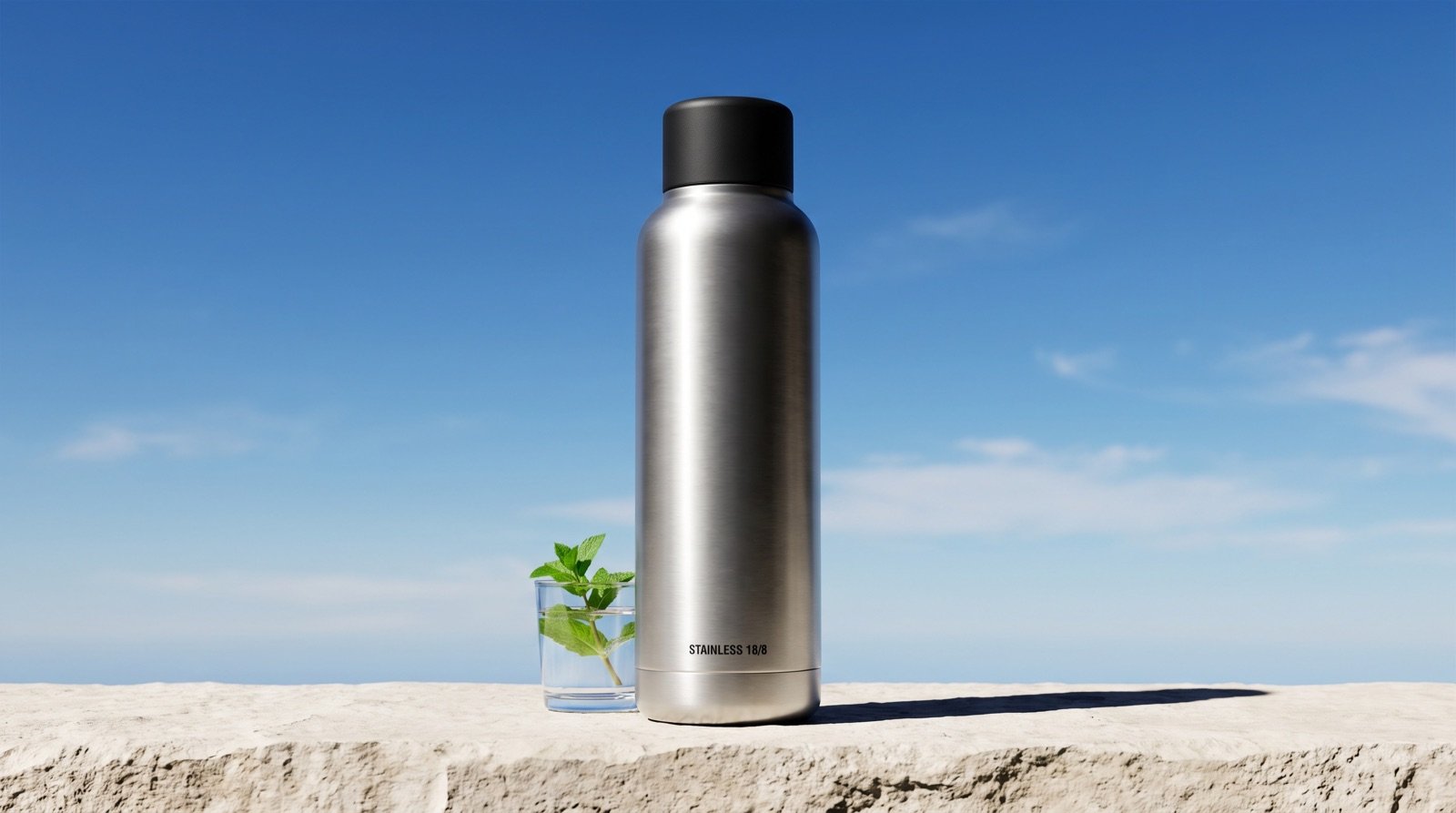
The rest of the spec holds up. The steel is 18/8, which is grade 304, and the interior is unlined: no epoxy, no plastic, nothing between you and the metal. The insulated TKWide is made from certified 90% post-consumer recycled steel at $46.95 for 32 oz. Caps are polypropylene, and the exterior is a powder coat the brand calls Klean Coat, though the brushed stainless colorway skips the coating entirely.
If you want no plastic anywhere, the 27 oz Reflect is single-wall steel with a bamboo cap at $32.95, with no vacuum seal to ask about at all.
The honest note is ownership. Klean Kanteen was family-owned for 20 years and was acquired in 2024 by Think Better Group, a UK company backed by the ABN AMRO Sustainable Impact Fund. Nothing about the product has changed that we can see, and you should still hear it from us.
Skip it if: you want 316 steel or a lined interior.
Purist: 316 steel with a glass lining inside
Best for: coffee, citrus and anything that makes a steel bottle taste like a steel bottle | Price: around $50 | Start with: Mover 18 oz, $50 | Ownership: owned by Specialized Bicycle Components
A lined bottle is usually a reason to walk away. This one is the exception. The lining is glass.
Purist builds its bottles from 316 surgical-grade stainless, the alloy with added molybdenum that handles acid better than 18/8, then coats the inside with an ultra-thin layer of amorphous silicon dioxide, which is to say glass. The effect people notice is taste: nothing carries over between coffee one day and water the next. And its FAQ states that all Purist bottles are lead-free, including the vacuum-sealed components.
The Mover at 18 oz is $50, with the 32 oz Founder at $58. That’s the top of this list’s price range for the smallest capacity on it.
Two things to weigh. The tops are BPA-free plastic and the brand doesn’t name the polymer. And Purist is owned by Specialized Bicycle Components, which is a bike company rather than a conglomerate, though it’s still a parent you’d want disclosed.
Skip it if: you want a big bottle for the price, or an unlined interior on principle.
MiiR: strong on certifications, silent on lead
Best for: buyers who weigh certifications and giving as heavily as materials | Price: around $40 | Start with: Wide Mouth 32 oz, $40 | Ownership: independent and founder-led
MiiR is the most credentialed brand here, and we checked all of it at the issuers rather than taking the badges on trust. B Lab lists MiiR as certified since March 2014 with a score of 95.5. The Climate Label register shows it certified for 2026. 1% for the Planet lists it as a whole-company member. Its own certifications page adds Certified Evergreen, the ownership structure built to keep a company independent.
The Wide Mouth bottle is 18/8 stainless with the brand’s Thermo 3D double-wall insulation, $40 for the 32 oz Wide Mouth and $32 for the 16 oz, with a powder-coated exterior.
Now the gap, because it’s the one this article exists to point at. We searched MiiR’s own site for a statement about lead in its vacuum seal and found nothing: not in the FAQ, not on the product pages, which say BPA-free and stop there. That isn’t evidence of lead. It’s evidence that two of its competitors decided this was worth answering publicly and MiiR hasn’t. The brand also doesn’t name the polymer in its lids.
Skip it if: the lead question is what brought you here. Klean Kanteen and Purist both answer it.
bkr: glass, and a lead answer backed by testing
Best for: people who can taste metal and hate it | Price: around $42 | Start with: Big Bottle 1L, $42 | Ownership: independent, founder-owned since 2011
Glass sidesteps most of this article. No vacuum seal, no pellet. No lining either, because the bottle is the lining.
bkr makes soda-lime glass bottles in a silicone sleeve, $42 for the 1 liter and $35 for the 500 ml, and its FAQ goes further than the others on testing: the glass is lead safe, with third-party testing finding lead not detected. The sleeve is silicone, the cap is food-grade polypropylene, and both are stated plainly.
Founded in 2011 by Tal Winter and Kate Cutler, it’s still founder-owned, which is rare at this size in drinkware.
The tradeoffs are the obvious ones. It’s glass, so it breaks, and it does nothing to keep your drink cold. The pricing is also fashion-led rather than spec-led, with colorways swinging the same bottle by $15.
Skip it if: you need insulation, or you’re hard on your gear.
Lifefactory: the cheapest honest option here
Best for: a first bottle, or a second one that lives in the car | Price: around $25 | Start with: 22 oz glass bottle with silicone sleeve and active cap, $24.99 | Ownership: owned by Thermos LLC since 2017
At $24.99 for a 22 oz glass bottle in a silicone sleeve, this is the cheapest thing on the list that we’d actually recommend. The glass is made in France, the silicone in the US, and assembly is American. Caps are polypropylene with a silicone gasket, and the brand says so on its FAQ without being chased.
Two caveats, and the second one decides which product to buy.
Lifefactory was acquired by Thermos in 2017, so this is a corporate-owned brand at a small-brand price. And on its stainless line, the disclosure thins out: the site doesn’t state the steel grade anywhere we could find, and there’s no statement about lead in the vacuum seal. So the $34.99 insulated steel bottle is the one we’d leave, and the glass one, where the material is visible and the chemistry is simple, is the one we’d buy.
Skip it if: you want the insulated version. The information isn’t there.
Red flags on a water bottle
Most of the risk here isn’t in the bottle. It’s in the claims. They make a bottle look checked when nobody checked it.
“BPA-free” is the big one. It tells you a single molecule is absent and nothing about what replaced it, and the usual replacements test as about as hormonally active in lab work. Europe stopped playing that game in 2024 and banned the whole hazardous family from food contact. Here’s what that swap actually involved.
Keep plastic out of heat. Sunlight, bottle age and above all microwaving were the strongest drivers of plastic particle release in the studies that measured it, and bottled water itself turned out to carry around 240,000 particles per liter once a 2024 method could see the small ones. The research is here.
Watch the base of an insulated bottle. That steel disc is what keeps the vacuum seal, lead pellet and all, away from your hands, and a loose or missing cover is the one scenario worth acting on. The full version of that story is less alarming and more useful than the headlines were.
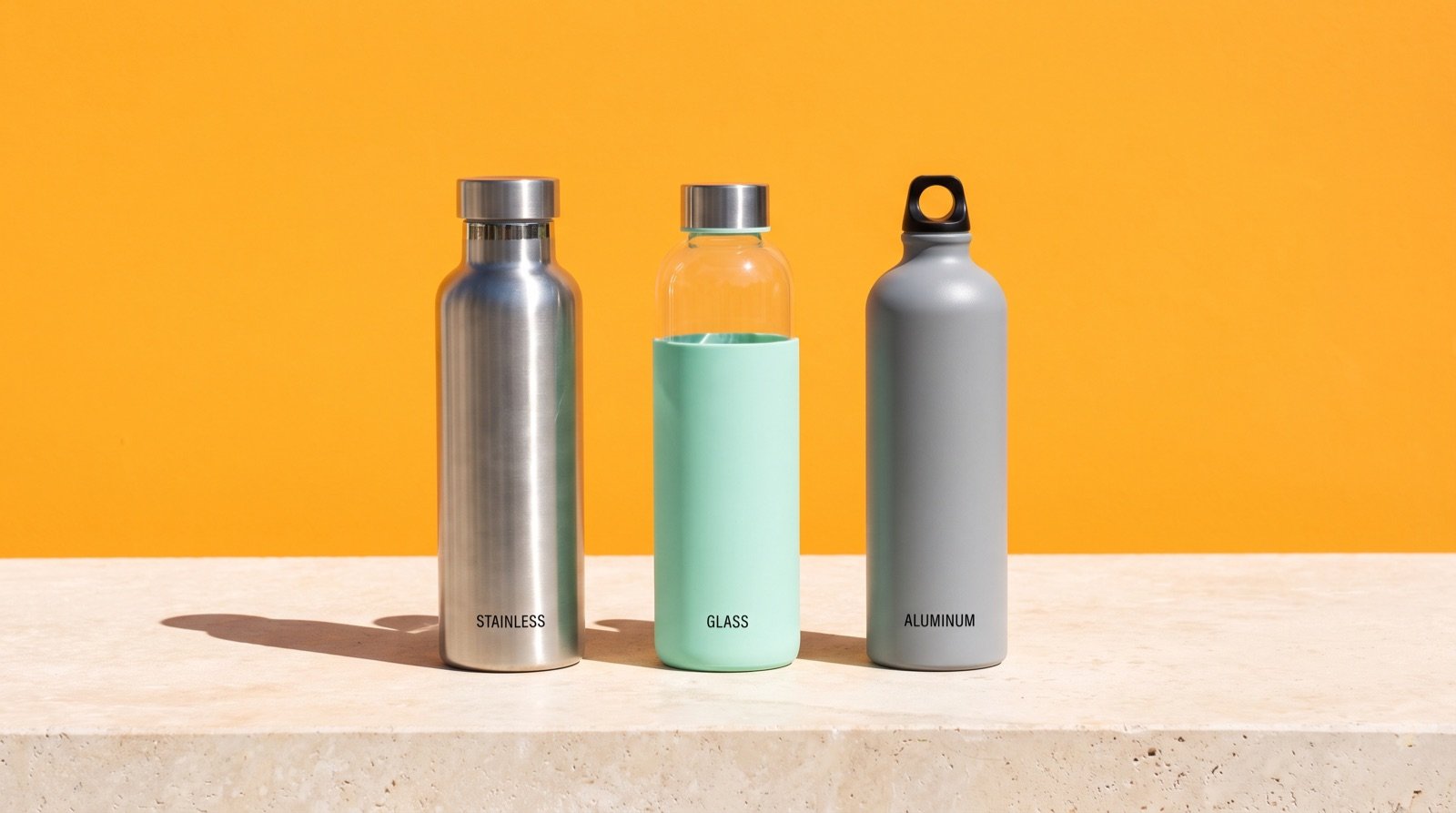
And treat an aluminum bottle as a lined bottle, because that’s what it is. The metal never touches your drink, a resin does, and we couldn’t find a single brand that names the resin or publishes migration testing. What’s actually inside one.
One more that has nothing to do with chemistry: a bottle you don’t like carrying is a bottle you won’t carry. Weight, mouth width, whether the lid survives a dishwasher, whether it fits your cupholder. Those decide whether it gets used, and an unused bottle has the worst footprint of all.
What we left off, and why
The four best-selling insulated brands in America are all missing from this list, for four different reasons.
Stanley says in its own FAQ that the sealing material includes lead, and that once sealed the area is covered with a durable stainless steel layer, making it inaccessible. The class actions built on that were dismissed in April 2026, with the judge finding no specific and plausible risk of harm. Separately, 2.6 million Switchback and Trigger Action travel mugs were recalled in December 2024 over lids detaching and causing burns, which didn’t involve the bottles. None of that is a safety verdict. We’d still rather point you at brands that engineered the pellet out.
Yeti’s manufacturing FAQ describes the same sealed-and-encapsulated approach, but the page blocks automated reading, so we couldn’t confirm the wording ourselves and won’t quote it. Hydro Flask, owned by Helen of Troy since 2016, has said it moved to lead-free sealing in 2012, though that statement lives in a social post and news coverage rather than on a page we could open.
Owala is the interesting one. It states its bottles are lead-free and always have been, which would put it alongside our top two picks. In July 2026 a Prop 65 60-day notice named its 24 oz FreeSip and its retailer over lead, with the alleged route being hand-to-mouth contact rather than the drink. A 60-day notice is an allegation nobody has tested in court, and until it resolves we’d rather wait than put it on a list like this.
Also left off: Nalgene, which makes no stainless bottle at all and is owned by Thermo Fisher, and Qwetch, whose steel caps and recycled-steel bottles we liked and which doesn’t ship to the US.
How to actually choose one
Start with how you drink. Not with the material.
If you want one bottle for everything, insulated stainless is the default, and the only real question for the brand is whether the vacuum seal contains lead. If you want the lightest carry, single-wall steel has no seal, no liner and nothing to argue about. If you can taste metal, glass is the honest answer, with a silicone sleeve so it survives the first drop.
Drinking anything acidic, like citrus water or electrolyte mixes? 316 steel handles it better than 18/8, which puts Purist first and makes the glass picks a fine second.
Then the question nobody asks. What goes in the bottle matters more than what it’s made of, which is why our water filter picks and what’s actually in your tap water are the real companions to this list.
And wash it in the dishwasher if the maker allows it. In the lifecycle study we read, washing method dominated a reusable bottle’s annual footprint, and dishwashing came out best both environmentally and for cutting bacteria by around 90%.
Frequently asked questions
Which water bottle material is safest?
Glass and unlined stainless steel are the two materials where you can see what your drink touches. Glass has no coating and no vacuum seal. Unlined 18/8 or 316 steel has no liner, though insulated versions have a vacuum seal that traditionally contains lead, so the brand’s statement about that seal is the thing to check.
Do water bottles really contain lead?
Many insulated bottles use a lead-containing pellet to seal the vacuum, sitting outside the drink path under a steel cover on the base. Stanley confirms the practice in its own FAQ. Klean Kanteen uses silica and glass plugs instead, Purist says its seals are lead-free, and single-wall and glass bottles have no vacuum seal at all.
Which water bottles are lead-free?
Of the brands we checked, Klean Kanteen and Purist state in their own FAQs that their bottles are lead-free including the seal. Owala makes the same claim, though a July 2026 Prop 65 notice over lead in one of its bottles is unresolved. MiiR, Lifefactory, LARQ, Welly and Ocean Bottle publish no statement either way.
Is stainless steel or glass better for a water bottle?
Steel is tougher, lighter and available insulated; glass is inert and tastes of nothing. If you drink coffee one day and water the next, or you’ve noticed a metallic taste, glass or a glass-lined steel bottle solves it. If you’ll drop it, steel.
Are BPA-free plastic bottles safe?
Safer in the narrow sense that one studied chemical is absent. The common substitutes, BPS and BPF, were found in a review of 32 studies to be about as hormonally active as BPA, and plastic bottles also shed particles as they age and heat. If you’re replacing a bottle anyway, steel or glass avoids both questions.
How often should you replace a water bottle?
Steel and glass bottles last years, and the parts that wear out are the gasket and the lid rather than the body. Plastic bottles are the ones to retire early: once the surface is cloudy, scratched or has spent summers in a hot car, that’s exactly the wear that drives particle release.
Related reading
Want the detail behind the picks? We wrote up each thing we screened for: BPA-free doesn’t mean safe, is stainless steel safe, including the lead seal, microplastics from plastic bottles, and aluminum bottles and their liners.
If you’re switching from bottled to tap, the best water filters is the companion piece, and the plastics in your kitchen covers the rest of the house.